

| Total warning lights on a modern vehicle | Roughly 50-200, depending on the model (Varies by manufacturer and trim level) |
| Color that always means stop immediately | Red (Universal automotive convention) |
| TPMS federally required since | 2008 (all new U.S. passenger vehicles) (NHTSA TPMS Final Rule) |
| Check engine light causes | Hundreds of possible fault codes (OBD-II standard) |
| Flashing check engine light urgency | Pull over safely; risk of catalytic converter damage (General industry guidance) |
| Oil pressure light response time | Stop driving as soon as safely possible (Engine damage can occur within seconds at low pressure) |
The Color Code: Red, Amber, and Green Explained
Before diving into individual symbols, it helps to understand the color system that applies across virtually every vehicle sold in the United States. Think of it like a traffic light built into your dash.
- Red means stop - or at minimum, act immediately. A red warning light signals a condition that could cause engine damage, a safety failure, or personal injury if ignored. Examples include oil pressure loss and overheating.
- Amber or yellow means caution. Something needs attention soon, but you likely have time to drive to a shop without catastrophic consequences. The check engine light, TPMS, and traction control lights typically appear in amber.
- Green or blue are informational - they confirm that a system is active, not that something is wrong. Your high-beam indicator and turn signal confirmations fall here.
When in doubt, a red light should always trigger a plan: pull over safely, assess whether the car can be driven, and consult a qualified mechanic. For more on interpreting road symbols and signals, see our road sign color reference.
| Total warning lights on a modern vehicle | Roughly 50-200, depending on the model (Varies by manufacturer and trim level) |
| Color that always means stop immediately | Red (Universal automotive convention) |
| TPMS federally required since | 2008 (all new U.S. passenger vehicles) (NHTSA TPMS Final Rule) |
| Check engine light causes | Hundreds of possible fault codes (OBD-II standard) |
| Flashing check engine light urgency | Pull over safely; risk of catalytic converter damage (General industry guidance) |
| Oil pressure light response time | Stop driving as soon as safely possible (Engine damage can occur within seconds at low pressure) |
The Lights You're Most Likely to See
Here's a plain-English rundown of the warning lights drivers encounter most often:
Check Engine (Malfunction Indicator Lamp)
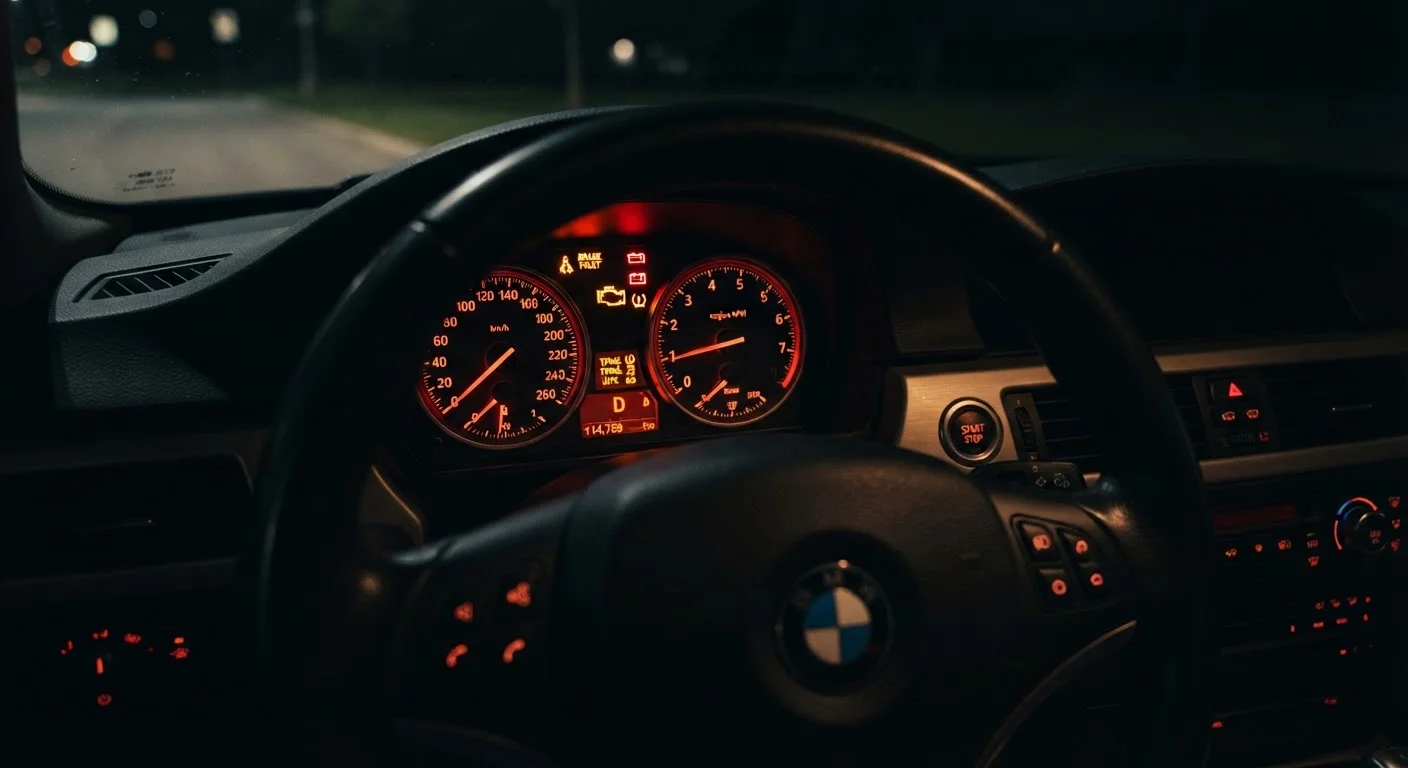
This amber engine-shaped icon is the most common - and most misunderstood - light on the road. A steady light means the system has logged a fault worth investigating, but you're not in immediate danger. A flashing check engine light is a different story: it typically signals an active engine misfire that can overheat and destroy your catalytic converter within minutes. Pull over safely and arrange a tow. Either way, a technician with an OBD-II scanner can read the stored fault code and identify the problem. See a full breakdown of warning lights by category for deeper detail.
Oil Pressure Warning
This red oil-can icon is one of the most serious lights your vehicle can show. It does not mean your oil is low - it means engine oil pressure has dropped dangerously, and your engine components may already be running without adequate lubrication. Stop driving as soon as it's safe to do so. Running an engine with low oil pressure can cause permanent, expensive damage within seconds. Check the oil level first; if it reads normal, do not restart - call for roadside assistance.
Temperature Warning
A red thermometer submerged in wavy lines signals engine overheating. Pull over, turn off the engine, and let it cool completely before checking the coolant level. Never open a hot radiator cap. Understand the fluids involved by reading our guide to car fluids.
Battery / Charging System
A red battery icon usually means the charging system - the alternator - isn't supplying electricity properly. Your vehicle is running on battery power alone, which is limited. Minimize electrical loads (turn off the A/C, radio, and rear defogger) and head to a shop before the vehicle stalls.
TPMS (Tire Pressure Monitoring System)
This amber icon - a cross-section of a tire with an exclamation point - illuminates when one or more tires has dropped 25% or more below the recommended pressure. It can also appear if pressure is too high. Check all four tires with a gauge and inflate to the PSI listed on the sticker inside your driver's door jamb, not the number printed on the tire sidewall itself. For more on reading tire information, see tire sidewall numbers decoded.
Brake System Warning
A red circle with an exclamation point (or the letter P in a circle) could mean the parking brake is engaged - or it could signal low brake fluid or a hydraulic fault. If the parking brake is off and this light appears, do not ignore it. Brake failure is among the most dangerous outcomes of deferred maintenance. Our companion article on brake squealing and when to act covers related warning signs.
Your Owner's Manual Is the Definitive Source
Warning light symbols are largely standardized, but some manufacturers add proprietary indicators or assign slightly different meanings to shared icons. If you see a light not covered here, your vehicle's owner's manual - or a quick call to a dealership service department - will give you the exact answer for your specific make and model. Many automakers also provide digital manuals through their websites.
Amber Lights That Can Wait - But Shouldn't Be Forgotten
A handful of amber lights indicate systems that are monitoring rather than failing. They still deserve a response within a reasonable timeframe.
- Traction Control / Stability Control (TC/ESC): If this light flashes while driving in slippery conditions, the system is actively working - that's normal. If it stays on, the system may be disabled or malfunctioning. Avoid aggressive maneuvers and have it checked.
- ABS (Anti-Lock Braking System): Your standard brakes still work, but the ABS safety feature that prevents wheel lockup during hard stops is offline. Drive cautiously and get it diagnosed.
- Service Engine Soon / Maintenance Required: Unlike the check engine light, this is typically a mileage-based reminder tied to oil changes or scheduled service intervals - not an active fault. Consult your manual to reset it after service.
Keeping up with these amber lights is a core part of responsible car maintenance, and staying informed contributes directly to safer driving for everyone on the road.
This article provides general educational information about vehicle warning systems. For diagnosis, repair, or concerns about your specific vehicle, consult a qualified mechanic or your vehicle manufacturer's service resources.