

| Red warning light | Stop or act immediately - serious risk to safety or vehicle |
| Amber/yellow warning light | Investigate within days - system fault, not yet an emergency |
| Green or blue indicator | Active system (e.g., headlights on, cruise control active) - not a fault |
| Flashing check engine light | Active engine misfire - pull over promptly, do not continue driving |
| Oil pressure warning response | Stop engine immediately, check oil level - risk of severe engine damage |
| Diagnostic scan cost | Often free or low-cost at many auto shops; reads stored error codes |
Why Warning Light Colors Matter
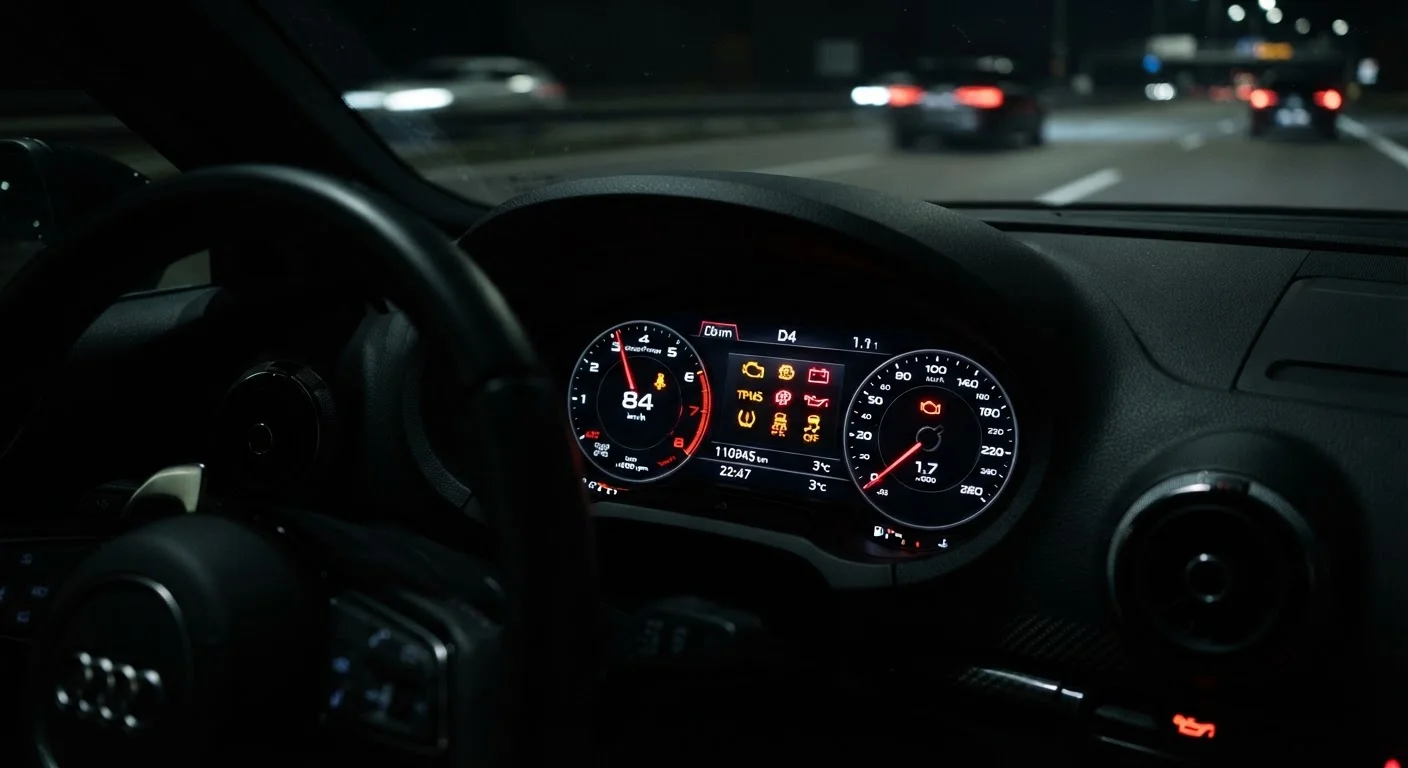
Your dashboard uses a traffic-light logic: red means stop or act immediately, amber/yellow means investigate soon, and green or blue means a system is active (not a problem). White lights typically signal an active mode, like a door ajar. Understanding this color code alone helps you prioritize correctly before you even know what the symbol represents.
Most modern vehicles share standardized icons defined by the Society of Automotive Engineers, so a battery icon looks the same across makes and models. Still, your owner's manual is the definitive guide for your specific vehicle - keep it in the glovebox or bookmark the digital version.
OBD-II
On-Board Diagnostics, version II - the standardized system used in most vehicles sold after 1996 to monitor engine and emissions performance. It stores error codes that a scan tool can read to identify problems.
TPMS
Tire Pressure Monitoring System - sensors inside the wheels that alert the driver when tire pressure drops below a safe threshold.
Alternator
A generator driven by the engine that keeps the battery charged while the car is running. A failing alternator can cause the battery warning light to appear.
Catalytic Converter
An emissions control device in the exhaust system that converts harmful gases into less harmful ones. Engine misfires can damage it quickly, which is why a flashing check engine light is treated as urgent.
ABS
Anti-lock Braking System - a safety feature that prevents wheels from locking up during hard braking, allowing the driver to steer while stopping.
The Warning Lights You're Most Likely to See
Here's a plain-English rundown of the most common dashboard symbols and what each one is actually telling you.
| Red warning light | Stop or act immediately - serious risk to safety or vehicle |
| Amber/yellow warning light | Investigate within days - system fault, not yet an emergency |
| Green or blue indicator | Active system (e.g., headlights on, cruise control active) - not a fault |
| Flashing check engine light | Active engine misfire - pull over promptly, do not continue driving |
| Oil pressure warning response | Stop engine immediately, check oil level - risk of severe engine damage |
| Diagnostic scan cost | Often free or low-cost at many auto shops; reads stored error codes |
Engine Warning (Check Engine Light)
This amber light - usually shaped like an engine outline - is the one drivers dread most. It can signal anything from a loose gas cap to a misfiring cylinder. A steady check engine light means you should schedule a diagnostic scan within a few days. A flashing check engine light is more urgent: it typically indicates an active engine misfire that can damage your catalytic converter. Pull over safely and call a mechanic.
Battery Warning
A red battery icon means the charging system isn't keeping up. This could be a failing alternator, a weak battery, or a broken drive belt. Don't ignore it - if the alternator stops charging, the car can stall mid-drive. Limit electrical loads (radio, A/C) and head to a shop promptly.
Oil Pressure Warning
A red oil can symbol is one of the most serious lights on any dashboard. Low oil pressure can cause catastrophic engine damage within minutes. Pull over safely, shut off the engine, and check the oil level. If the level is fine but the light stays on after restarting, do not drive - have the vehicle towed.
Temperature Warning
A thermometer in liquid means your engine is overheating. Pull over, turn off the engine, and let it cool - never open the radiator cap on a hot engine. Driving while overheated can warp cylinder heads, an expensive repair. See our guide on interpreting vehicle warning signs for additional context on urgent symptoms.
Tire Pressure (TPMS)
This amber symbol looks like a flat tire with an exclamation mark. It activates when one or more tires drops significantly below the recommended pressure. Check all four tires with a gauge before assuming it's a slow leak - cold weather alone can trigger this light. For help understanding tire specifications, see our tire sidewall numbers guide.
Brake System Warning
A red circle with an exclamation point (or the letter P in a circle) is the brake warning light. If the parking brake is released and this light is on, have your brake fluid level and brake system inspected immediately. Brakes are not optional - don't delay.
Lights That Can Wait (But Shouldn't Be Ignored)
Some amber lights indicate a system that needs attention within days or weeks rather than right now. These include the traction control light (a car with squiggly lines beneath it), which may mean the system is simply engaged on a slippery road, or could indicate a sensor fault. The ABS light means your anti-lock braking system has a fault - your regular brakes still work, but ABS assistance won't activate in an emergency stop. The service engine soon or wrench icon typically indicates a scheduled maintenance interval, not an emergency.
Whenever you're unsure about a used vehicle's history or a warning light that's been present for a while, reviewing the vehicle's past records can provide helpful context. Our guide to reading a used car's history report explains which sections to focus on.
When in doubt, a diagnostic scan at a shop - often available for free or low cost - reads the error codes stored by your car's computer and removes the guesswork entirely. That's always a better option than ignoring a lit symbol and hoping for the best.