

| First letter (P, LT, ST) | Vehicle type designation (Tire and Rim Association standard) |
| Three-digit number (e.g., 215) | Section width in millimeters |
| Two-digit ratio (e.g., 65) | Aspect ratio - sidewall height as % of width |
| Construction letter (R/D/B) | Radial, diagonal, or belted bias |
| Wheel diameter (e.g., 17) | Rim size in inches |
| Load index (e.g., 98) | Max load per tire via standardized chart |
| Speed rating (e.g., H) | Max sustained speed the tire is rated for |
| DOT date code | Week and year of manufacture (4 digits) (U.S. Department of Transportation) |
The Sidewall Is a Data Label for Your Tires
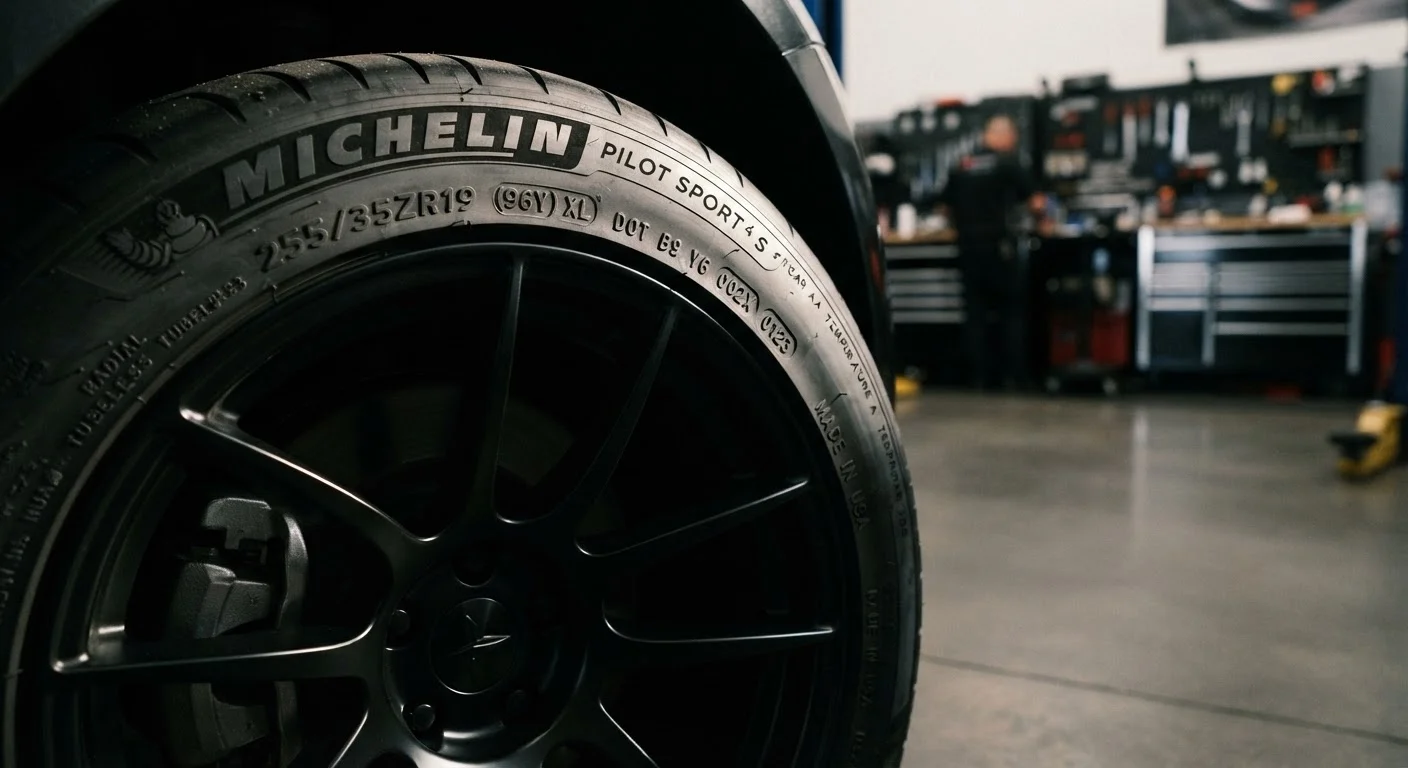
That long string of letters and numbers molded into the side of your tire isn't random. It's a standardized code - set by the TRA and adopted industry-wide - that tells you exactly what the tire is designed to do. Understanding it takes about five minutes, and it can save you from installing the wrong tire or driving on something unsafe.
A typical code looks like this: P215/65R17 98H. Each segment has a specific meaning. Let's walk through it left to right.
Section Width
The distance across a tire from sidewall to sidewall at its widest point, measured in millimeters. This is the first number in the tire size code.
Aspect Ratio
The sidewall height expressed as a percentage of the tire's section width. A lower aspect ratio means a shorter sidewall and typically a firmer ride.
Load Index
A numerical code that corresponds to the maximum weight a single tire can safely support. It maps to a standardized chart - higher numbers indicate greater load capacity.
Speed Rating
A letter code indicating the maximum sustained speed a tire is engineered to handle. It reflects structural design limits, not a driving recommendation.
UTQG
Uniform Tire Quality Grading - a government-mandated rating system covering treadwear durability, wet traction, and heat resistance. Ratings are comparative, not absolute measures of miles or performance.
DOT Date Code
A four-digit number at the end of a tire's DOT serial number indicating when the tire was manufactured. The first two digits are the week, the last two are the year.
Breaking Down the Code, Segment by Segment
The prefix letter (P, LT, or ST): This tells you the tire's intended vehicle type. P stands for passenger vehicle. LT means light truck. ST is for special trailer use. Some tires have no prefix - those are metric tires built to European standards and may have slightly different load ratings than P-metric tires of the same size.
The three-digit number (e.g., 215): This is the tire's section width in millimeters - measured from sidewall to sidewall at the tire's widest point. A higher number means a wider tire.
The two-digit number after the slash (e.g., 65): This is the aspect ratio - the height of the tire's sidewall expressed as a percentage of the section width. A 65 aspect ratio means the sidewall height is 65% of 215 mm, which works out to about 140 mm. Lower aspect ratios mean a shorter, sportier sidewall; higher ratios mean a taller, more cushioned ride.
The construction letter (R, D, or B): R stands for radial, by far the most common construction in passenger vehicles today. D means diagonal (bias-ply), used on some trailers and older vehicles. B denotes belted bias construction, now rare.
The two-digit wheel diameter (e.g., 17): This is the rim diameter in inches - the size wheel the tire is designed to fit. Getting this wrong means the tire literally won't mount.
The load index (e.g., 98): A number that maps to a maximum load capacity per tire. A load index of 98 corresponds to 1,653 lbs. per tire. These numbers follow a standardized chart - the higher the number, the more weight the tire can safely carry.
The speed rating (e.g., H): A letter indicating the maximum sustained speed the tire is rated for. H-rated tires are rated for up to 130 mph. Other common ratings include S (112 mph), T (118 mph), V (149 mph), and W (168 mph). This isn't a recommendation to drive at those speeds - it reflects the tire's structural design limits.
| First letter (P, LT, ST) | Vehicle type designation (Tire and Rim Association standard) |
| Three-digit number (e.g., 215) | Section width in millimeters |
| Two-digit ratio (e.g., 65) | Aspect ratio - sidewall height as % of width |
| Construction letter (R/D/B) | Radial, diagonal, or belted bias |
| Wheel diameter (e.g., 17) | Rim size in inches |
| Load index (e.g., 98) | Max load per tire via standardized chart |
| Speed rating (e.g., H) | Max sustained speed the tire is rated for |
| DOT date code | Week and year of manufacture (4 digits) (U.S. Department of Transportation) |
Other Markings Worth Knowing
Beyond the main size-and-rating string, sidewalls often carry additional information that's easy to overlook.
DOT code: The Department of Transportation serial number includes a four-digit date code at the end - the first two digits are the week of manufacture, the last two are the year. DOT XXXX 2319 means the 23rd week of 2019. Tires older than six years are generally worth inspecting closely, even if tread looks fine; rubber degrades over time regardless of use.
UTQG ratings: The Uniform Tire Quality Grading system shows three values: treadwear (a relative index - 400 lasts roughly twice as long as 200 under test conditions), traction (AA, A, B, or C - wet braking performance), and temperature (A, B, or C - heat resistance at speed).
Max inflation pressure: This is the maximum cold inflation pressure the tire structure can handle - not the recommended pressure for your vehicle. Your vehicle's recommended tire pressure is found on the sticker inside the driver's door jamb or in the owner's manual. For more on why this distinction matters, see our guide to tire pressure, tread, and rotation.
If your TPMS warning light comes on, knowing your sidewall markings helps you confirm you have the right replacement - and that it's inflated correctly. Learn more about what dashboard warnings mean in our dashboard warning lights explainer.