

Key Takeaways
Why Fluids Matter More Than Most Drivers Realize
Gas gets you down the road, but fluids keep everything working while you're on it. Engine oil lubricates moving metal parts. Coolant prevents your engine from overheating. Brake fluid transfers the force of your foot to the brake pads. Without these systems operating correctly, even a well-kept car can fail - sometimes without much warning.
The good news is that fluid maintenance doesn't require a mechanic's skill set. Understanding what each fluid does and roughly when it needs attention puts you in a much stronger position to catch small problems before they become expensive ones. If you want a broader overview before diving in, this plain-language fluid guide is a useful starting point.
Engine Oil: The One You Can't Ignore
Engine oil lubricates dozens of metal components that are constantly moving against each other at high speed. Without adequate lubrication, friction generates heat that can warp or seize engine parts - damage that is often irreversible.
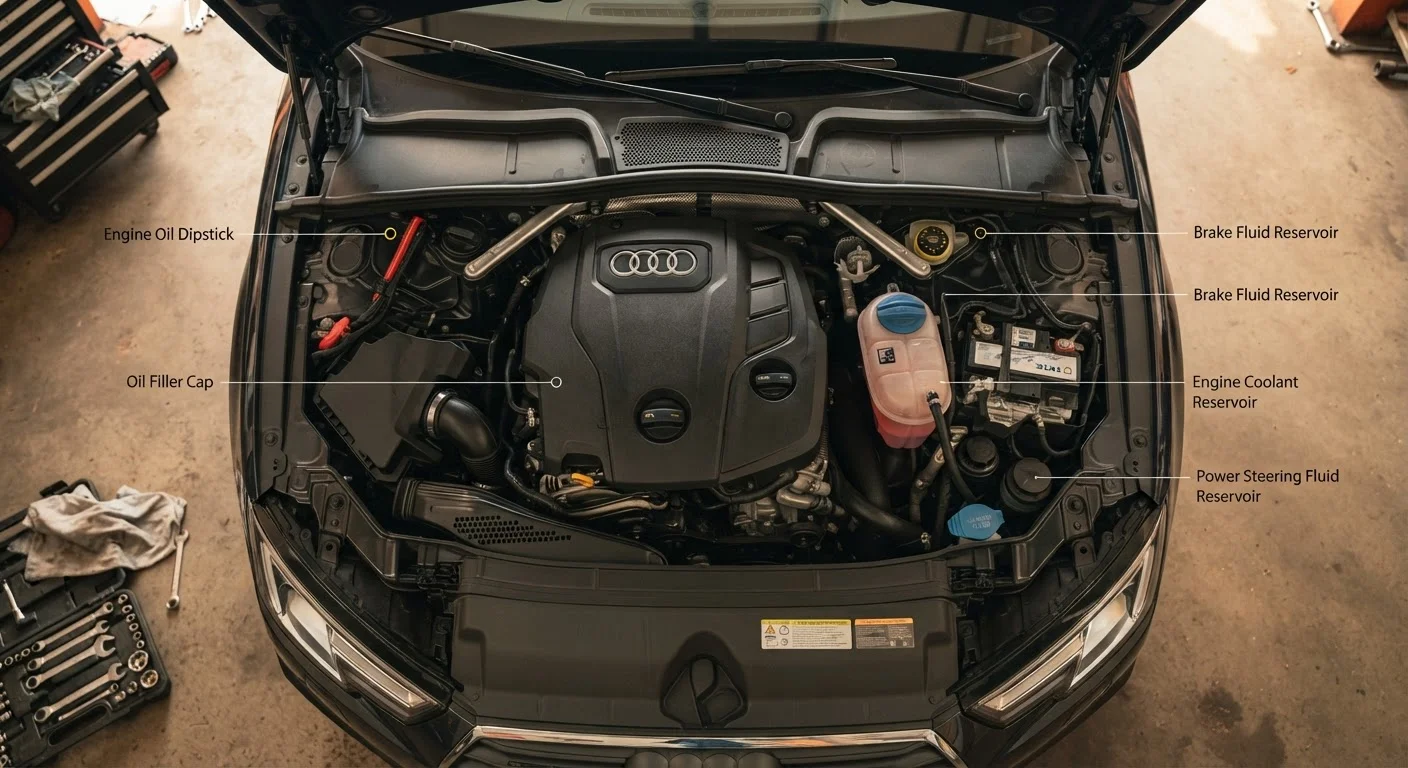
Check your oil level monthly using the dipstick (your owner's manual shows where it is). Wipe it clean, reinsert it fully, then pull it again to get an accurate reading. The oil should fall between the two marks and look amber to light brown. Very dark, gritty oil is a sign it's overdue for a change.
Oil change intervals vary significantly by vehicle and oil type. Many modern cars using full synthetic oil can go 7,500 to 10,000 miles or more between changes - the old "every 3,000 miles" rule is largely outdated for today's engines. For more on that, this piece on maintenance myths breaks down what the evidence actually shows. Always follow your manufacturer's recommendation, which you'll find in the owner's manual or the vehicle's onboard maintenance reminder system.
When checking oil, always do it with the engine off and the car parked on level ground - an idling engine or a sloped driveway can give you a false reading on the dipstick.
Oil circulates when the engine runs, so the dipstick won't give an accurate level until the oil has settled back into the pan, typically a few minutes after shutoff.
Never open the radiator cap on a warm engine - wait at least 30 minutes after driving before checking coolant directly at the radiator.
The cooling system is pressurized, and opening the cap while the engine is hot can cause scalding coolant to spray out forcefully, causing serious burns.
Coolant: Keeping Temperatures in Check
Coolant - sometimes called antifreeze - circulates through your engine and radiator to regulate operating temperature. It prevents the engine from overheating in summer and the coolant itself from freezing in winter.
Most vehicles have a translucent overflow reservoir near the radiator where you can check the level without opening the radiator cap. Look for markings labeled "MIN" and "MAX" and make sure the level sits between them. The fluid itself is typically green, orange, or pink depending on the formulation - mixing different types can cause problems, so always top off with the type specified in your owner's manual.
Coolant doesn't get "used up" like oil, but it does degrade over time and can become acidic, which corrodes cooling system components. Many manufacturers recommend a coolant flush every 30,000 to 50,000 miles, though some longer-life formulas extend that interval.
Brake Fluid: Small Reservoir, Big Consequences
Brake fluid is a hydraulic fluid - when you press the brake pedal, pressure through the fluid line activates the brake pads at each wheel. Because it operates under pressure and heat, its condition directly affects how well your brakes respond.
One important characteristic of most brake fluid (classified as DOT 3, DOT 4, or DOT 5.1) is that it's hygroscopic, meaning it absorbs moisture from the air over time. As water content rises, the fluid's boiling point drops. Under hard braking, degraded fluid can boil inside the lines - a condition called brake fade - which can significantly reduce stopping power.
Never Ignore a Brake System Warning
If your brake warning light comes on or your brake pedal feels unusually soft or spongy, stop driving and have the system inspected by a qualified mechanic before continuing. A low brake fluid level can indicate a leak in the hydraulic system - not just a need for a top-off. Do not treat brake issues as a DIY observation and continue driving.
Check the reservoir (usually a small, translucent cap near the firewall on the driver's side) periodically. If the level is noticeably low, have a mechanic inspect the system - a significant drop can indicate a leak. Most manufacturers recommend replacing brake fluid every two years or per the interval in your owner's manual, regardless of mileage.
Transmission Fluid, Power Steering, and Windshield Washer
Transmission fluid lubricates the gears and internal components of your transmission, whether it's automatic, manual, or a CVT. Automatic transmissions are particularly sensitive to fluid condition - degraded fluid can cause rough shifting or long-term damage. Understanding your transmission type helps clarify what fluid and interval applies to your vehicle. Some sealed transmissions are labeled "lifetime fill" by manufacturers, but many mechanics recommend periodic changes regardless, especially on higher-mileage vehicles.
Power steering fluid (in vehicles with hydraulic power steering) helps make turning the wheel easier. Many newer vehicles use electric power steering and don't have this fluid at all. If your car does have a power steering reservoir, check it during routine inspections and top off with the correct type if needed.
Windshield washer fluid is the easiest to maintain - just keep it filled. Use a washer fluid formulated for your climate; plain water can freeze in the reservoir and lines during winter months.
Building a Simple Fluid Check Habit
The most practical approach is to check your fluids on a regular schedule rather than waiting for a warning light. Warning lights are a safety net, not a maintenance plan - by the time one illuminates, the problem may already be affecting performance.
A reasonable routine: check engine oil and coolant level monthly. Inspect brake and transmission fluid every three months or when you get an oil change. Refill washer fluid as needed. Keep a copy of your owner's manual in the car - it lists the correct fluid specifications, which matter as much as the quantity.
If your car is approaching or past 100,000 miles, fluid maintenance becomes even more important. Maintenance needs shift on high-mileage vehicles, and staying ahead of fluid changes is one of the most cost-effective ways to extend the life of an older car. And while you're building good habits, don't overlook tires - tire pressure and tread checks pair naturally with a fluid inspection routine.