

Key Takeaways
Why These Myths Persist
Car care advice spreads by word of mouth, and old rules tend to stick long after the technology that created them has changed. A tip that was genuinely useful in 1975 gets passed down through generations without anyone checking whether it still applies. The result is that many drivers spend money on unnecessary services or follow routines that made sense for their grandparents' cars but do little for a modern vehicle.
None of this means maintenance doesn't matter - it absolutely does. What it means is that the right maintenance, done at the right interval, is what protects your investment. For a broader look at habits that do cause real long-term damage, see our piece on habits that quietly shorten a car's life.
Myth
You should let your engine warm up for several minutes before driving, especially in cold weather.
Fact
Modern fuel-injected engines reach operating temperature faster by being driven gently than by sitting at idle.
This rule made sense for carbureted engines, which were common before the 1980s. Those engines needed a warm-up period to run a proper fuel-air mixture. Today's fuel-injected engines adjust automatically from the moment they start. Extended idling in cold weather wastes fuel, increases engine wear by letting combustion byproducts build up in the oil, and doesn't warm the transmission, wheel bearings, or tires at all. A slow, easy start for the first minute or two is all most modern vehicles need.
Myth
You need to change your oil every 3,000 miles, no exceptions.
Fact
Most modern vehicles are engineered for oil change intervals of 5,000 to 10,000 miles or more, depending on oil type and driving conditions.
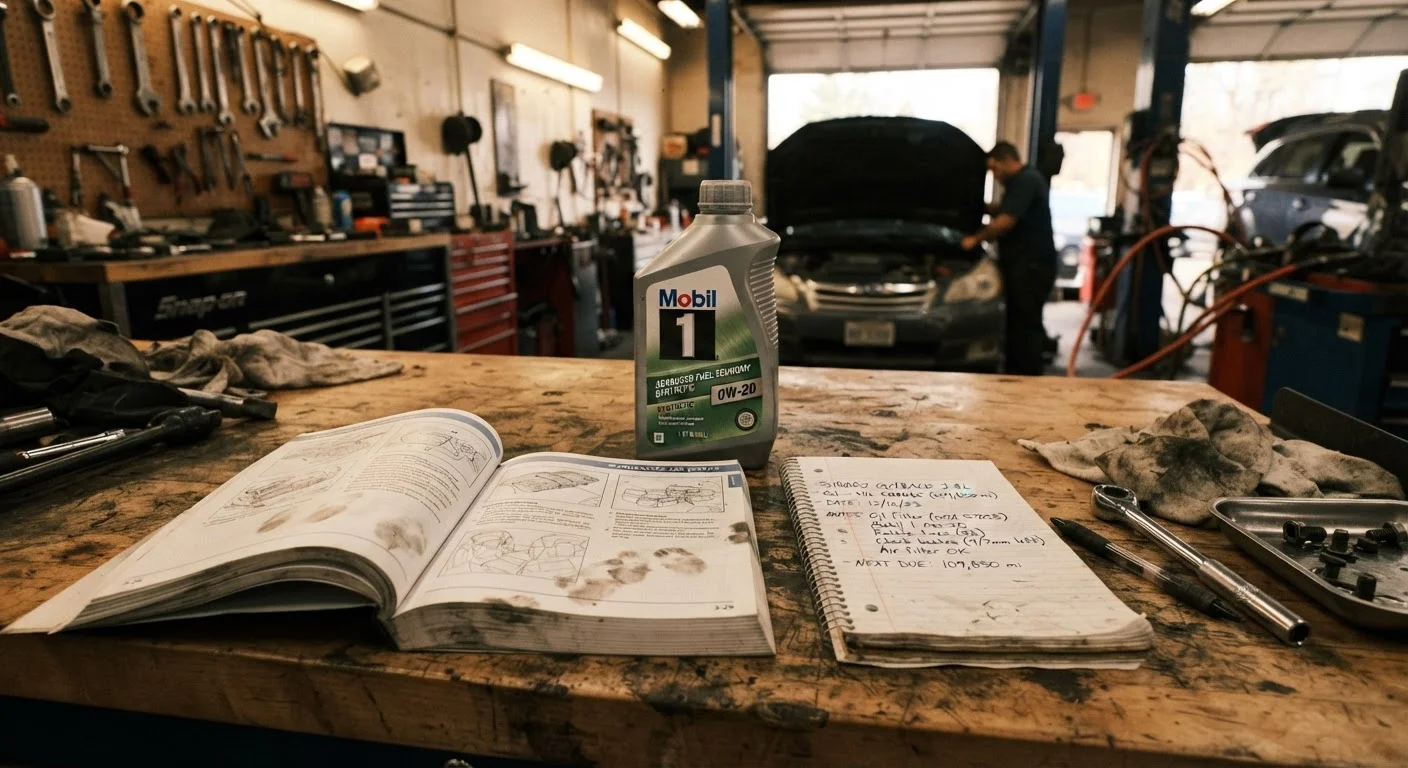
The 3,000-mile rule became conventional wisdom during an era of older engine designs and conventional motor oil formulations. Modern engines are built to tighter tolerances, and synthetic and synthetic-blend oils last significantly longer without breaking down. Many manufacturers now set intervals at 7,500 or even 10,000 miles for normal driving. Your owner's manual and, on many vehicles, an onboard oil life monitoring system, will tell you what interval actually applies to your car. See our guide to synthetic vs. conventional oil for more on how oil type affects change intervals.
Myth
Premium gasoline gives any car better performance and fuel economy.
Fact
Premium fuel only benefits engines that require or recommend it - using it in a standard engine produces no measurable gain.
Premium fuel has a higher octane rating, which resists premature ignition (called engine knock) in high-compression or turbocharged engines. If your car's manual says "premium required," use it. If it says "premium recommended," standard fuel is typically fine for everyday driving with a possible minor efficiency trade-off under heavy load. If your manual specifies regular unleaded, paying more for premium is simply wasted money - your engine's computer is not designed to take advantage of it.
Myth
The number on the tire sidewall is the correct inflation pressure for your tires.
Fact
The number on the sidewall is the maximum pressure the tire can safely hold - the correct inflation is on a sticker inside your driver's door jamb.
Inflating to the sidewall maximum typically overinflates the tire, which reduces the contact patch with the road, increases wear in the center of the tread, and makes the ride harsher. The recommended pressure printed on the door placard (or in your owner's manual) is calibrated to your specific vehicle's weight, suspension, and handling targets. Check pressure when tires are cold - meaning the car has been parked for at least three hours - for an accurate reading. Our article on tire pressure, tread, and rotation covers this in full detail.
Myth
You must get your oil changed at a dealership to keep your warranty valid.
Fact
Under federal law in the United States, manufacturers generally cannot require you to use their dealership for routine maintenance to keep your warranty in effect.
The Magnuson-Moss Warranty Act provides consumer protections that generally prevent manufacturers from voiding a warranty simply because you used an independent shop or did maintenance yourself - provided you follow the manufacturer's specified intervals and use fluids meeting their standards. Keep records of every service, including receipts and dates, regardless of where the work is done. Keeping a maintenance log is one of the simplest ways to protect yourself if a warranty dispute ever arises.
How to Know What Your Car Actually Needs
The single best maintenance resource you have costs nothing and is already in your glove box: your owner's manual. It contains a service schedule built around your specific engine, transmission type, and even anticipated climate. Many drivers have never opened it. Our guide to reading your owner's manual walks through exactly how to find and use that schedule.
If your vehicle has an oil life monitoring system - a dashboard indicator that tracks engine conditions rather than just mileage - trust it. These systems account for short trips, high temperatures, and other real-world factors that affect oil degradation more accurately than a fixed interval can.
Your Owner's Manual Overrides Everything
No general rule of thumb - including anything in this article - should take priority over the maintenance schedule in your vehicle's owner's manual. That schedule is engineered specifically for your engine, transmission, and driving conditions. Following it is the single most reliable way to protect your car and your warranty.
Drivers with higher-mileage vehicles should also be aware that maintenance needs can shift after 100,000 miles. Our article on high-mileage vehicle maintenance explains what changes and why.
Don't Ignore Actual Warning Signs
Debunking outdated rules doesn't mean skipping maintenance altogether. Low oil pressure lights, unusual engine sounds, or fluid leaks are genuine warnings that need prompt attention. Stretching intervals is fine when your manual supports it - ignoring your car's signals is not. If something seems off, have a qualified mechanic take a look.