

Key Takeaways
Our Verdict
Raised beds deliver standout advantages for gardeners with poor native soil, limited mobility, or smaller yards - but they require more upfront investment. In-ground gardens are a cost-effective, scalable option when your soil is workable and you have the space and time to condition it. Neither approach is universally superior; the best choice reflects your specific yard conditions, physical needs, and long-term goals.
| Best for | Recommended |
|---|---|
| Gardeners with compacted, rocky, or contaminated native soil | Raised Beds |
| Those working within strict time or cost constraints | In-Ground Planting |
| Gardeners with back or knee issues who need accessible planting | Raised Beds |
| Growing large quantities of deep-rooted or sprawling crops | In-Ground Planting |
The Core Difference Between These Two Approaches
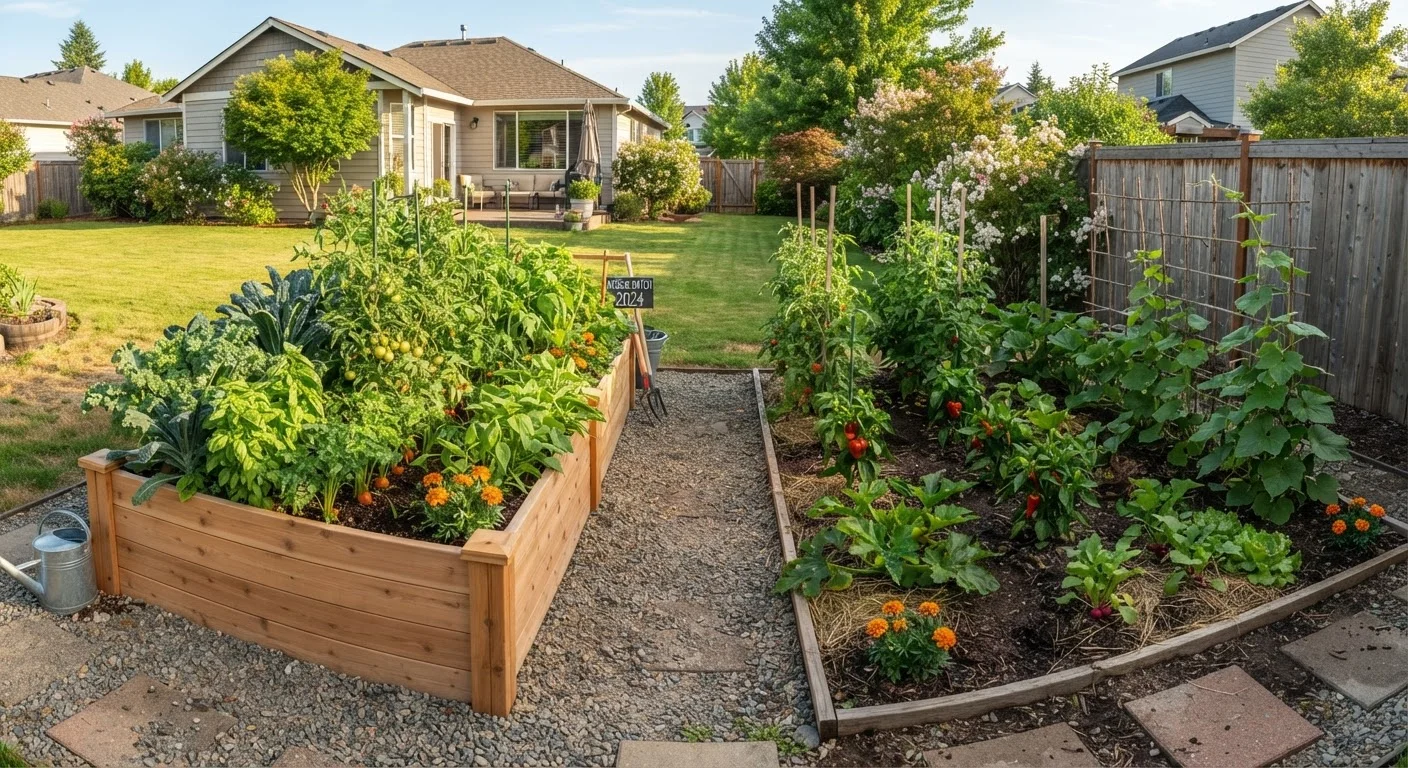
Raised beds are enclosed growing areas - typically built from wood, galvanized metal, or composite materials - filled with a custom soil blend placed on top of or above your existing ground. In-ground planting means amending and working directly with the native soil in your yard.
Both methods grow vegetables, herbs, and flowers successfully. The real question is which one suits your soil, your physical situation, and your available budget. If you're weighing broader garden setup decisions at the same time, our guide to starting a vegetable garden from the ground up walks through site selection and planning in greater detail.
Raised Beds: Advantages and Limitations
The single biggest advantage of raised beds is soil control. You fill them entirely with a mix you choose - typically a blend of topsoil, compost, and an aerating material like perlite - which means you're not fighting clay, compaction, or contamination from the start. This makes raised beds particularly valuable in urban and suburban yards where native soil quality is often poor.
Raised beds also drain more efficiently, warm up earlier in spring (which extends your growing season), and tend to have fewer weed seeds in the initial fill. Their defined borders make it easier to practice companion planting strategies and rotate crops systematically.
On the physical side, a bed built 12-18 inches tall significantly reduces bending and kneeling - a meaningful benefit for gardeners with back, hip, or knee issues.
The limitations are real, though. Raised beds cost more upfront: lumber or metal, hardware, and quality fill soil add up quickly, especially for multiple beds. They also dry out faster than in-ground plots, which means more frequent watering in hot weather. And deep-rooted crops like winter squash or full-size tomatoes do better with more unrestricted root run than a standard raised bed provides.
| Raised Beds | In-Ground Planting | |
|---|---|---|
| Upfront Cost | Higher - materials and fill soil | Lower - amendments only |
| Soil Control | Full control over soil mix | Dependent on native soil quality |
| Weed Pressure | Lower initially | Higher - existing seed bank |
| Drainage | Excellent - can dry out quickly | Varies with soil type |
| Season Length | Longer - warms up faster | Standard - follows ground temp |
| Physical Accessibility | High - reduced bending needed | Lower - requires kneeling or bending |
| Scalability | Limited by build cost | Easily expanded |
| Deep-Rooted Crops | Restricted root depth | Unrestricted root growth |
In-Ground Planting: Advantages and Limitations
In-ground gardening is the lower-barrier entry point for most homeowners. There are no materials to buy beyond amendments like compost, and you can scale the garden as large as your yard allows without additional construction. Deep-rooted crops thrive here - roots can travel down several feet to find moisture and nutrients, which means plants may be more resilient during dry stretches.
The challenge is that most American yards don't start with ideal native soil. Heavy clay drains poorly and compacts easily; sandy soil drains too fast and holds few nutrients. Improving in-ground soil takes consistent effort over multiple seasons - regular additions of compost, proper aeration, and attention to soil biology. Good mulching practices help retain moisture and build organic matter over time, but results aren't immediate.
Weed pressure tends to be higher in-ground, since you're working in soil that already holds a seed bank. Soil-borne pests and diseases can also persist from season to season if the same area is planted repeatedly without crop rotation.
How to Decide Based on Your Yard
Start by evaluating your native soil. Dig down about 12 inches in a few spots - if you hit hardpan, heavy clay, or rocky ground within the first few inches, raised beds will likely be less frustrating from the start. If the soil crumbles loosely and has some dark color or earthworm activity, in-ground planting with amendments is a reasonable path.
Consider your budget. A single 4×8 raised bed can cost anywhere from $50 to well over $200 depending on materials and fill soil. If you're planning a large garden, that cost multiplies fast. In-ground planting's main cost is time and soil amendments - both more manageable for many households.
Think about physical accessibility. If bending or kneeling is uncomfortable or painful, raised beds at an appropriate height can make the difference between a sustainable gardening habit and one that stops after a season.
Finally, consider what you're growing. If you want a diverse vegetable garden including crops like sprawling cucumbers, melons, or corn, in-ground rows give you more practical space. For herbs, salad greens, compact tomato varieties, and flowers, raised beds are an excellent fit. Many experienced gardeners use a hybrid approach - raised beds for intensive, high-value crops and in-ground space for larger plants. This mirrors the kind of thoughtful trade-off analysis you'd apply to other yard decisions, like choosing between grass seed and sod for a new lawn.