

Key Takeaways
Start here
Choosing the Right Spot
Next
Understanding and Preparing Your Soil
Then
Planning What to Grow
When you're ready
Planting and Early Care
Ongoing
Watering, Feeding, and Keeping Pests at Bay
Choosing the Right Spot
Site selection is the single most consequential decision you'll make as a new gardener. Get it right and nearly everything else becomes easier. Get it wrong, and even the best seeds and soil amendments can't compensate.
Most vegetables require a minimum of six hours of direct sunlight daily - fruiting crops like tomatoes, peppers, and squash prefer eight or more. Walk your yard at different times of day and note where sun falls and where shade lingers. Avoid planting under large trees, which block light and compete aggressively for water and nutrients through their root systems.
Beyond sunlight, look for a spot with reasonable drainage. Vegetables don't thrive in standing water; soggy soil suffocates roots and invites disease. If your yard has a low-lying area that holds water after rain, choose a higher spot or plan for a raised bed instead.
Proximity to a water source matters more than most beginners expect. Carrying a hose or watering can across a long distance quickly becomes a chore that gets skipped. Locating your garden within easy reach of an outdoor spigot removes a real barrier to consistent care.
This article is part of a larger resource - the complete year-round homeowner's lawn and garden guide - which covers everything from soil prep to seasonal upkeep for the whole yard.
Understanding and Preparing Your Soil
Healthy soil is the foundation of a productive garden. Before you plant a single seed, it's worth taking time to understand what you're working with.
pH
A measure of how acidic or alkaline your soil is, rated on a scale from 0 to 14. Most vegetables grow best in slightly acidic to neutral soil, around pH 6.0-7.0.
Compost
Decomposed organic matter - kitchen scraps, yard waste, leaves - that improves soil structure, fertility, and drainage when mixed into garden beds.
Hardening off
The process of gradually introducing indoor-started seedlings to outdoor conditions over about a week, so they adjust to sunlight, temperature swings, and wind before being permanently transplanted.
Mulch
A layer of material - straw, wood chips, shredded leaves - spread over soil to retain moisture, regulate temperature, and reduce weed growth around plants.
Cool-season crops
Vegetables that grow best in cooler temperatures and can tolerate light frost, such as lettuce, spinach, peas, and broccoli. These are planted in early spring or fall.
Warm-season crops
Vegetables that require warm soil and frost-free conditions to thrive, including tomatoes, peppers, cucumbers, and squash. These are planted after the last frost date in your area.
The easiest starting point is a soil test, available through most county cooperative extension offices for a modest fee. A test reveals your soil's pH level and nutrient profile, so you know exactly what amendments - if any - are needed. Vegetable gardens generally thrive in slightly acidic to neutral soil, roughly pH 6.0 to 7.0.
For most homeowners, the practical answer to poor soil is compost. Working 2-3 inches of finished compost into the top 8-12 inches of soil improves drainage in heavy clay, boosts water retention in sandy soils, and feeds soil biology. If you're starting with particularly poor or compacted ground, a raised bed filled with a quality garden mix is a practical shortcut.
Avoid the temptation to till repeatedly. Excessive tilling disrupts beneficial soil structure and the organisms that help plants absorb nutrients. Till once to break up compaction and incorporate amendments, then let the soil settle before planting.
Planning What to Grow
Resist the urge to plant everything that catches your eye in the seed catalog. A focused first garden - three to five crops you'll actually eat - is far more manageable than an ambitious spread that becomes overwhelming by midsummer.
Start with crops that match your climate and growing season. Cool-season vegetables like lettuce, spinach, peas, and kale tolerate frost and do best planted in early spring or fall. Warm-season crops - tomatoes, cucumbers, beans, peppers, and squash - need frost-free conditions and warm soil, typically planted after your area's last frost date.
Consider how much each plant will produce relative to the space it occupies. Zucchini, for instance, is prolific and sprawling; a single or two plants can supply more than most families can eat. Cherry tomatoes reward you with continuous harvests from a compact footprint. Radishes mature in as little as three weeks, making them satisfying for impatient first-timers.
Once you have a handle on the basics, companion planting is a natural next step - some plant pairings actively deter pests and improve yields without any extra products or effort.
Planting and Early Care
Whether you start from seed or purchase transplants, timing and technique both matter. Seeds started indoors need to be hardened off - gradually acclimated to outdoor conditions over seven to ten days - before transplanting, or the shock of full sun and wind can set them back significantly.
When planting outdoors, follow spacing guidelines on seed packets or plant tags. Crowding plants creates competition for light, water, and nutrients, and reduces air circulation in ways that encourage fungal disease. It can feel counterintuitive to leave so much bare soil between seedlings, but they'll fill in quickly.
Water new transplants thoroughly at planting and keep the soil consistently moist for the first week or two while roots establish. A thin layer of mulch - straw, shredded leaves, or wood chips - laid around plants (but not touching stems) conserves moisture, moderates soil temperature, and suppresses weeds.
Keep a Simple Garden Journal
Jotting down what you planted, when you planted it, and how it performed takes just a few minutes but pays dividends over time. Next season, you'll know exactly which varieties did well in your conditions and which weren't worth repeating. Even a basic notebook works perfectly for this.
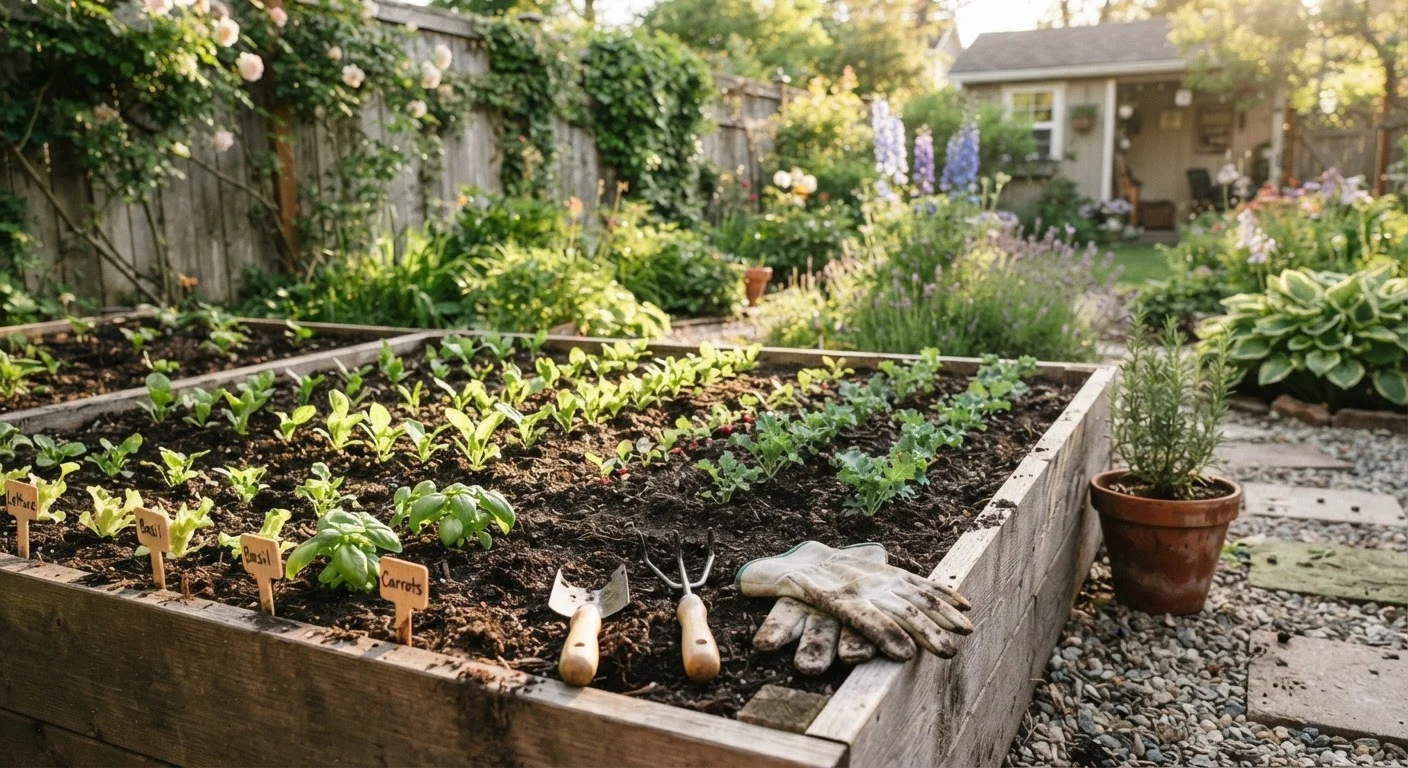
Label everything as you plant. Memory fades quickly once the garden fills in, and knowing exactly what you've planted where helps you track performance and plan better next season.
Watering, Feeding, and Keeping Pests at Bay
Consistent care through the growing season is what separates a thriving garden from a struggling one. Fortunately, none of it is complicated once you establish a simple routine.
Watering: Aim for about one inch per week, delivered slowly and deeply rather than in frequent shallow sprinkles. Deep watering pushes roots down into the soil, making plants more resilient during dry stretches. Water at the base of plants in the morning so foliage dries quickly - wet leaves overnight invite fungal problems.
Feeding: If your soil was well amended with compost at the start, you may not need supplemental fertilizer for the first several weeks. As plants begin to flower and fruit, a balanced general-purpose fertilizer applied per label directions can support continued production. Avoid over-fertilizing with nitrogen, which encourages leafy growth at the expense of fruit.
Pest management: Inspect plants regularly - especially the undersides of leaves - and deal with problems early when they're easiest to address. Hand-picking insects, removing damaged foliage, and encouraging beneficial insects with a variety of flowering plants nearby are practical first-line strategies. Understanding which plants help each other is a valuable skill; our guide to companion planting strategies covers this in detail.
A vegetable garden rewards attentiveness more than expertise. Check in regularly, respond early to what you observe, and you'll be harvesting before you know it.