

Key Takeaways
Why Plants Benefit from Good Neighbors
The idea behind companion planting is straightforward: different plant species interact with the soil, insects, and each other in ways that can be mutually beneficial - or occasionally harmful. Some release chemical compounds through their roots or leaves that repel insects. Others attract predatory insects that feed on common garden pests. Still others physically modify the growing environment by providing shade, fixing nutrients, or acting as a living mulch.
This isn't gardening folklore. Researchers studying intercropping (growing multiple crops together) have documented measurable benefits in reduced pest pressure, improved soil nitrogen, and in some cases better yields. That said, results vary by climate, soil type, and the specific plant varieties used - so think of companion planting as one useful tool within a broader garden strategy, not a guaranteed fix on its own. For a wider view of seasonal garden care, see our year-round homeowner's lawn and garden guide.
Garden planner or graph paper
Map out plant placement before putting anything in the ground to avoid spacing conflicts.
Trowel or transplanting tool
Used to place seedlings and transplants at the correct depth and spacing.
Soil test kit
Confirms your soil's pH and nutrient levels before adding companions that may affect soil chemistry.
Plant markers or stakes
Label companion groupings so you can track what's working season to season.
How to Set Up Companion Pairings in Your Garden
Whether you're gardening in raised beds or in-ground rows, the steps below walk you through a practical approach to companion planting. If you're still deciding on your garden format, consider reading about raised beds vs. in-ground planting before you finalize your layout - the setup affects how densely you can plant companions.
What you will need
Map your garden bed before planting
Before you put a single seed in the ground, sketch out your garden layout. Note which vegetables you plan to grow, their mature size, and how much sun each area receives. This prevents the common mistake of placing a tall companion - like corn or sunflowers - where it will shade out a low-growing crop that needs full sun.
Use graph paper or a simple drawn grid and assign rough zones. A mapped plan also lets you rotate your companion groupings year to year, which helps prevent soil depletion and disease buildup.
Choose pairings based on specific benefits
Not every plant pairing offers the same advantage. Match companions to the problem you want to solve:
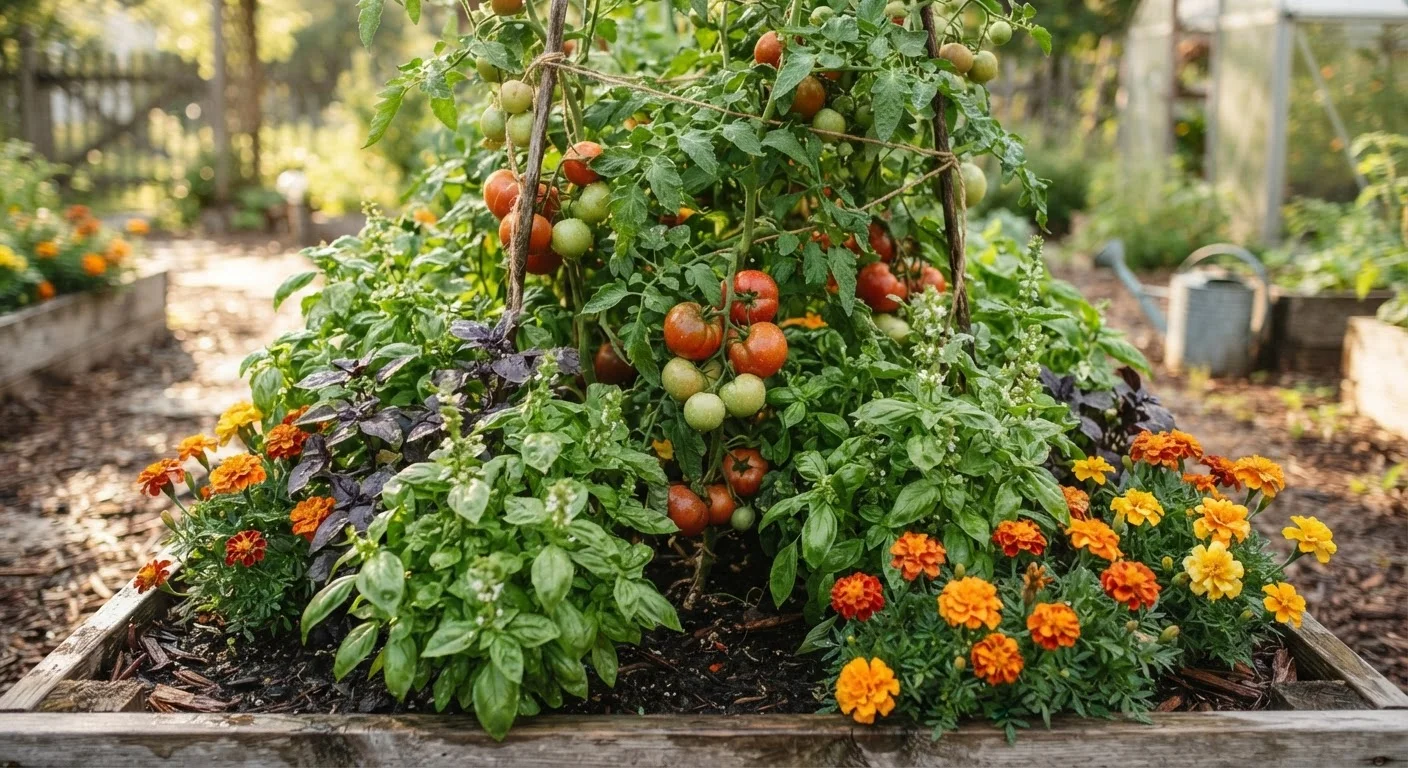
- Pest deterrence: Marigolds planted near tomatoes repel nematodes and certain beetles. Nasturtiums act as trap crops, drawing aphids away from vegetables.
- Pollinator attraction: Borage and phacelia attract bees that improve fruit set on squash, cucumbers, and peppers.
- Soil enrichment: Beans and peas are nitrogen-fixers - they pull nitrogen from the air and deposit it in the soil via root bacteria, benefiting heavy feeders like corn or brassicas planted nearby.
- Shade and weed suppression: Low-growing plants like lettuce or clover can fill bare soil between taller crops, crowding out weeds and retaining moisture.
Apply the Three Sisters method as a foundation
The Three Sisters - corn, beans, and squash - is one of the most well-documented companion planting systems, used for centuries by Indigenous farmers across North America. The system works because each plant fills a different role:
- Corn grows tall and provides a natural trellis for bean vines.
- Beans fix nitrogen in the soil, feeding the corn and squash.
- Squash spreads low to the ground, shading out weeds and retaining soil moisture with its large leaves.
Plant corn first and let it reach about 4-6 inches before adding beans around the base. Add squash a week or two later. This sequencing prevents the plants from competing during their most vulnerable early stages.
Learn the pairings to avoid
Companion planting isn't only about good neighbors - some plants actively inhibit each other. Common pairings to avoid include:
- Fennel and most vegetables: Fennel releases compounds from its roots that suppress the growth of tomatoes, peppers, and many other crops. Keep fennel in its own container or isolated bed.
- Onions and beans: Alliums (onions, garlic, leeks) can stunt bean and pea growth.
- Brassicas and tomatoes: These two plant families compete for similar nutrients and can each suppress the other's development when grown too close.
Monitor, adjust, and rotate each season
Companion planting is an iterative practice. After your first season, review which groupings thrived and which didn't perform as expected. Rotate your companion combinations to different areas of the garden each year - just as you would rotate crops - to prevent soil nutrient depletion and break pest and disease cycles.
Pairing companion planting with good foundational practices amplifies results. Consistent mulching around companion groupings helps retain moisture, regulate soil temperature, and keep weed pressure low throughout the season.
Common Mistakes and How to Avoid Them
Many first-time companion planters make the mistake of treating companion pairings as rigid rules rather than guidelines. Gardening conditions - your local climate, soil quality, pest population, and even the specific cultivar you're growing - all affect outcomes. A pairing that works beautifully in one yard may underperform in another.
A second common mistake is neglecting soil health and expecting companions to compensate. If your soil is severely compacted, depleted, or has an imbalanced pH, even the best companion groupings won't deliver their full benefit. Address your soil's underlying health first, then layer in companion planting as an enhancement. You might also evaluate your fertilizer approach to ensure companions that fix nitrogen aren't being undermined by fertilizer applications that make nitrogen-fixing unnecessary.
Start Small and Expand What Works
If you're new to companion planting, begin with one or two well-established pairings - tomatoes with basil, or beans with corn - and observe the results over a full season. Expanding gradually lets you build real-world knowledge about what works in your specific yard before committing your entire garden to new configurations.