

Key Takeaways
Soil pH
Soil pH is a measure of how acidic or alkaline your soil is, expressed on a scale from 0 to 14. A reading of 7.0 is neutral - values below that indicate acidic soil, and values above it indicate alkaline (or basic) soil. Most lawn grasses and garden vegetables grow best in a slightly acidic range, typically between 6.0 and 7.0.
pH stands for 'potential of hydrogen' and reflects the concentration of hydrogen ions in the soil solution. This concentration directly influences how soil minerals dissolve and become available for plant roots to absorb.
Why pH Is the Hidden Lever in Your Garden
You can water faithfully, fertilize on schedule, and choose quality plants - and still watch them limp along. More often than gardeners expect, the culprit isn't what you're adding to the soil; it's whether the soil can actually deliver it. That's what pH controls.
When pH drifts too far in either direction, nutrients lock up chemically and become inaccessible to plant roots, even if those nutrients are physically present in the ground. Iron, manganese, phosphorus, and calcium all behave differently depending on how acidic or alkaline the soil is. A garden with the wrong pH is like a pantry full of food with a permanently jammed door - everything is there, but nothing gets through.
This is why pH troubleshooting belongs early in any lawn or garden diagnostic. It's part of the foundational soil work covered in the complete year-round homeowner's lawn and garden guide.
Reading the pH Scale
The pH scale runs from 0 (most acidic) to 14 (most alkaline), with 7.0 as the neutral midpoint. For most common lawn grasses and vegetables, the sweet spot falls between 6.0 and 7.0 - mildly acidic. In this range, the widest variety of essential nutrients remain dissolved and accessible in the soil water that roots absorb.
A few plants break the mold. Blueberries and azaleas prefer distinctly acidic conditions around 4.5 to 5.5. Asparagus and many brassicas tolerate, and sometimes prefer, conditions closer to neutral or slightly above. Knowing what you're growing is step one before making any adjustments.
6.0-7.0
Ideal pH range for most lawn grasses and vegetables
Soil scientists and extension specialists broadly agree this range maximizes nutrient availability for the widest variety of common garden plants.
~1 unit
pH shift possible per season with careful amendment
Extension guidelines generally suggest targeting modest, gradual corrections rather than large single-season adjustments to avoid overcorrection.
13
Essential nutrients affected by soil pH
Of the 17 elements considered essential for plant growth, 13 are sourced from soil - and pH influences the availability of nearly all of them.
Soil pH also affects microbial activity. The beneficial bacteria and fungi that decompose organic matter and release nutrients function best in that same mildly acidic zone. Extremes in either direction slow this biological activity, compounding the nutrient-access problem.
How to Test Your Soil
Don't guess. A soil test removes the uncertainty and tells you exactly where you stand. There are two main approaches:
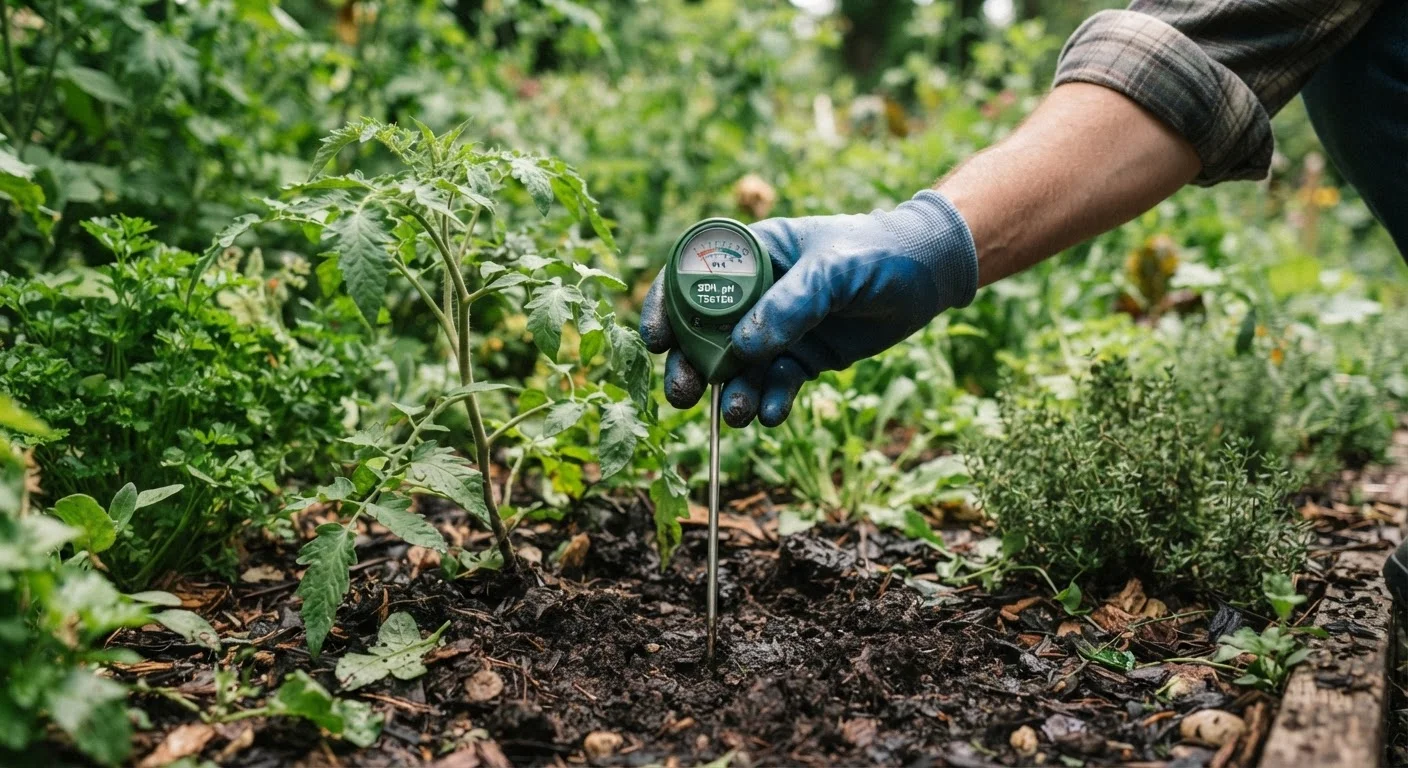
- Home test kits or digital probes: Quick, inexpensive, and good for a general reading. Follow kit instructions carefully - sample from several spots in the area you're assessing and mix the soil for a representative result.
- Cooperative extension service testing: Your local extension office (part of the land-grant university system) typically offers low-cost or subsidized testing. In addition to pH, these tests often measure nutrient levels and organic matter, and they include amendment recommendations specific to your region and crop type.
When collecting a sample, take small plugs from 4 to 6 inches deep across multiple locations in the bed or lawn area. Avoid spots near foundations, compost piles, or recently fertilized patches, as these can skew readings. Air-dry the sample before mailing if using an extension lab.
Correcting Acidic Soil
Soil with a pH below 6.0 is considered acidic. This is common in regions with high rainfall, pine trees, or naturally sandy soils. The standard fix is agricultural lime - ground limestone applied to the soil surface and worked in lightly.
Two common forms are calcitic lime (calcium carbonate) and dolomitic lime (which also adds magnesium). Which one suits your soil depends on your soil test results - dolomitic lime is the better choice if magnesium is also low. Extension offices can help interpret this.
Apply lime in fall when possible. It reacts slowly, and winter moisture helps work it into the soil profile. Expect to retest in three to six months before assuming the job is done. Over-liming is a real risk - raising pH too high creates a new set of nutrient problems, so follow test-based recommendations rather than applying broadly.
Fertilizer choices also matter once pH is corrected. Understanding the what lawn fertilizer labels actually tell you helps you select the right formula after you've addressed pH.
Correcting Alkaline Soil
When pH climbs above 7.5, phosphorus and iron become less available, and plants often show yellowing between leaf veins - a condition called chlorosis. Alkaline soils are common in arid and semi-arid regions of the U.S., and in areas with high-calcium bedrock or heavy clay.
The primary amendment for lowering pH is elemental sulfur. Soil bacteria convert it to sulfuric acid over time, gradually acidifying the zone. The process is slow - it can take six months or more to see meaningful change - and works best in warm, moist soil where microbial activity is high.
Other options include acidifying fertilizers, which combine nutrients with an acidifying action, and incorporating organic matter such as peat moss (though peat carries environmental concerns worth weighing). For very alkaline soils, especially in the Southwest, correcting pH may be an ongoing management task rather than a one-time fix, since irrigation water and native geology keep pushing conditions back up.
Working With Your Soil Instead of Against It
Sometimes the most practical approach is to choose plants suited to your existing pH rather than trying to force large corrections. If your native soil runs moderately acidic, embracing that with acid-loving shrubs and groundcovers is far easier than years of amendment. The native plants and the low-maintenance yard explores this idea further - many native species are already adapted to your region's natural soil chemistry.
When you do plant in amended areas, building healthy organic matter levels helps buffer pH naturally, reducing the degree of swing over time. Compost is particularly useful here; it tends to moderate both acidic and alkaline extremes as it breaks down.
For mixed plantings, companion planting strategies can group plants with similar pH preferences together, making it easier to manage soil conditions by zone rather than trying to satisfy every plant with one universal setting.
Soil pH isn't a problem to solve once and forget. Think of it as one of the ongoing readings - like temperature or moisture - that tells you how your garden is doing and what it needs next.