

Key Takeaways
Our Verdict
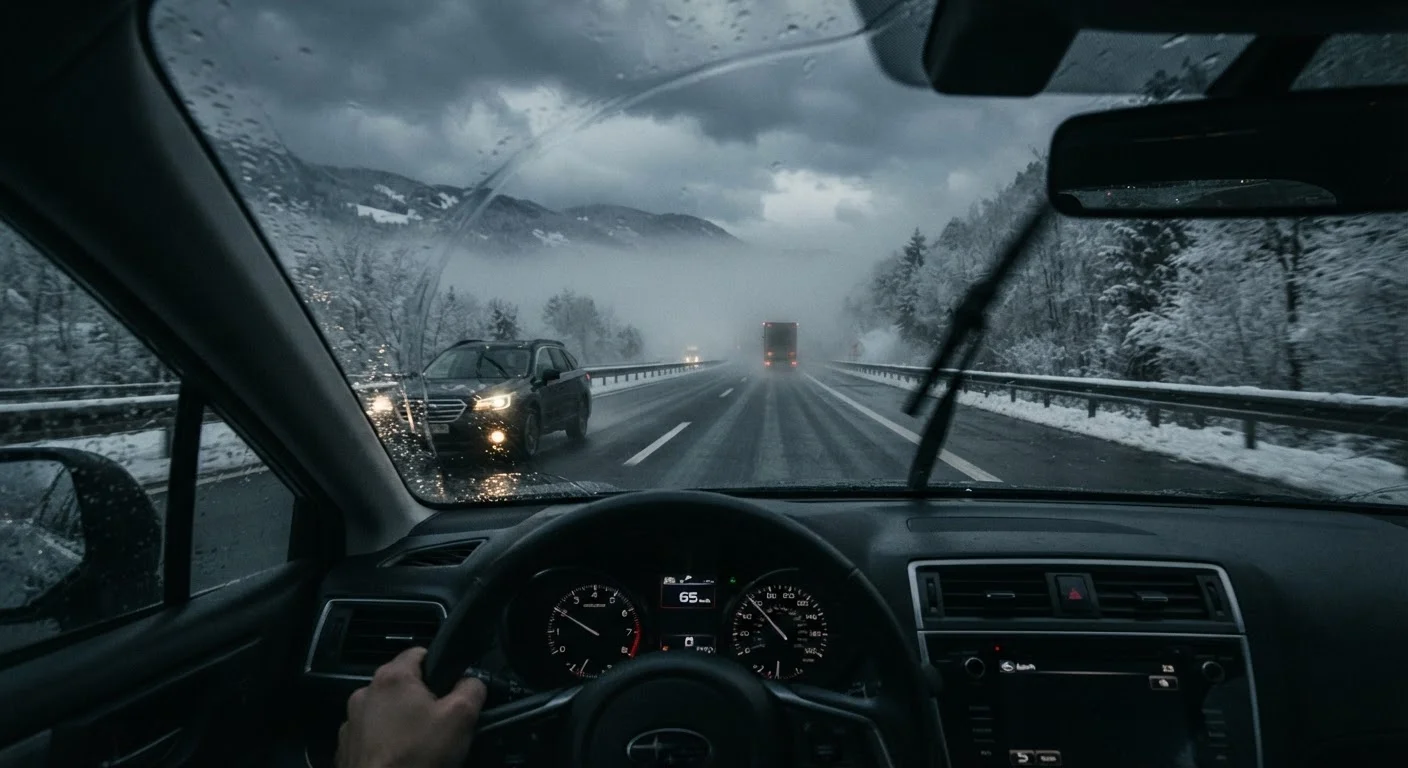
Rain, fog, and snow are not interchangeable hazards - each changes the driving environment in distinct ways that require specific technique adjustments. Rain primarily attacks grip and drainage; fog strips away your visual field; snow and ice challenge both grip and vehicle control simultaneously. Understanding the difference helps you respond with the right habits rather than generic caution.
| Best for | Recommended |
|---|---|
| Drivers who frequently encounter heavy rain | Rain Driving Techniques |
| Drivers in coastal or valley regions prone to dense fog | Fog Driving Techniques |
| Drivers in northern or mountain climates facing winter roads | Snow and Ice Driving Techniques |
Why Each Weather Condition Needs Its Own Approach
Many drivers treat any wet or low-visibility condition the same way: slow down a bit and turn on the wipers. That instinct is in the right direction, but it misses real differences between rain, fog, and snow that affect how your vehicle handles and how you should respond. A one-size approach can leave you underprepared for the specific danger in front of you.
For a broader foundation, see The Complete Guide to Safe Driving in America - it puts weather hazards in context alongside traffic laws, night driving, and emergency response. Understanding what makes each condition distinct is the starting point for adapting effectively.
| Rain | Fog | Snow / Ice | |
|---|---|---|---|
| Primary hazard | Hydroplaning, reduced grip | Severely limited visibility | Extreme loss of traction |
| Recommended speed | Below posted limit | Match visible stopping distance | Well below posted limit |
| Headlight setting | Low beams on | Low beams or fog lights only | Low beams on |
| Following distance | At least 4 seconds | Maximum possible | At least 6-9 seconds |
| Braking technique | Firm, early pressure | Firm, early pressure | Slow and very gradual |
| Key mistake to avoid | Using cruise control | Using high beams | Sudden steering or braking |
Driving in Rain: Grip and Visibility
Rain creates two separate problems: reduced tire grip and compromised visibility. On a wet road, water sits between your tires and the pavement. If you're moving fast enough, your tires can't push that water aside quickly enough to maintain contact - a phenomenon called hydroplaning. When it happens, steering and braking essentially stop working until your tires regain contact with the road surface.
To manage rain safely, reduce your speed below the posted limit when roads are wet, especially in the first 20-30 minutes of rainfall when oil residue and water mix to create a particularly slick surface. Increase your following distance to at least four seconds behind the vehicle ahead - double what you'd use in dry conditions. Avoid sudden braking or sharp steering inputs.
Turn your headlights on even during daylight rain. In many U.S. states, it's legally required when wipers are in use, and it helps other drivers see you. Avoid cruise control in the rain; you need full control of your throttle if the car begins to slide. Your vehicle's AWD or 4WD system can help with traction in light rain but won't prevent hydroplaning at speed.
Driving in Fog: Seeing and Being Seen
Fog is uniquely disorienting because it doesn't feel dangerous the way icy roads do. But it dramatically compresses your available reaction distance. If you're traveling at 55 mph in fog with only 100 feet of visibility, you have less than two seconds to react to anything in your path - far less than the roughly four seconds needed to stop at that speed.
The most common mistake in fog is using high-beam headlights. High beams reflect off fog particles and scatter back toward you, actually reducing what you can see. Use low beams instead, or fog lights if your vehicle has them. Slow down to a speed where you can stop within your visible distance - this is sometimes called driving within your headlights.
Avoid stopping on the road if possible; if you must pull over, get completely off the travel lane, turn on your hazard lights, and stay away from the car. Also pay attention to your lane markings rather than following the taillights of the car ahead - a technique called "pacing" can lead you to follow another driver right into an accident.
Active hazard scanning becomes even more critical in fog since your visual horizon is compressed. Listen for sounds, watch for shadows, and slow down before curves where visibility drops further.
Driving in Snow and Ice: Smooth Is Everything
Snow and ice reduce tire grip to a fraction of what you'd have on dry pavement. On packed snow, stopping distances roughly triple compared to dry roads. On glaze ice, they can increase tenfold or more. The fundamental rule: every input - steering, braking, accelerating - should be as smooth and gradual as possible. Sudden movements break traction and can send the car into a skid.
Accelerate slowly from stops. Brake early and gently; if your vehicle has ABS (anti-lock braking system), apply steady firm pressure and let the system pulse the brakes - don't pump the pedal manually. When going downhill, use engine braking by shifting to a lower gear rather than riding the brakes. Give yourself far more following distance than feels necessary - three times your dry-road distance at minimum.
Before winter arrives, make sure your tires, brakes, and battery are in good shape. Seasonal car maintenance walks through the specific checks that matter most before cold weather hits. Also understand what your vehicle's drive system actually does: AWD helps you get moving but doesn't help you stop. Overconfidence in AWD on icy roads is a real and common cause of winter accidents.
Habits That Apply Across All Three Conditions
While rain, fog, and snow each have specific techniques, some habits improve safety across every type of adverse weather. Slow down below the speed limit - the posted limit is set for ideal dry conditions. Increase your following distance regardless of the specific hazard. Turn your headlights on so others can see you. Eliminate distractions; in degraded conditions, your full attention is not optional.
Also be realistic about whether the trip is necessary. Many weather-related accidents happen because drivers underestimate conditions or overestimate their own readiness. If you're uncertain, waiting out a storm or dense fog event is a valid and often smart choice. And always check that your windshield, mirrors, and all windows are fully clear before you move - a partially de-iced windshield creates dangerous blind spots that compound every hazard above.
For related driving-safety skills, the article on night driving versus daytime driving covers another set of conditions where the environment changes in ways most drivers don't fully account for.