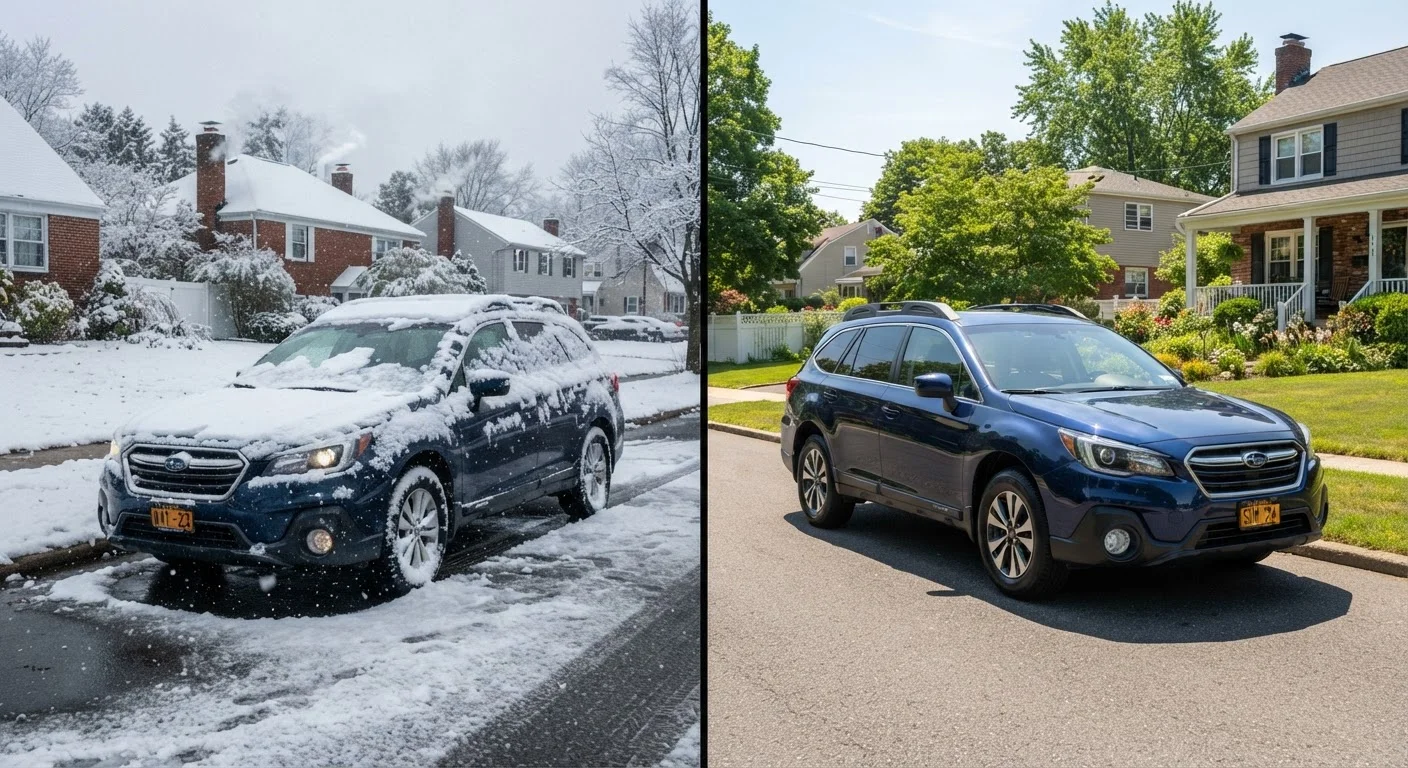
Batteries, tires, and fluids are the three systems most stressed by temperature extremes.
Winter prep should begin before the first freeze - not after you're already stuck.
Summer heat accelerates fluid breakdown and can cause tire blowouts if pressure is ignored.
Many seasonal checks take only a few minutes and require no special tools.
Your owner's manual contains manufacturer-specific intervals that override general guidance.
45–90 min
Summary
22 items · 45-90 minutes
Why Seasons Matter More Than Miles
Most drivers think about maintenance in terms of mileage - the familiar 5,000-mile oil change, the 30,000-mile spark plug check. But temperature swings are just as demanding on your vehicle as distance. Cold contracts metal, thickens fluids, and drains battery charge. Heat expands rubber, accelerates fluid breakdown, and builds pressure inside tires. Catching problems before those extremes arrive is almost always cheaper and safer than dealing with them on the side of a highway in January or August.
This checklist covers the checks worth doing twice a year: once heading into winter and once heading into summer. You don't need a mechanic's background to work through most of them - you need a few minutes, decent lighting, and a willingness to look closely. For the items that go beyond a visual check, we'll tell you when it makes sense to hand things off to a qualified technician.
If you're unsure about service intervals specific to your vehicle, your owner's manual is the authoritative source. See our guide to reading your owner's manual for help making sense of the maintenance schedule inside it.
Battery and Electrical
Test your battery's charge and cold cranking amps (CCA) - most auto parts stores will do this free. Batteries weaken faster in cold, and one that's borderline in fall may fail completely by January.Must
Inspect battery terminals for white or bluish corrosion buildup and clean them with a terminal brush if needed.Must
Check that all exterior lights - headlights, brake lights, turn signals, and reverse lights - are functioning before winter's shorter days arrive.Must
Confirm your battery is within its typical service window; most last three to five years. See our battery lifespan guide for warning signs.Should
Tires
Check tire pressure with a gauge - cold air causes pressure to drop roughly 1 PSI per 10°F drop in temperature. Use the pressure on your door jamb sticker, not the number printed on the tire sidewall.Must
Inspect tread depth using the penny test: insert a penny with Lincoln's head pointing down - if you can see all of his head, the tread is too worn for safe driving.Must
Look for sidewall cracking, bubbles, or uneven wear patterns, all of which worsen under temperature stress.Must
If you live in a region with significant snowfall, consider dedicated winter tires - all-season tires lose effectiveness below about 45°F.Should
Check spare tire pressure and confirm the jack and lug wrench are accessible in the trunk.Should
Fluids
Check coolant (antifreeze) level and freeze-point protection - an inexpensive test strip can confirm it's rated for your region's lowest expected temperatures.Must
Inspect engine oil level and color; if it's dark and gritty, it's due for a change regardless of mileage. In winter, verify the oil viscosity is appropriate for cold starts.Must
Top off windshield washer fluid with a winter-rated formula (rated below freezing) before temperatures drop - summer fluid freezes in the lines.Must
Check brake fluid level in the reservoir; if it's low, have a technician inspect the brake system rather than simply topping it off.Must
Inspect power steering and transmission fluid levels if your vehicle uses a dipstick for these - consult your owner's manual.Should
Wipers and Visibility
Replace wiper blades that streak, skip, or leave dry patches - visibility is non-negotiable in rain, sleet, or snow.Must
For winter, consider blades designed to resist ice and snow buildup, which standard blades handle poorly.Should
Test the defroster (front and rear) to confirm it clears glass evenly without dead zones.Must
Summer-Specific Checks
Check tire pressure again in summer - heat expands air and can cause overinflation, increasing blowout risk on hot pavement.Must
Inspect the cabin air filter and replace it if it's visibly dirty - a clogged filter makes the AC system work harder in peak heat.Should
Test the air conditioning system before hot weather peaks; if it's blowing warm or weakly, have a technician inspect the refrigerant level and compressor.Should
Check hoses and belts for cracking, softness, or fraying - heat accelerates rubber degradation and a broken serpentine belt can leave you stranded.Should
Keep a gallon of water and a basic emergency kit in the trunk; summer breakdowns in heat carry their own risks.Nice to have
Tools You'll Want on Hand
You don't need a full garage setup to complete most of these checks. The items below cover the practical basics - and a few you might not have thought to keep in the car year-round.
Required
Tire pressure gauge
Accurately checks inflation level in all four tires and the spare.
Required
Coolant test strips
Quickly measures antifreeze concentration and freeze-point protection.
Required
Flashlight or headlamp
Lets you inspect tires, under the hood, and fluid reservoirs in low-light conditions.
Optional
Terminal brush
Removes corrosion from battery terminals to ensure a clean electrical connection.
Required
Penny (for tread test)
Quick and free method to check whether tire tread depth is safe.
Required
Vehicle owner's manual
Confirms fluid types, capacities, and service intervals specific to your make and model.
A Few Things Worth Flagging Before You Start
Don't Ignore Brake Fluid Warnings
Low brake fluid can indicate a leak in the brake system, not just normal consumption - topping it off without diagnosis can mask a serious safety problem. If your brake fluid is consistently low or you notice a soft brake pedal, take the vehicle to a qualified mechanic before driving further. Brakes are not a system to troubleshoot by guesswork.
Once you've worked through the checklist, it's worth thinking about how your driving habits shift with the season too. Winter conditions call for adjusted techniques - our guide to driving in rain, fog, and snow covers the specifics. And if you're planning any long drives once seasonal prep is done, run through the pre-road-trip safety check before you leave.
When to Stop and Call a Professional
Some items on this list - including AC refrigerant handling, brake system inspection, and belt replacement - involve systems where an error can compromise safety or void warranties. If you're uncertain about a step or spot something that looks damaged, err on the side of having a licensed technician evaluate it. No checklist replaces hands-on expertise when something looks wrong.
There's also a persistent myth worth dispelling: long engine idling to warm up a cold car is mostly unnecessary with modern fuel-injected engines. The truth about cold engine warm-up may change your morning routine.
Automotive Editorial Team is the collective byline for our editorial team and contributor network. Articles published under this byline or an editorial pen name are researched, written, and reviewed according to our editorial standards for clarity, consistency, and independence before publication.
Disclaimer: The content on this site is for informational purposes only and is not a substitute for professional advice. Always consult a qualified professional for guidance specific to your situation.