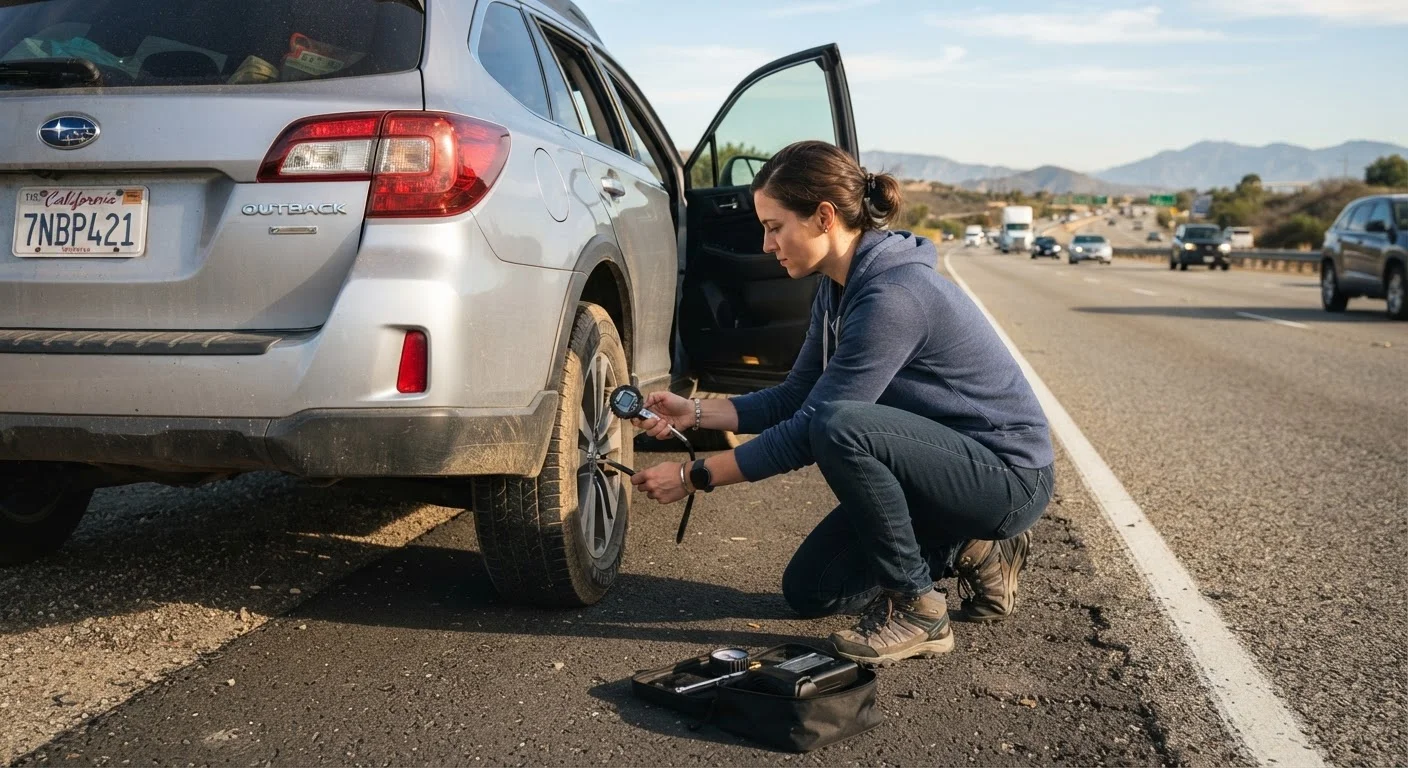
Tire pressure and tread condition are the most commonly overlooked pre-trip checks.
Fluid levels - oil, coolant, and brake fluid - should be verified before any long drive.
A basic emergency kit can mean the difference between a minor inconvenience and a dangerous situation.
Most pre-trip safety checks take under 30 minutes and require no special tools.
Lights, wipers, and mirrors are easy to verify but frequently ignored before departure.
20–45 min
Summary
22 items · 20-45 minutes
Why This Check Is Worth Your Time
Most drivers do a quick walk around the car, toss the bags in the trunk, and pull out of the driveway without a second thought. That works fine for a ten-minute errand - but a long highway drive is a different situation. At highway speeds, a low tire, a failing wiper, or a dim headlight stops being a minor inconvenience and becomes a real safety risk.
The good news: a thorough pre-trip safety check takes less time than a sit-down breakfast. You don't need a mechanic's training - just a systematic approach. This checklist covers what to look at, what to listen for, and what to pack before you hit the road. For a deeper look at what professionals verify on a vehicle, see what a mechanic checks during a routine inspection.
Tires
Check all four tire pressures using a gauge and inflate to the PSI listed on the driver's door jamb sticker - not the number molded into the tire sidewall.Must
Inspect each tire's tread depth; if the tread is at or below 2/32 of an inch (the legal minimum in most U.S. states), the tire needs replacing before the trip.Must
Look for visible sidewall bulges, cuts, or embedded objects like nails or screws that could cause a blowout at speed.Must
Confirm your spare tire is present, properly inflated, and that your jack and lug wrench are accessible in the vehicle.Should
Fluids
Check engine oil level with the dipstick when the engine is cold; top off or schedule an oil change if you're within 500 miles of your next interval.Must
Verify coolant (antifreeze) level in the overflow reservoir - it should fall between the MIN and MAX lines.Must
Check brake fluid level in the translucent reservoir under the hood; low brake fluid can indicate worn pads or a leak.Must
Top off windshield washer fluid - you'll use more of it on a long drive than you expect.Should
Check transmission fluid and power steering fluid if your vehicle's owner manual recommends doing so at regular intervals.Nice to have
Lights and Visibility
Walk around the vehicle and verify that headlights, taillights, brake lights, and turn signals all function - have a second person help or use a reflective surface.Must
Test your windshield wipers at both speeds and confirm the washer fluid sprays correctly; replace blades that streak or skip.Must
Adjust all mirrors - driver's side, passenger's side, and rearview - before you leave the driveway, not while moving.Must
Check that your defroster (front and rear) works properly, especially for early-morning or late-night departures.Should
Under the Hood and Belts
Inspect the serpentine belt for visible cracking, fraying, or glazing; a snapped belt can disable your alternator, power steering, and water pump at once.Should
Check battery terminals for corrosion (white or blue-green buildup) and confirm the battery is securely mounted.Should
Listen for any unusual sounds - knocking, hissing, or squealing - when you start the engine cold, and investigate before departing if something sounds off.Must
Emergency Kit
Pack a basic roadside emergency kit including jumper cables or a jump-start battery pack, a reflective warning triangle or road flares, and a flashlight with working batteries.Must
Include a basic first-aid kit with bandages, antiseptic wipes, and any essential personal medications.Must
Keep water and a snack supply in the vehicle - particularly important for remote routes or extreme weather conditions.Should
Store a paper map or downloaded offline map as a backup in case you lose cell signal in rural areas.Nice to have
Tools and Supplies to Have Ready
You don't need a full garage to run through this checklist. A few basic items will cover most of what's listed here - and some of them double as emergency gear you'll want in the car anyway.
Required
Tire Pressure Gauge
Accurately measure tire PSI before comparing it to your vehicle's recommended pressure.
Required
Flashlight or Headlamp
Illuminate dark areas under the hood and around tires, especially in low-light conditions.
Required
Jumper Cables or Portable Jump Starter
Restart a dead battery without needing another vehicle nearby.
Required
Reflective Warning Triangles or Road Flares
Alert other drivers if you need to stop on the shoulder.
Required
First-Aid Kit
Handle minor injuries on the road until professional help is available.
Optional
Tread Depth Coin or Gauge
Quickly verify whether tire tread is still within a safe and legal depth.
If your vehicle has a history of seasonal issues - overheating in summer or battery trouble in winter - the seasonal car maintenance guide walks through what to focus on before each season's harshest conditions.
A Note on Fluids and When to Refill
Fluid checks trip up a lot of drivers because the labels under the hood aren't always obvious. Engine oil, coolant, brake fluid, power steering fluid, and windshield washer fluid each have their own reservoir and their own acceptable range. Checking them only takes a few minutes when the engine is cool.
If you're not sure what you're looking at, our plain-language guide to car fluids explains each one - what it does, where the reservoir is, and what color or consistency to expect. Brake fluid and coolant in particular warrant attention before any extended drive; running low on either can have serious consequences.
Don't Check Fluids on a Hot Engine
Opening the coolant reservoir or touching fluid caps on a hot engine can cause burns from pressurized steam or hot liquid. Always let your engine cool for at least 30 minutes before checking coolant or other underhood fluids. If you're uncertain whether your engine is cool enough, consult your owner's manual for guidance specific to your vehicle.
Automotive Editorial Team is the collective byline for our editorial team and contributor network. Articles published under this byline or an editorial pen name are researched, written, and reviewed according to our editorial standards for clarity, consistency, and independence before publication.
Disclaimer: The content on this site is for informational purposes only and is not a substitute for professional advice. Always consult a qualified professional for guidance specific to your situation.