

| Typical inspection duration | 30-60 minutes for a standard multi-point check |
| Inspection frequency | Often recommended with every oil change or annually |
| Core systems evaluated | Fluids, brakes, tires, lights, belts, battery, suspension |
| Written report | Most shops provide a multi-point inspection checklist |
| Owner's manual role | Specifies manufacturer-recommended service intervals for your vehicle |
Why Routine Inspections Matter
A routine vehicle inspection isn't just a box your shop checks before handing you a bill. It's a systematic look at the systems that keep your car safe and running. When you understand what a mechanic is actually evaluating, you're in a much better position to ask informed questions, prioritize repairs, and avoid being caught off guard by recommendations.
Most routine inspections follow a predictable structure - working through fluids, brakes, tires, lights, and a handful of other critical systems. The scope can vary by shop and service type, but the core checklist is fairly consistent across the industry. See our guide to using your owner's manual maintenance schedule to understand what your specific vehicle requires between shop visits.
| Typical inspection duration | 30-60 minutes for a standard multi-point check |
| Inspection frequency | Often recommended with every oil change or annually |
| Core systems evaluated | Fluids, brakes, tires, lights, belts, battery, suspension |
| Written report | Most shops provide a multi-point inspection checklist |
| Owner's manual role | Specifies manufacturer-recommended service intervals for your vehicle |
The Core Systems a Mechanic Evaluates
Fluids
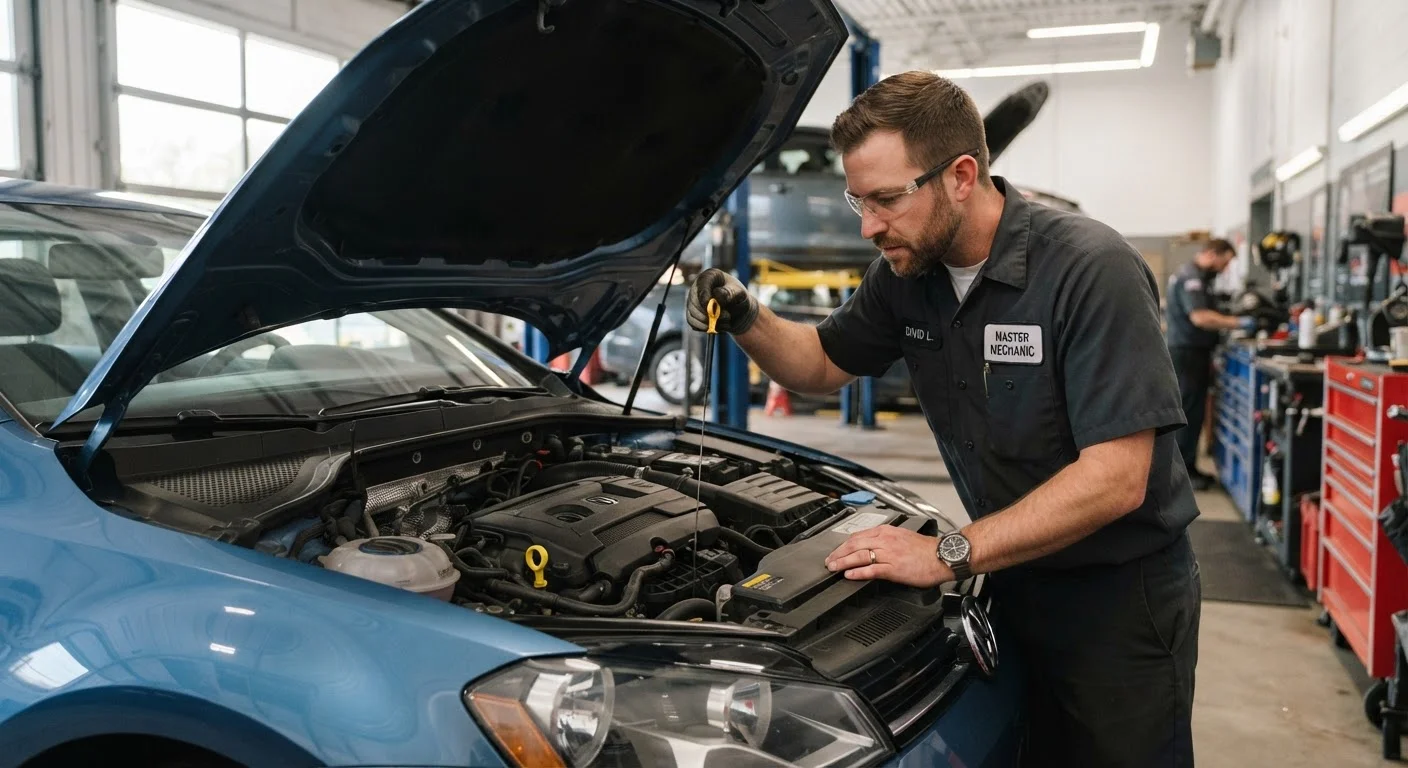
Engine oil is usually the starting point - the mechanic checks the level and condition. Dark, gritty oil is a sign it's overdue for a change. Beyond oil, inspections typically cover coolant (which regulates engine temperature), brake fluid, power steering fluid, transmission fluid, and windshield washer fluid. Low or contaminated fluids can signal a leak or a service interval that's been missed.
Brakes
Mechanics look at brake pad thickness and rotor condition. Pads wear down over time; rotors can develop grooves or warping. Both affect stopping distance. The brake lines and fluid reservoir are also checked for leaks or low levels. If you've noticed squealing or a pulsing sensation when you brake, mention it - that context helps the mechanic know where to focus.
Tires
Tread depth, inflation pressure, and overall condition are all on the checklist. Uneven wear patterns can point to alignment or suspension problems. Speaking of alignment - if your car pulls to one side or your steering wheel sits crooked, see our explainer on what wheel alignment actually means before your next visit.
Lights and Electrical
Headlights, brake lights, turn signals, and hazard lights are tested. A burned-out bulb is easy to overlook from the driver's seat but creates real safety and legal risks.
Belts and Hoses
The serpentine belt drives multiple engine accessories. Cracks, fraying, or glazing are warning signs. Coolant hoses are squeezed and inspected for soft spots or leaks - a failed hose can overheat an engine quickly.
Battery and Charging System
A quick battery load test measures whether the battery holds a charge under demand. The alternator, which recharges the battery while you drive, is checked as part of this assessment.
Suspension and Steering
Mechanics look for worn ball joints, tie rods, and shocks or struts. These components affect how the car handles and how evenly your tires wear. If anything feels loose or bouncy on the road, that's worth flagging. For road trip preparation, this pre-trip safety checklist covers what you can observe yourself between professional inspections.
How to Use the Inspection Report
After the inspection, a shop will typically give you a written report - sometimes color-coded into urgent, monitor, and acceptable categories. Not every finding requires immediate action. A mechanic who walks you through the report and explains the safety implications of each item is giving you what you need to make a sound decision.
It's reasonable to ask: What happens if I wait on this? Some items - like brake pads near the wear indicator - shouldn't wait. Others, like a minor fluid top-off, have more flexibility. Understanding the difference is exactly what separates a stressful shop visit from a productive one.
If you're curious which repairs you might handle yourself and which truly belong in a shop, this breakdown of DIY vs. professional maintenance is a practical next read.