

Key Takeaways
Wheel Alignment
Wheel alignment refers to the angle at which your tires make contact with the road. When a mechanic says your car needs an alignment, they mean one or more of those angles has drifted outside the range your vehicle's manufacturer specifies. Correcting alignment means adjusting the suspension components - not the tires themselves - so every wheel points in precisely the right direction.
Alignment is measured across three main angles: camber (vertical tilt), toe (inward or outward pointing), and caster (steering axis tilt). Most modern passenger vehicles require all three to be within tight tolerances, typically measured in fractions of a degree.
What 'Alignment' Actually Refers To
Your car's wheels aren't simply bolted on flat - they're held at precise angles designed by the manufacturer to balance handling, tire life, and stability. Alignment is the process of verifying and correcting those angles. When they drift, the vehicle doesn't perform the way it was engineered to.
There are three angles technicians look at:
- Camber: Whether the tire tilts inward or outward when viewed from the front. A tire that leans out too far (positive camber) or too far in (negative camber) will wear unevenly on one edge.
- Toe: Whether the fronts of the tires point inward (toe-in) or outward (toe-out) relative to each other. Think of it like standing pigeon-toed versus splayed out. Incorrect toe causes rapid, scrubbing tire wear.
- Caster: The angle of the steering axis when viewed from the side. This mainly affects steering stability and how well the wheel returns to center after a turn.
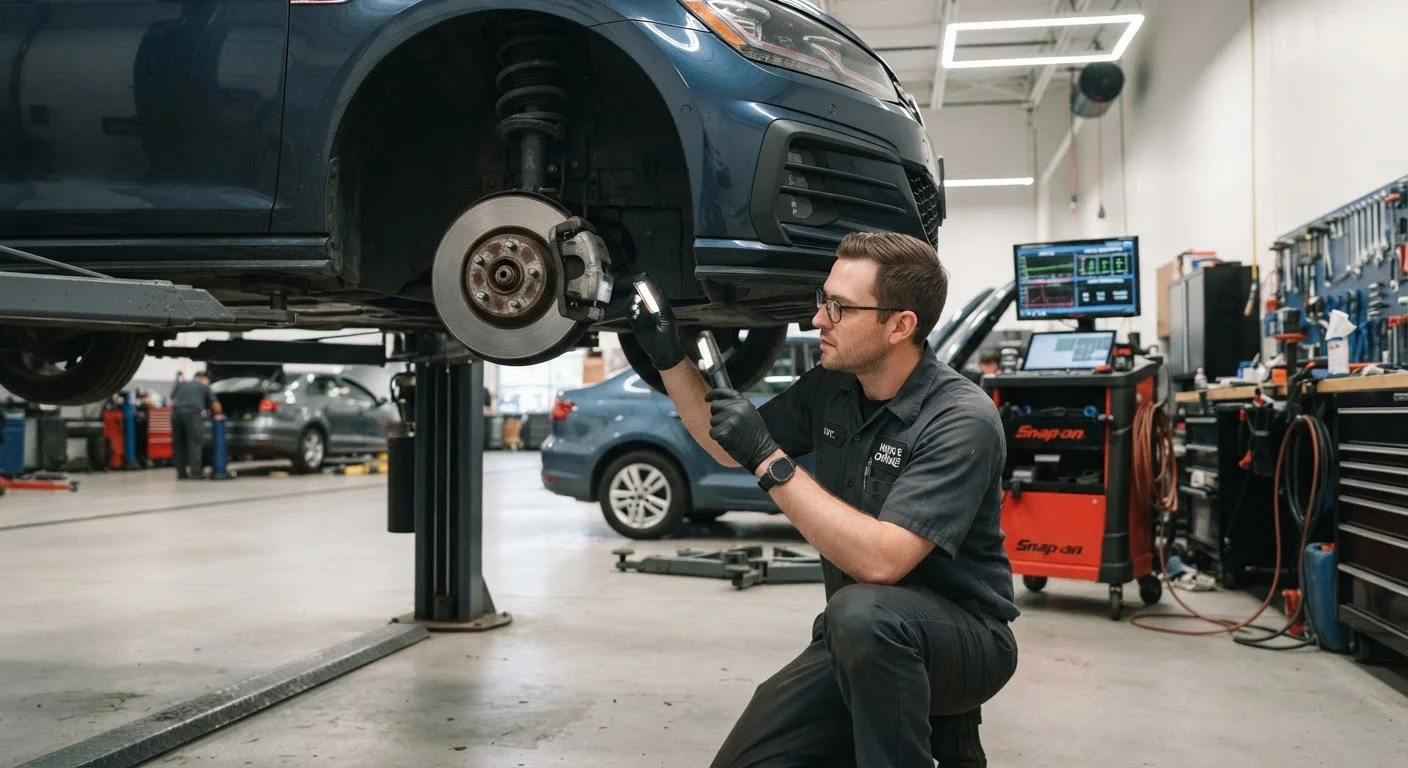
Mechanics adjust these angles by changing the position of suspension components - control arms, tie rods, and similar parts - using specialized computerized equipment. For more context on how terms like these can be confusing, see our guide to automotive terms new drivers frequently misunderstand.
What Causes Alignment to Go Off
Alignment doesn't drift randomly. It's usually knocked out of spec by a specific event or gradual wear. Common causes include:
- Hitting a pothole or large bump at speed
- Striking a curb while parking or turning
- Minor collisions, even at low speeds
- Worn suspension or steering components - ball joints, tie rod ends, and bushings all affect how the wheels sit
- Gradual settling of the vehicle's suspension over time and miles
Some vehicles are more sensitive than others. Performance-oriented cars with stiffer suspensions can lose alignment more easily from road impacts. Older vehicles with worn components may drift out of spec even without a single obvious trigger.
Check Alignment After Any Major Impact
If you hit a particularly bad pothole or clip a curb hard enough to feel it in the steering wheel, it's worth having alignment checked - even if nothing seems obviously wrong afterward. Small angular shifts may not produce noticeable symptoms immediately but will wear your tires unevenly over time.
Signs Your Alignment May Be Off
You don't need diagnostic equipment to suspect a problem. Pay attention to these common indicators:
- The car pulls to one side when you're driving straight on a flat road and let the wheel go momentarily
- The steering wheel sits crooked when you're driving straight - it points to the left or right even though the car tracks forward
- Uneven tire wear - one edge of a tire is significantly more worn than the other, or one tire wears faster than its partner on the same axle
- Unusual vibration in the steering wheel, which can overlap with balance issues
Uneven tire wear is one of the clearest signals, which is why monitoring your tires for wear patterns is such a useful habit. A tire worn thin on just one edge almost always points to a suspension or alignment problem rather than a tire defect.
Why It Matters and What Happens If You Skip It
Alignment isn't just about handling comfort - it has real cost implications. Tires are among the more expensive consumables on a vehicle, and misalignment can cut their usable life significantly. A tire that should last 50,000 miles might need replacement at 30,000 simply because it was scrubbing against the road at a slight angle the whole time.
~25%
Potential reduction in tire lifespan from misalignment
Industry estimates from alignment equipment manufacturers suggest significant misalignment can reduce tire life by roughly a quarter or more compared to a properly aligned vehicle.
10%
Estimated fuel economy loss from rolling resistance
The U.S. Department of Energy notes that improper tire maintenance - including alignment-related rolling resistance - can meaningfully reduce fuel efficiency in affected vehicles.
Beyond tires, persistent misalignment puts additional stress on steering and suspension components. Parts that are working against the vehicle's geometry wear faster. And as noted above, there's a measurable fuel economy penalty from increased rolling resistance.
Alignment is firmly in the category of work that belongs with a professional. The equipment required - a four-wheel alignment rack with computerized sensors - isn't something a home garage typically has. See our breakdown of DIY tasks versus shop jobs to understand where alignment fits. A qualified technician will measure all angles, compare them against manufacturer specifications, and adjust until everything is within tolerance - then provide a printout showing the before-and-after readings.
If your vehicle is due for a routine inspection, alignment is often checked as part of the process. Our overview of what a mechanic checks during a routine inspection can help you know what questions to ask. And for knowing how frequently your specific vehicle needs this service, your owner's manual maintenance schedule is the most reliable reference.