

Key Takeaways
Why Scanning Beats Reacting
Most drivers look at where they are right now. Skilled drivers look at where they're going to be in the next few seconds - and scan constantly for anything that might force a decision. That gap in habit explains why some drivers seem to glide through traffic while others are always braking hard or swerving at the last moment.
Reaction time for an average alert driver runs roughly 1.5 seconds from perceiving a hazard to completing a braking response. At 60 mph, that's about 130 feet of ground covered before your foot even hits the pedal. If you only notice a hazard when it's right in front of you, physics works against you. Spotting it four or five seconds out gives you time to slow gradually, change lanes, or simply be ready - no panic required.
This isn't a natural reflex that some people are born with. It's a practiced visual strategy, and it can be learned. For a broader foundation, see The Complete Guide to Safe Driving in America - this article builds on those fundamentals.
Core Scanning Practices That Make the Difference
These habits separate drivers who anticipate from drivers who only react.
Look 12-15 seconds ahead on the road, not just at the car in front of you.
Twelve to fifteen seconds of forward visibility - roughly a city block at urban speeds, or a quarter-mile on the highway - gives your brain time to process what's ahead and form a response plan. Fixating on the bumper directly in front of you compresses your decision window to nearly zero.
Check your mirrors every 5-8 seconds, not only when you plan to change lanes.
A complete picture of the traffic around you requires knowing what's behind and beside you, not just ahead. Drivers who only check mirrors when maneuvering are frequently surprised by vehicles that moved into adjacent lanes while they weren't watching.
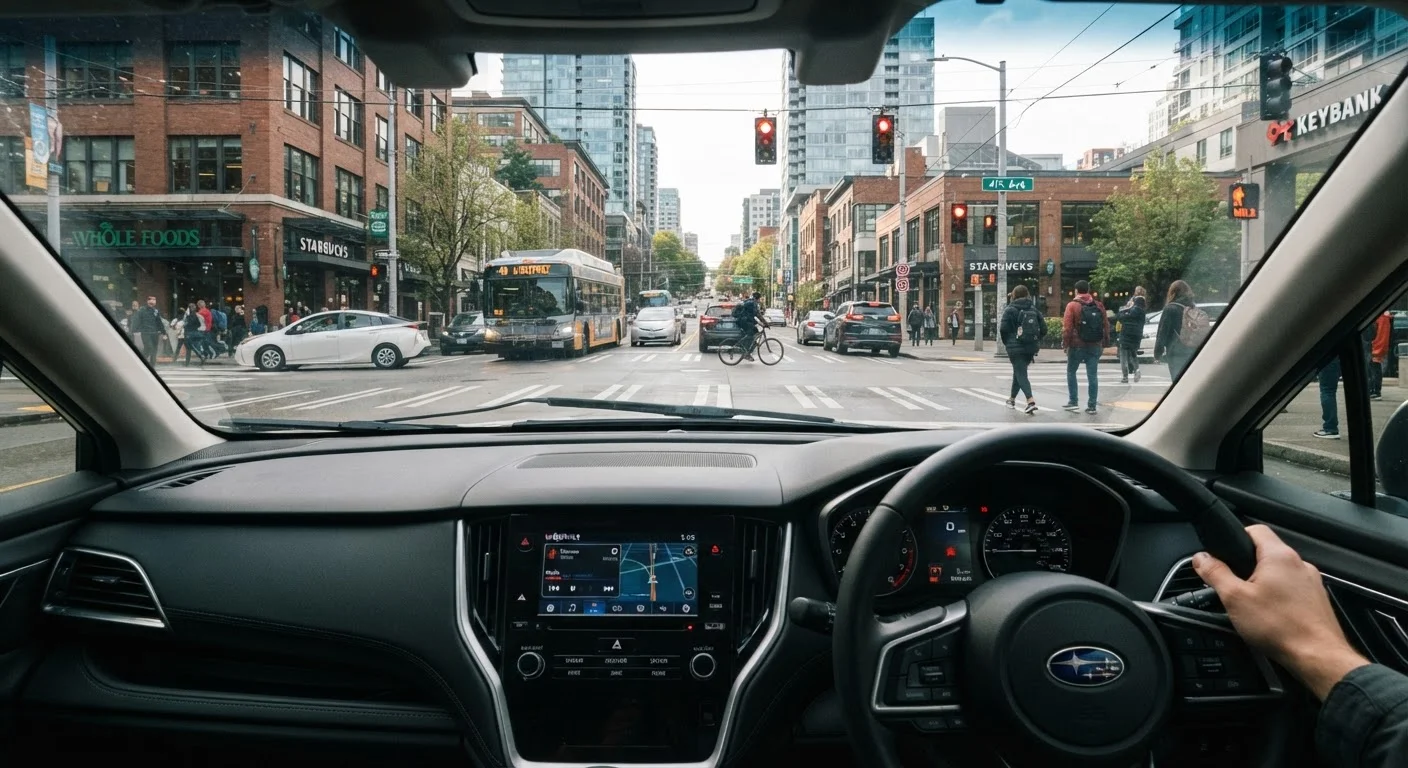
Scan intersections before you enter them, even on a green light.
Green means you have the right of way - it doesn't mean the intersection is clear. Cross-traffic violations, pedestrians, and cyclists approaching from the side aren't visible until you're already committed if you don't scan first.
Identify an escape route before you need one.
In a sudden hazard, drivers who already know where they can safely steer react faster and more precisely than those who have to figure it out under pressure. Scanning for open space beside and ahead of you turns a potential emergency into a manageable adjustment.
Watch for behavioral cues from other drivers, not just their position.
A car that's drifting slightly, braking erratically, or has been idling in a turn lane for too long is giving you information. Position alone doesn't tell you what a driver is about to do - behavior does.
Manage your speed to match your actual sight distance.
You should be able to stop within the distance you can clearly see. On a foggy road, a blind curve, or at night, that distance shrinks dramatically. Driving at highway speeds in conditions that limit visibility to 200 feet is like driving with your eyes closed for several seconds.
Quick Wins You Can Apply Today
You don't need a defensive driving course to start scanning better. A few focused adjustments on your very next drive can noticeably change what you catch and how early you catch it.
If fatigue is affecting your alertness behind the wheel, your scanning suffers first - before you even realize you're impaired. Our article on why drivers underestimate fatigue covers how to recognize that risk early. And since conditions like rain and fog fundamentally change what you can scan for, it's worth reading how to adapt your habits for each weather condition as a companion piece.
Putting It All Together on the Road
Good scanning isn't a checklist you run through once - it's a rhythm. Far ahead, mid-range, mirrors, blind spots, back to far ahead. Repeat. Over time it becomes automatic, the same way shifting gears or signaling does.
New and returning drivers especially benefit from building this habit early. If you're just getting started, everything a first-time driver should know before hitting the road alone walks through the broader picture of solo driving readiness. For those wanting to understand the mindset distinction more deeply, defensive driving vs. aggressive driving explains how scanning fits into a larger safety philosophy.
The goal isn't perfect prediction - it's giving yourself options. When you see a potential hazard three seconds before it becomes a real one, you rarely need to do anything dramatic. A slight speed adjustment or a lane position change is usually enough. That's what experienced driving actually looks like: quiet, early, deliberate.