

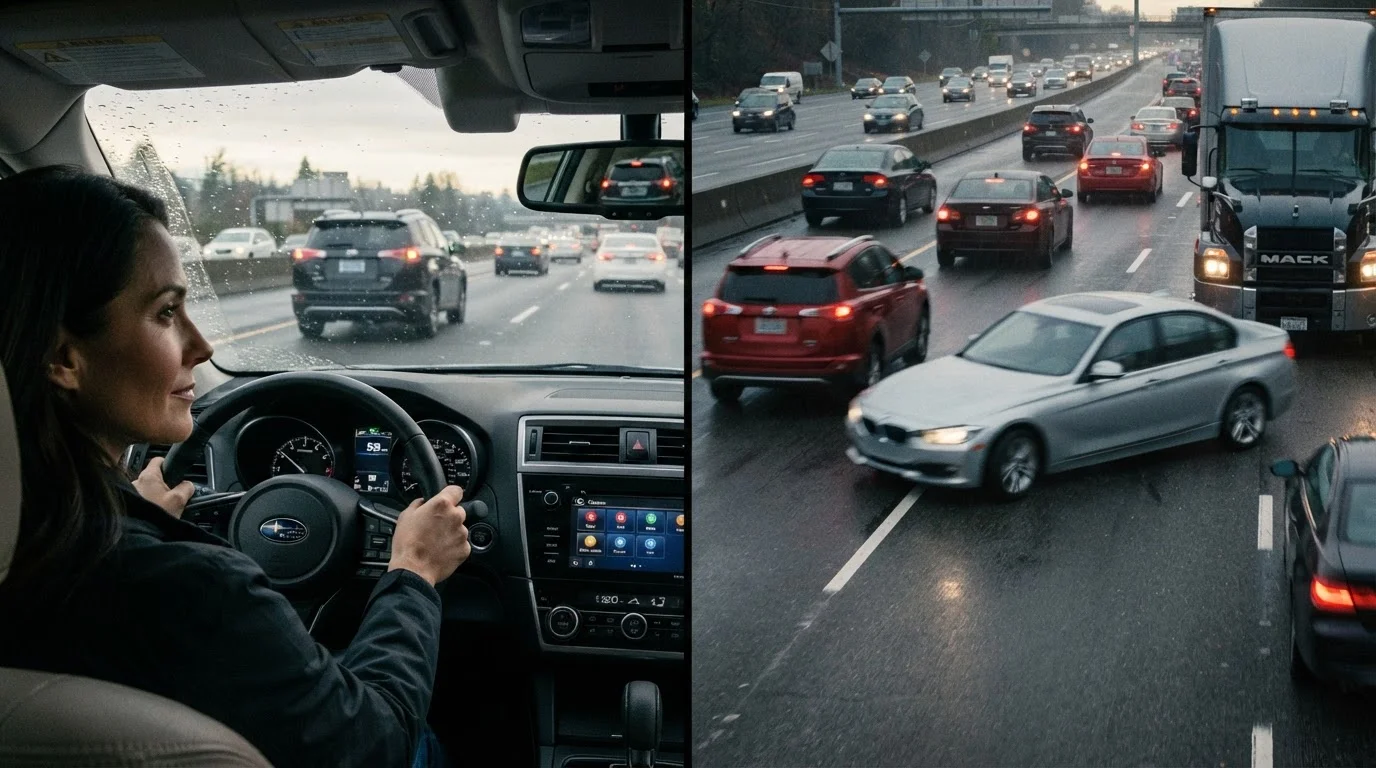
Key Takeaways
Option A
Defensive Driving
The proactive, risk-aware approach to every mile.
Best for: Drivers who want to reduce crash risk and maintain composure in unpredictable traffic conditions.
Option B
Aggressive Driving
A pattern of behavior that prioritizes speed over safety.
Best for: No one - aggressive driving is a recognized risk factor, not a recommended approach.
If you want to reduce your crash risk on daily commutes
Defensive Driving
Defensive habits like scanning ahead, maintaining space cushions, and anticipating others' moves consistently reduce the likelihood of collisions in routine traffic.
If you're a new or teen driver building foundational habits
Defensive Driving
Early adoption of defensive techniques shapes long-term behavior; aggressive patterns, once ingrained, are harder to unlearn.
If you frequently drive in high-traffic or highway conditions
Defensive Driving
Complex traffic environments amplify the consequences of aggressive choices, making situational awareness and patience especially valuable.
What Each Driving Style Actually Means
These two terms get thrown around loosely, but they describe specific, documented behavior patterns - not just vibes behind the wheel.
Defensive driving means actively managing risk by anticipating hazards before they develop. A defensive driver keeps a cushion of space around the vehicle, scans the road well ahead, adjusts speed for conditions, and assumes other drivers may make mistakes. It's a mindset of constant, low-stress awareness rather than reactive scrambling.
Aggressive driving is defined by the National Highway Traffic Safety Administration (NHTSA) as operating a vehicle in a way that endangers or is likely to endanger people or property. That includes speeding, tailgating, unsafe lane changes, running red lights, and cutting off other drivers. These behaviors often cluster together - a driver running late who speeds is also more likely to tailgate and make abrupt lane changes.
Importantly, aggressive driving isn't always a conscious choice. Time pressure, stress, and a false sense of vehicle capability all push drivers toward riskier behavior without them fully recognizing the shift.
Side-by-Side: How the Two Approaches Differ
The contrast between these styles shows up in specific, measurable behaviors - not just overall attitude.
| Criterion | Defensive Driving | Aggressive Driving |
|---|---|---|
| Following distance | 3+ second cushion | Under 1 second (tailgating) |
| Speed choice | Adjusted for conditions | Above limit or traffic flow |
| Lane changes | Signaled, spaced, deliberate | Abrupt, unsignaled, frequent |
| Hazard awareness | Anticipates 12-15 seconds ahead | Reacts to immediate obstacles |
| Response to stress | Slows down, increases margins | Speeds up, reduces margins |
| Crash risk | Actively minimized | Significantly elevated |
One element worth calling out: following distance. Defensive drivers typically aim for a minimum three-second gap in normal conditions - more in rain, fog, or heavy traffic. Aggressive drivers routinely close that gap to under a second, dramatically reducing reaction time. At highway speeds, the difference between a three-second and one-second gap can mean the difference between stopping safely and a rear-end collision.
For a deeper look at how skilled drivers actively read road conditions, see how experienced drivers scan for hazards before they become emergencies.
The Real Cost of Aggressive Driving
Aggressive driving isn't just a legal risk - it carries genuine safety consequences for everyone on the road. NHTSA data has consistently shown that speeding alone is a contributing factor in roughly a third of all U.S. traffic fatalities. Combine speeding with tailgating or erratic lane changes, and risk compounds quickly.
~33%
U.S. traffic deaths linked to speeding
NHTSA has reported that speeding is a contributing factor in approximately one-third of all U.S. motor vehicle fatalities across multiple years of data.
3 sec
Minimum recommended following distance
Traffic safety organizations, including state DMVs, widely recommend a minimum three-second gap in normal driving conditions - more in adverse weather.
56%
Fatal crashes involving at least one aggressive behavior
According to AAA Foundation for Traffic Safety research, more than half of fatal crashes involve at least one aggressive driving action by one of the drivers.
Beyond crash statistics, aggressive driving escalates into road rage incidents when a targeted driver responds. NHTSA notes that road rage - a more extreme, intentional form of aggression - has been involved in thousands of injury crashes. What starts as impatience can spiral into behavior neither driver planned for.
This is part of why the complete guide to safe driving treats aggression management as a core safety topic, not a secondary concern.
Building Defensive Habits Without the Lecture
Defensive driving isn't about being timid - it's about being efficient. Experienced defensive drivers aren't the ones getting honked at; they're the ones who rarely need to brake hard because they saw the slowdown coming two blocks ago.
A few habits with the most practical impact:
- Maintain a three-second following distance at minimum in normal conditions. Pick a fixed object, watch when the car ahead passes it, then count - if you pass before three seconds, you're too close.
- Scan 12-15 seconds ahead (roughly a city block or a quarter-mile on the highway). This gives you time to react rather than just respond.
- Check mirrors every five to eight seconds so you always know what's around you, not just what's in front.
- Manage your own stress before it manages your driving. Running consistently late is a driving hazard - it creates the time pressure that feeds aggression.
Formal training can reinforce these habits. Defensive driving courses have real benefits, including potential insurance reductions, but they work best when paired with deliberate daily practice rather than treated as a one-time fix.
This article is for general informational purposes. Always follow the traffic laws applicable in your state and consult a qualified driving instructor for personalized guidance.