

Key Takeaways
The Mindset: Prepared, Not Paranoid
Travel security isn't about expecting the worst - it's about making sure a bad moment doesn't derail an entire trip. Most travelers who lose money or documents aren't victims of elaborate scams; they're caught off guard by ordinary situations: a pickpocket on a crowded bus, a wallet left on a restaurant table, a phone snatched from an open bag. The good news is that a handful of consistent habits addresses the overwhelming majority of these scenarios.
Before you leave home, run through a security-focused version of your prep. Our pre-trip planning checklist covers documents, finances, and safety steps in one place - it's worth bookmarking alongside your packing list.
Protecting Your Money
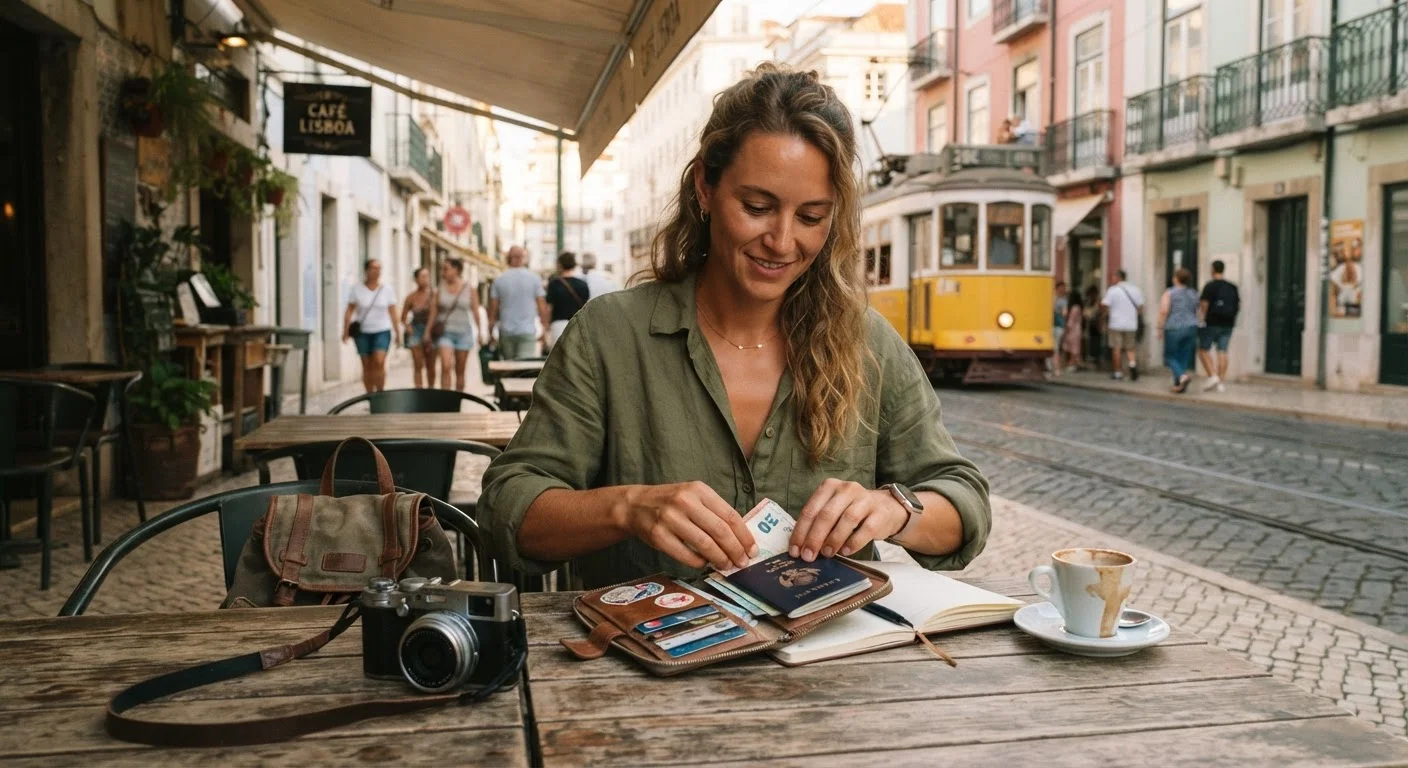
The cardinal rule: never keep all your money in one place. Divide cash across at least two locations - say, a front-pocket wallet for daily spending and a secondary stash in a hidden belt pouch or a locked luggage compartment back at your accommodation. If one source disappears, you're inconvenienced, not stranded.
Split your cash into at least two separate locations every day.
Concentrating all your money in one wallet or bag creates a single point of failure. If that item is lost or stolen, you have nothing to fall back on in an unfamiliar place.
Notify your bank and card issuers of your travel plans before departure.
Banks monitor accounts for unusual activity, and foreign transactions can look suspicious without prior notice, triggering a freeze that leaves you unable to access your own funds while abroad.
Store encrypted digital copies of all critical documents in the cloud.
Physical documents can be lost, stolen, or destroyed. Having digital backups accessible from any device means you can prove your identity and begin a replacement process even if you have nothing on you.
Use inside or hidden pockets rather than easily accessible outer compartments.
Opportunistic theft is far more common than targeted crime. Most pickpockets look for the easiest grab - typically open bag pockets, back pockets, or items visible on a table.
Avoid using public Wi-Fi for sensitive accounts; enable two-factor authentication before you travel.
Unsecured networks expose login credentials to interception. Two-factor authentication ensures that stolen passwords alone aren't enough to compromise your accounts.
For cards, carrying two debit or credit cards from different networks gives you a backup if one is blocked or lost. Call or message your bank before departure to flag your travel dates and destination - many institutions now let you set travel notices through their app. Without this step, an overseas transaction can trigger a fraud alert and freeze your account mid-trip.
Withdraw larger amounts less frequently rather than making repeated small ATM trips, which exposes you to skimming devices and transaction fees. Always use ATMs attached to banks or inside secure locations rather than standalone machines on quiet streets. For a deeper look at managing money on the road, see how travel budgets actually work.
Keeping Your Documents Safe
Your passport is the document most worth protecting - and most worth having a backup for. Before you leave, photograph every important document: passport bio page, driver's license, travel insurance card, hotel confirmations, and any visas. Store these photos in a secure cloud service (not just your camera roll) and email copies to yourself and a trusted contact at home. If your physical passport is lost or stolen, having those digital copies dramatically speeds up the replacement process at the nearest embassy or consulate.
While traveling, keep your passport in your accommodation's safe when you don't need it. In most destinations, a photo ID or a printed copy of your passport is sufficient for day-to-day use - though always verify local requirements before you go, since rules vary by country and situation. Always verify entry, visa, and document requirements with official government sources before your trip, as policies change frequently.
Digital Security on the Road
Public Wi-Fi at hotels, cafes, and airports is convenient and risky in equal measure. Avoid logging into banking apps or entering payment details on unsecured networks. A reputable VPN (Virtual Private Network) - a service that encrypts your internet connection - adds a meaningful layer of protection on public networks.
Enable two-factor authentication (2FA) on your email, banking, and any accounts that hold payment information before you travel. That way, even if a password is compromised, an attacker still can't access your account without a secondary code. Keep your phone's screen locked with a PIN or biometric, and be conscious of who can see your screen in crowded places - shoulder surfing is more common than most travelers realize.
VPN Use Abroad: Know Local Rules
VPNs are widely used by travelers for privacy and security on public networks, but their legal status varies by country - some nations restrict or prohibit their use. Before relying on a VPN abroad, verify whether it's permitted in your destination country. Your country's official travel advisory website is a good starting point for current information.
Traveling lighter also reduces digital risk: fewer devices mean fewer things to lose. See our guide on packing light without sacrificing comfort if you're still sorting out what to bring.
Everyday Habits That Add Up
Security becomes effortless when it's routine. Use the inside zipper pockets of your bag rather than exterior pouches. Sit with your bag in your lap or looped around a chair leg at restaurants. Do a quick pocket-pat check every time you stand up to leave a seat. These small behaviors are easy to maintain and quietly effective.
At the airport, stay especially alert during the screening process - the organized chaos of putting items in trays and collecting them on the other side is a classic moment for opportunistic theft. Our airport security walkthrough explains what to expect so you can move through confidently. And if you're deep in the planning stage, the pre-departure checklist is a great final review before you head out the door.
None of this requires anxiety - just awareness. Build the habits, do the prep, and your attention is free for the parts of travel that actually matter.