

Key Takeaways
Why Packing Light Is a Learnable Skill
Most overpacked bags share the same origin story: a traveler standing in their bedroom the night before a flight, tossing in options "just in case." The result is a heavy, chaotic bag full of things that never leave the hotel room. As our colleagues explore in Why Travelers Overpack-and What to Do Instead, the real problem is psychological, not logistical.
The good news: packing light is a system, not a gift. Once you internalize the core principles - intentional selection, space efficiency, and knowing your destination - it becomes second nature on every trip. This guide walks you through exactly that system, step by step.
What you will need
Step-by-Step: Packing Smarter From the Start
Work through these steps in order. The sequence matters - decisions made early (like choosing your bag) constrain and simplify every choice that follows. Pair this with your Pre-Trip Planning Checklist to make sure packing fits into your broader preparation.
Choose the Right Bag for the Trip Length
Your bag sets the upper limit on everything else. A carry-on (typically 21-22 inches) comfortably handles trips up to two weeks for most travelers who pack intentionally. A personal item alone can work for a long weekend. Resist the urge to "go bigger just in case" - a larger bag is simply permission to overpack. Match the bag size to the trip, not your anxiety.
Build a Versatile Capsule Wardrobe
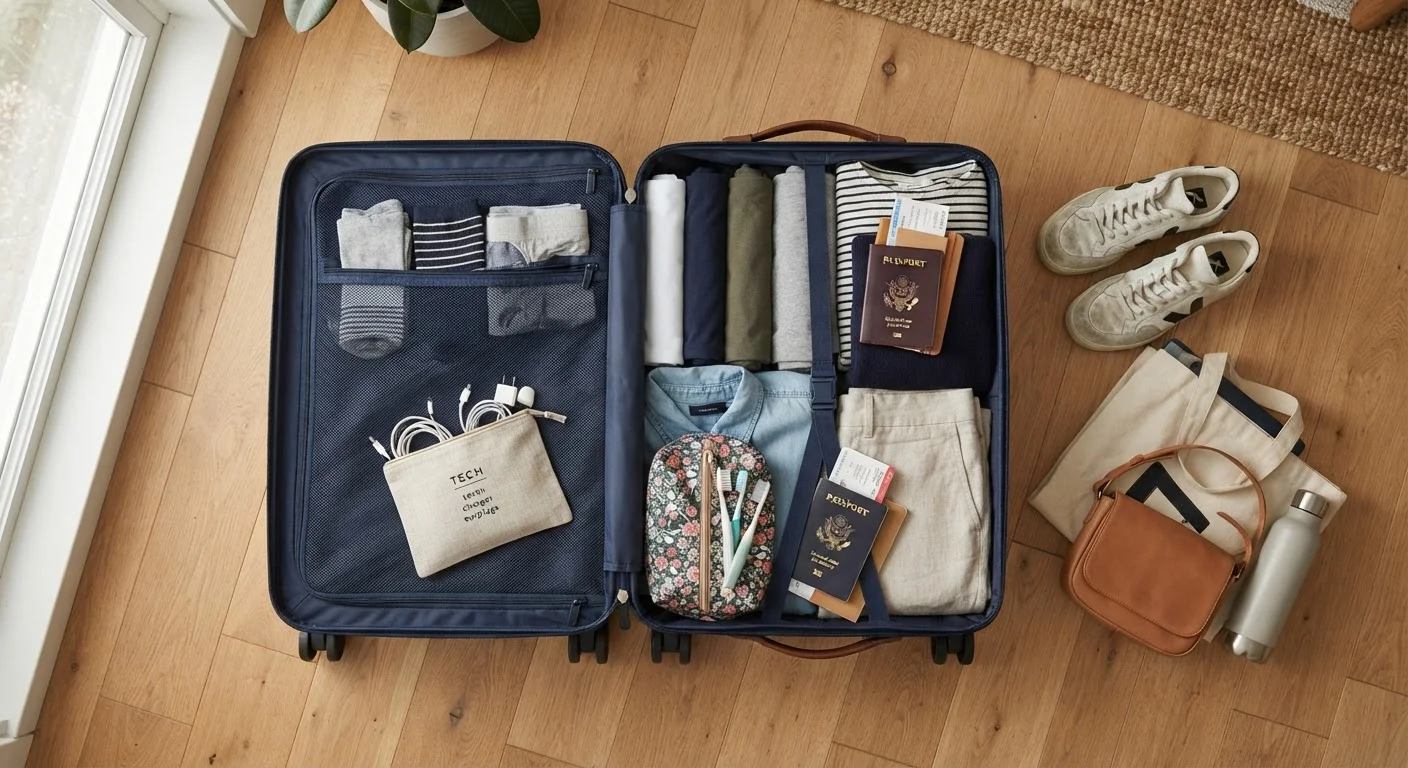
Lay out every clothing item you're considering, then apply a simple filter: does this item work with at least three other things in this pile? If not, cut it. Aim for a neutral color palette - navy, grey, black, white, tan - where everything pairs naturally. A good travel capsule for a week might include three bottoms, five tops, one layer, and two pairs of shoes (one walking, one versatile enough for dinner). That math gets you through seven days with room to remix.
Decant Toiletries and Cut the Bottles
Full-size toiletry bottles are among the heaviest, bulkiest items in most bags. Transfer only what you'll realistically use into small reusable containers - most trips don't require more than 2-3 oz of each product. For multi-week trips, remember that shampoo, conditioner, and body wash are available everywhere in the world. Buy locally when you run out rather than hauling a two-week supply from home.
Pack Using Cubes and Rolling Technique
Packing cubes compress and categorize your clothes so every cubic inch of bag space gets used. Assign a cube per category - tops, bottoms, underwear/socks - rather than mixing items loosely. Roll soft items like t-shirts and jeans tightly before placing them in cubes; rolling reduces wrinkles and takes up significantly less space than flat folding. Heavier items go at the bottom (near the bag's wheels), lighter and more frequently accessed items near the top.
Do a Final Weight and Necessity Check
Once everything is packed, weigh your bag and then go through it one more time with fresh eyes. For each item, ask: Would I actually go back for this if I forgot it? If the answer is no, or if you'd buy a cheap replacement locally, leave it out. A good rule of thumb: if you can't identify when you'll wear or use something on at least two specific days of the trip, it doesn't earn a spot.
On the Road: Making Light Packing Actually Work
Even the most efficient pack can unravel during a trip if you don't maintain a few habits. Dedicate a few minutes each evening to refolding clothes and returning items to their designated spots - it keeps your bag organized and makes repacking fast when you check out.
Laundry is your most powerful tool. A sink-wash of workout clothes or a mid-trip visit to a local laundromat can effectively halve your wardrobe needs. Many accommodations - particularly apartments and mid-range hotels - offer guest laundry facilities. Factoring this into your itinerary is worth it.
Plan Activities Before You Pack
Your itinerary directly shapes your packing list. Knowing you have one formal dinner versus three helps you decide whether to pack dress shoes at all. Building your travel itinerary before you open your suitcase is one of the most underrated packing hacks there is. Activities determine clothing needs - not the other way around.
For more on protecting the documents and valuables that do make the cut, see Keeping Your Money and Documents Safe While Traveling. And if you're still weighing whether a carry-on truly serves your trip, Carry-On vs. Checked Bag: Which Makes More Sense for Your Trip? breaks down when each option genuinely wins.