

Key Takeaways
The Real Reasons We Overpack
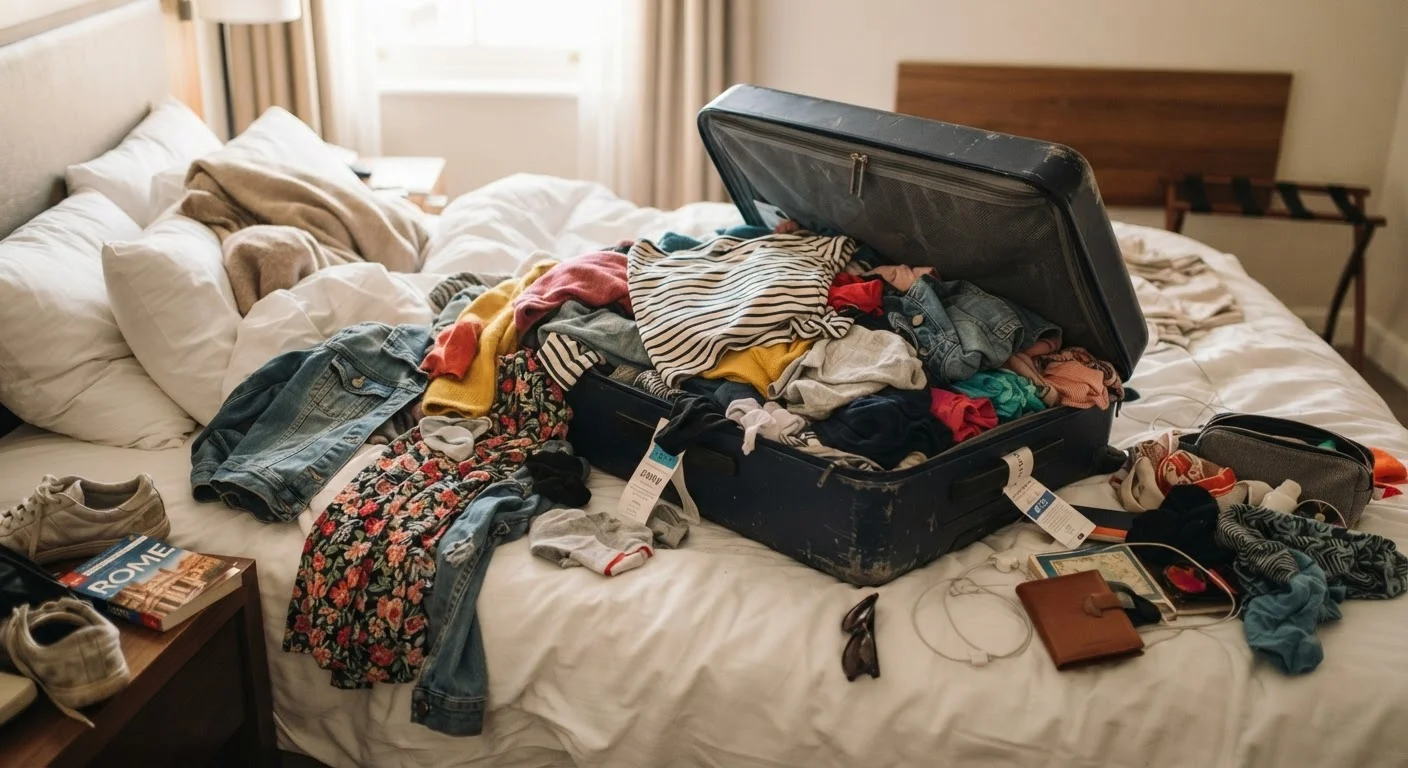
Almost every traveler has stood at the airport staring at an overstuffed bag, wondering how it came to this. Overpacking isn't a character flaw - it's a very human response to uncertainty. When we don't know exactly what a trip will demand, we default to preparation-as-insurance. The result: a bag full of items that never leave the hotel room.
Anxiety is the primary driver. We imagine formal dinners that won't happen, rain that won't fall, and gym sessions we won't take. We pack for six hypothetical versions of ourselves instead of one realistic traveler. Compounding this is the "just in case" mindset - an impulse that feels responsible but quietly doubles the weight of any bag.
There's also a comfort factor. Packing familiar items from home - extra toiletries, favorite snacks, backup shoes - can feel like carrying a piece of security. That's understandable, but it comes with a physical and financial price. Checked baggage fees, aching shoulders, and precious time spent waiting at carousels are all direct consequences of bringing too much.
Understanding why you overpack is the first step toward changing the habit. The good news: the fix isn't about deprivation - it's about smarter, more intentional choices before you ever zip the bag.
Common Overpacking Mistakes - and How to Break Them
Most packing errors follow predictable patterns. Recognizing yours makes it much easier to course-correct before departure.
Packing for every possible scenario rather than the most likely ones.
Why it happens: Travelers imagine worst-case situations - sudden cold snaps, surprise formal events, unexpected hikes - and pack to cover all of them, even when the odds are low.
Bringing full-size toiletries and duplicating products already available at the destination.
Why it happens: Familiar brands feel reassuring, and travelers worry about not finding what they need - even when pharmacies, supermarkets, and hotel amenities are widely available worldwide.
Treating clothing as single-use items rather than building a versatile, mix-and-match wardrobe.
Why it happens: At home we rarely repeat outfits, so packing feels like assembling a daily wardrobe for every day of the trip - one full outfit per day, minimum.
Ignoring laundry as a travel tool.
Why it happens: Many travelers don't think to research laundry options in advance and default to bringing enough clothing to never repeat a wear.
Skipping a final ruthless edit of the packed bag.
Why it happens: Once items are packed, removing them feels like undoing work. There's a psychological resistance to taking things back out after the effort of putting them in.
For a deeper look at pre-trip preparation habits that support lighter packing, see our pre-trip checklist before you head to the airport.
Practical Mindset Shifts That Actually Work
Packing light isn't about sacrifice - it's about trusting that the world outside your front door is actually functional. Here are the mindset shifts that make the biggest difference:
- Think in outfits, not individual pieces. Build around a tight color palette (think navy, white, and olive) so everything mixes and matches. Three bottoms and five tops can create 15 combinations easily.
- Research laundry options before you leave. Many hotels offer laundry service, and laundromats are common in virtually every destination. A one-week trip can realistically be done with three to four days of clothing if you wash once.
- Use the 1-2-3 rule as a starting point. One pair of shoes for walking, one for evenings. Two or three bottoms, three to five tops. Adjust from there based on specific activities.
- Pack, then remove a third. This classic trick works because most travelers subconsciously overpack by about 30%. After you've assembled everything, take out the items you feel least certain about. You almost certainly won't miss them.
These strategies also tie directly into the bigger question of which bag to bring in the first place. Our guide to carry-on vs. checked luggage can help you decide what format best suits your trip length and style.
And if you want to go further, packing light without sacrificing comfort offers practical techniques for fitting more function into less luggage - without leaving the things you'll actually use behind. Better packing also pairs well with a well-structured trip plan; our guide to building a travel itinerary that actually works can help you plan days that match what you've actually packed for.