

Key Takeaways
U.S. Airport Security Screening
Airport security screening in the United States is the mandatory checkpoint process managed by the Transportation Security Administration (TSA) that every passenger must pass through before boarding a domestic or international flight. It involves identity verification, baggage X-ray, and body scanning to detect prohibited items. The process is standardized across all commercial airports, though the experience can vary by lane type and enrollment in trusted traveler programs.
TSA operates under the Department of Homeland Security and sets federal screening standards; individual airports manage physical layout and staffing in coordination with those rules.
What the TSA Checkpoint Actually Involves
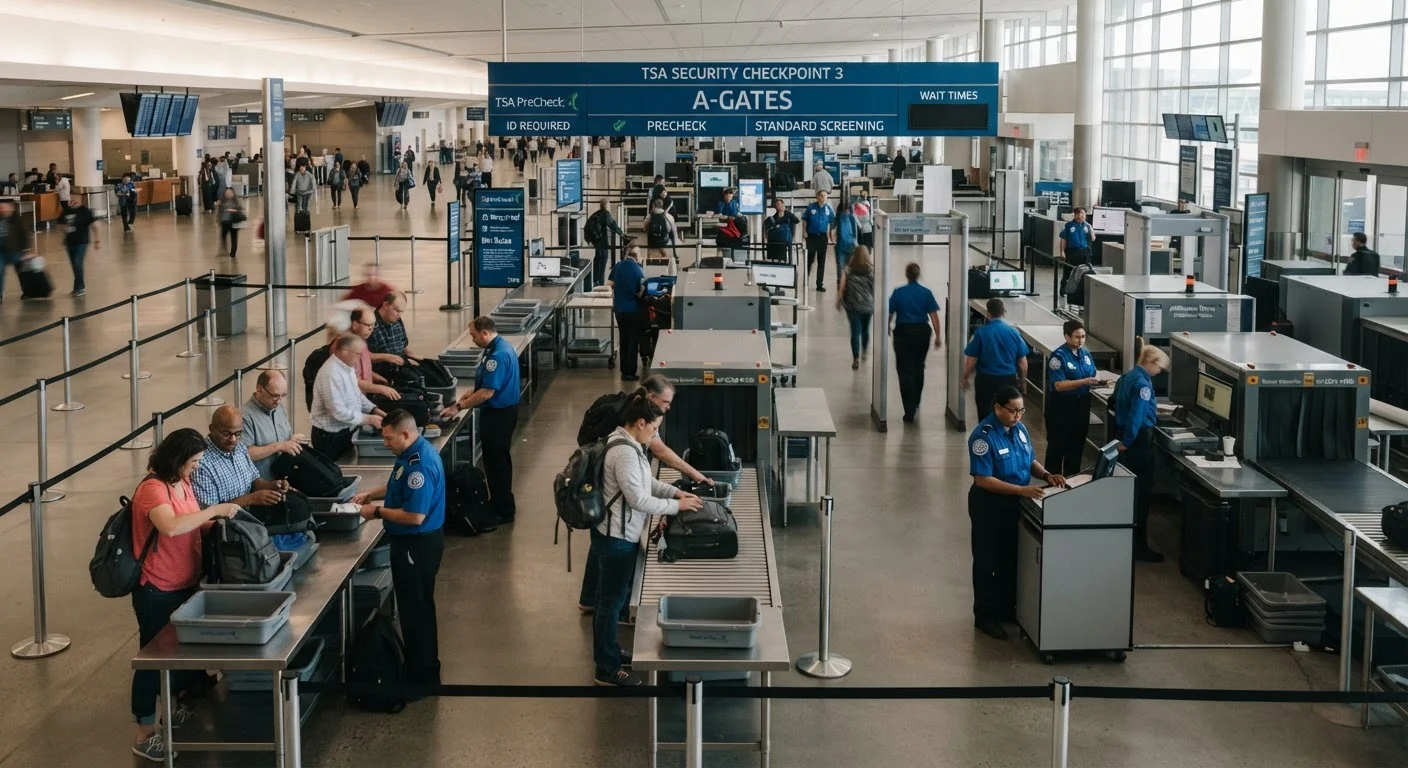
The U.S. airport security checkpoint has a reputation for being chaotic, but it follows a predictable sequence once you know the script. Every passenger goes through three core steps: identity verification, baggage screening, and body screening. Understanding each stage lets you move through confidently rather than scrambling at the last second.
Identity check: Before you even reach the conveyor belts, a TSA officer will compare your boarding pass against a government-issued photo ID. Digital boarding passes on your phone are accepted at most airports. As of May 2025, a REAL ID-compliant driver's license or state ID - identifiable by a star in the upper corner - or a U.S. passport is required for domestic travel. Non-compliant IDs are no longer accepted.
Baggage X-ray: Bags, shoes, and personal items go into plastic bins and onto a conveyor belt that feeds an X-ray machine. In standard lanes, laptops must come out of bags and be placed flat in a separate bin. Large electronics like tablets follow the same rule. Items in your pockets go into the bin too - keys, phones, loose change.
Body screening: You'll walk through either a metal detector or a millimeter-wave scanner, which uses radio waves to detect concealed items and produces a generic outline - not a photograph. If the scanner flags anything, a same-gender officer performs a targeted pat-down on that specific area. The process is quick and routine.
The Liquids Rule and Other Packing Must-Knows
The 3-1-1 liquids rule is one of the most misunderstood parts of the screening process, and it's responsible for a significant share of hold-ups at the checkpoint. Here's what it actually means: each liquid, gel, aerosol, cream, or paste must be in a container of 3.4 ounces (100 ml) or less. All such containers must fit into one quart-sized, clear, resealable plastic bag, and you get one bag per person. That bag gets pulled out and placed in a bin separately.
Prep Your Liquids Bag Before You Leave Home
Pack your quart-sized liquids bag the night before your flight and place it near the top of your carry-on. At the checkpoint, you can pull it out immediately without unpacking everything else. This single habit eliminates one of the most common causes of checkpoint slowdowns.
Oversized containers - even if mostly empty - will be confiscated. Common culprits include full-size shampoo, sunscreen, and mouthwash. Consolidate toiletries into travel-size containers before you leave home. See our pre-trip planning checklist for a full packing preparation guide.
A few important carve-outs exist: medically necessary liquids and infant formula or breast milk are exempt from the 3.4 oz limit but must be declared to an officer before screening. Duty-free liquids purchased past the security checkpoint are also allowed in carry-on bags when properly sealed in a tamper-evident bag with a receipt.
Beyond liquids, certain items are always prohibited in carry-on luggage: firearms (unless declared and checked per airline rules), most sharp objects over a specific blade length, and flammable materials. The TSA maintains a searchable What Can I Bring? database on its website - worth a quick check if you're unsure about a specific item before packing.
TSA PreCheck, Global Entry, and Expedited Lanes
Trusted traveler programs exist specifically to reward low-risk, pre-vetted passengers with a faster, less invasive screening experience. The two most relevant programs for American travelers are TSA PreCheck and Global Entry.
TSA PreCheck is a domestic-focused program. Approved members use dedicated PreCheck lanes where shoes, belts, and light jackets stay on, and laptops and liquids remain in the bag. Lines are typically shorter because the pool of travelers is smaller and the process is faster. Enrollment involves an online application, a background check, and an in-person appointment at an enrollment center. The membership covers multiple years.
Global Entry, administered by U.S. Customs and Border Protection, is designed for international travelers - it expedites customs re-entry into the United States and automatically includes TSA PreCheck benefits. It requires a more thorough application and an in-person interview, generally at an international airport. For frequent international travelers, it's considered by many to be the more versatile option.
Both programs print the relevant designation directly on your boarding pass, which is how the checkpoint officer routes you to the correct lane. If your boarding pass doesn't show the PreCheck indicator even though you're enrolled, the airline's check-in counter can usually resolve it before you reach security.
If you travel internationally and want to understand what happens after you land, our guide on common border mistakes is a helpful companion read.
Practical Tips for a Smoother Checkpoint Experience
Even seasoned travelers occasionally fumble at the checkpoint. A few habits make a consistent difference:
- Wear easy-off shoes. In standard lanes, shoes must come off. Slip-ons or sneakers with single laces save time and prevent the awkward sock-slide shuffle in line.
- Keep your ID and boarding pass accessible. Digging through a bag at the document check slows you and everyone behind you. A front pocket or a travel wallet works well.
- Pack your carry-on with screening in mind. Dense, disorganized bags produce murky X-ray images that prompt manual checks. Keep the top layer of your bag relatively clear.
- Declare medical items proactively. If you're carrying insulin, a CPAP machine, or other medical equipment, letting an officer know before you put things on the belt prevents confusion and speeds the process.
- Empty your pockets before you reach the bins. Doing this while you're waiting in line saves time at the belt.
For a comprehensive look at everything to have sorted before departure - documents, finances, safety steps - the pre-travel checklist covers it all in one place. And if you want to keep your valuables secure once you're past security and on the road, protecting your money and documents while traveling has practical, no-fuss guidance.
2.9M+
Passengers screened daily by TSA
According to TSA's own published checkpoint travel numbers, the agency screens roughly 2.9 million passengers on an average day across U.S. airports.
~17M
TSA PreCheck members enrolled
TSA has reported that enrollment in its PreCheck program has grown to approximately 17 million members as the program expanded to more airports and airlines.
3.4 oz
Maximum liquid container size allowed
The TSA's 3-1-1 liquids rule limits each individual container to 3.4 ounces (100 ml), a standard that has been in place since 2006.