

Key Takeaways
Travel Budget
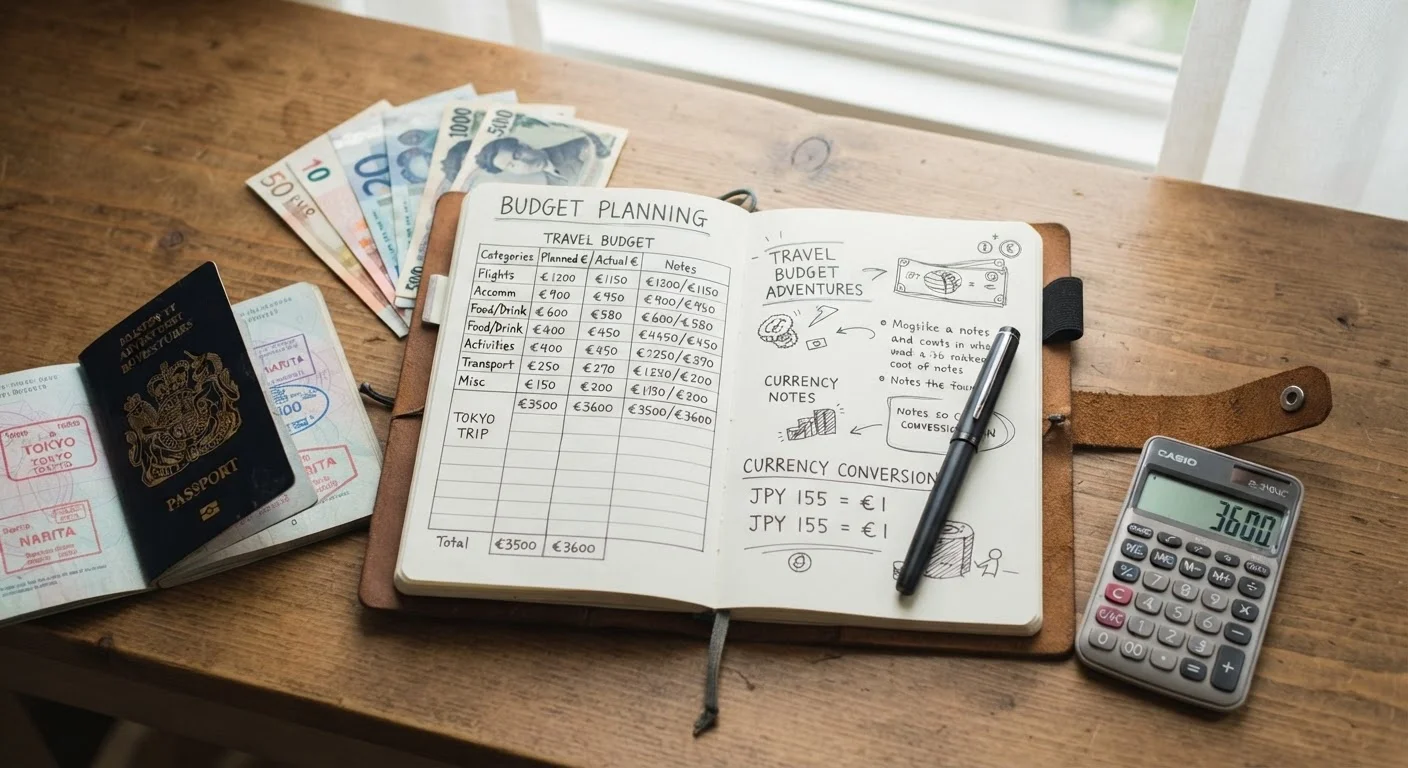
A travel budget is a structured estimate of every dollar you expect to spend on a trip, organized by category - transportation, lodging, food, activities, and miscellaneous costs. It helps you decide what a trip will realistically cost before you commit, and lets you track spending while you're on the road. Unlike a wish list, a working travel budget accounts for the expenses most people forget until the credit card bill arrives.
Travel budgets are commonly expressed as a daily per-person cost (DPC), which makes it easier to compare destinations and scale estimates to trip length.
The Categories Most Budgets Miss
Ask someone what their trip will cost and they'll usually quote flights plus hotels. That's the skeleton - not the budget. The spending categories that blow up otherwise solid plans are the ones hiding in plain sight.
Here's a more complete category list to build from:
- Transportation: Flights or driving costs, airport transfers (often $30-$80 each way in major cities), rental cars, fuel, tolls, parking, and local transit passes.
- Accommodation: Room rate, resort fees, taxes (which can add 15-25% to the sticker price in many U.S. destinations), and parking at the hotel.
- Food and drink: Three meals a day adds up faster than most people expect - especially when breakfast isn't included in the room rate.
- Activities and entry fees: Museums, tours, national park passes, and experiences should be itemized individually rather than estimated as a lump sum.
- Health and safety: Travel insurance, any required vaccinations or prescriptions, and a small first-aid fund. See our overview of travel insurance coverage for what policies typically include.
- Miscellaneous: Tips, souvenirs, laundry, luggage fees, international data or a local SIM card, and any currency exchange costs.
Working through this list before booking is the single most effective way to avoid surprise charges. It also surfaces decisions - do you want to pay for checked bags or pack lighter? - that can meaningfully reduce the total.
How to Estimate Realistic Daily Costs
Daily per-person cost (DPC) is the most practical unit for travel budgeting. It scales cleanly with trip length and makes comparing destinations straightforward.
To build a DPC estimate:
- Look up current accommodation costs for your destination - use a mid-range option as your anchor, not the cheapest listing you can find.
- Estimate food at three tiers: a cheap local meal, a mid-range sit-down meal, and one splurge per day. Average those for a daily food number.
- Identify two or three representative activities and divide their costs across your trip days.
- Add a daily transport allowance based on how you'll move around - subway-heavy cities cost much less than car-dependent ones.
- Add 10-15% as a contingency buffer.
For context, budget-conscious travelers often target $100-$150 per person per day in Western Europe, $60-$100 in parts of Latin America, and $150-$250 in Scandinavia or Japan - though these figures shift significantly based on travel style and current exchange rates. Verify current costs through destination-specific travel forums or tourism resources before finalizing your numbers.
10-15%
Recommended contingency buffer for travel budgets
Widely cited by travel financial planners as a standard cushion for unexpected costs and spontaneous opportunities.
30-50%
Potential DPC reduction from accommodation choice
Switching from a mid-range hotel to a hostel or apartment rental is typically the single largest cost lever available to travelers.
15-25%
Taxes and fees added to hotel sticker prices
Resort fees, occupancy taxes, and tourism levies can significantly inflate the cost beyond the advertised room rate, particularly in major U.S. destinations.
Accommodation is typically your biggest lever. Choosing a hostel dorm over a mid-range hotel, or an apartment rental over a resort, can reduce your DPC by 30-50% on its own. Pairing your budget with a well-structured daily itinerary helps you spend intentionally rather than reactively.
Tracking Spending While You're on the Road
A budget you build and never look at again is just an optimistic document. Tracking in real time is what keeps a travel budget functional.
The method matters less than the consistency. A shared notes app, a simple spreadsheet column for each day, or a travel expense app all do the job - pick whichever you'll actually use. The habit that works is a two-minute daily check-in: log what you spent that day and compare the running total against your plan.
A few practical habits that help:
- Log receipts immediately rather than reconstructing at night - small purchases are easy to forget and easy to underestimate in aggregate.
- Separate your contingency fund mentally. If you've budgeted $200 as a buffer, don't count it as available spending money until you genuinely need it.
- Flag patterns early. If food is running 40% over estimate by day three, you'll catch it in time to adjust - not on the flight home.
For travelers managing money across multiple trips or alongside variable income, the same principles apply as in any personal budget. The fundamentals of personal budgeting translate directly to trip planning, and a monthly budget checklist can help you carve out savings ahead of time. Also worth bookmarking: practical guidance on keeping your money and documents secure while abroad.
All cost estimates in this article are general illustrations only. Prices vary widely by destination, season, and travel style - verify current figures through official and destination-specific sources before making financial decisions.