

Key Takeaways
Our Verdict
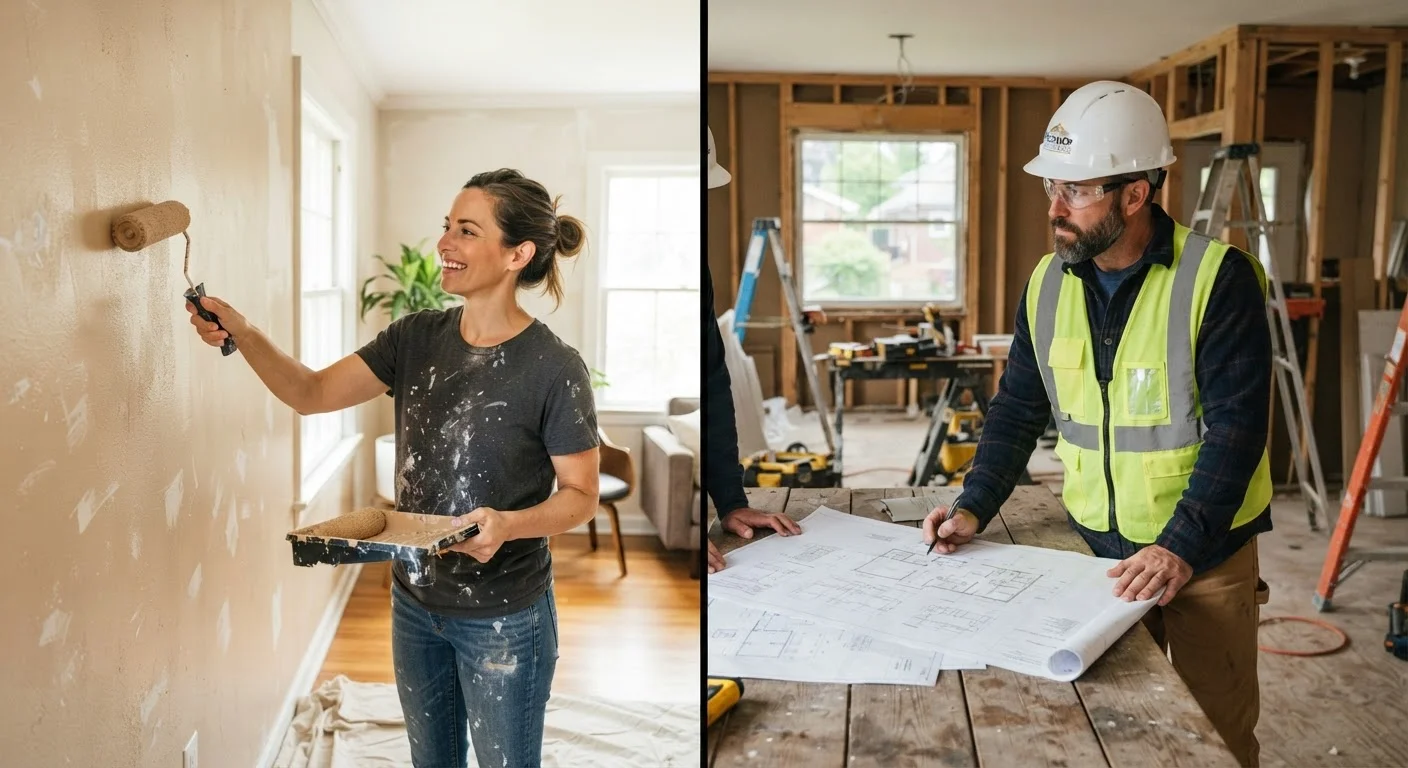
DIY is a reasonable choice for low-risk, cosmetic, and straightforward maintenance tasks - but licensed contractors are essential whenever safety systems, structural integrity, permits, or regulated trades are involved. The right call depends on the scope of the work, your verified skill level, and what local codes require.
| Best for | Recommended |
|---|---|
| Confident homeowners with basic tools and moderate skill | DIY |
| Electrical, gas, plumbing, roofing, or structural projects | Licensed Contractor |
| Projects requiring permits or inspections | Licensed Contractor |
| Cosmetic updates like painting, tiling, or landscaping | DIY |
The Core Question: What's Actually at Stake?
Every home project sits somewhere on a risk spectrum. At one end are weekend tasks - patching drywall, painting a bedroom, replacing a faucet cartridge - where the consequences of a misstep are minor and fixable. At the other end are jobs where an error can cause a house fire, structural failure, flooding, or a failed home sale years down the road.
Before picking up a tool or calling a contractor, ask yourself three questions:
- Could a mistake injure someone or damage the home's structure?
- Does this work require a permit or licensed inspection in my municipality?
- Do I have the verified skills, tools, and time to do this correctly?
If any answer points toward serious risk, a permit requirement, or genuine skill gaps, that's a strong signal to bring in a licensed professional. For more on when permits apply, see what a building permit actually covers.
Projects That Are Generally Safe to DIY
A wide range of routine maintenance and cosmetic improvements fall well within reach for a careful homeowner with basic tools and a willingness to follow instructions carefully. These tasks tend to share a few characteristics: they don't affect structural components, they don't involve electrical panels or gas lines, and mistakes are correctable without major expense.
- Interior painting and wallpaper removal
- Installing or replacing light fixtures (with the circuit breaker off and basic electrical knowledge)
- Replacing cabinet hardware, outlet covers, or switch plates
- Patching small drywall holes
- Caulking around tubs, sinks, and windows
- Laying peel-and-stick tile or floating floor systems
- Basic landscaping, garden bed installation, and mulching
- Cleaning gutters and downspouts
- Replacing a toilet flapper or faucet cartridge
These projects reward patience and preparation. Watch instructional videos, read manufacturer guidelines, and don't rush. The main risk here is usually aesthetic - an uneven patch, a dripping faucet - rather than a safety hazard.
Start Small to Build Real Confidence
If you're newer to home repair, resist the urge to jump into complex projects. Choose a straightforward task - re-caulking a tub surround, replacing a light switch - and complete it fully before moving to something more involved. Documented success on smaller jobs gives you a realistic picture of your abilities and helps you identify where your limits actually are, rather than where you assume they are.
Work That Requires a Licensed Contractor
Certain categories of home improvement are regulated for good reason. Licensed contractors carry insurance, meet training requirements, and pull permits that trigger inspections - all safeguards that protect you, your family, and future buyers of your home.
| Project Type | DIY-Friendly | Licensed Contractor Required | |
|---|---|---|---|
| Interior painting | Yes - low risk, no permits | Not typically needed | |
| Electrical panel or new circuits | No - high risk | Yes - permit and inspection required | |
| Gas line work | No - serious safety hazard | Yes - licensed plumber or gas fitter | |
| Replacing a toilet or faucet | Generally yes, with care | Not typically needed | |
| Load-bearing wall removal | No - structural risk | Yes - engineer and contractor needed | |
| Roof replacement | Not recommended | Yes - permits often required | |
| Flooring installation (floating or peel-stick) | Yes - manageable for most | Not typically needed | |
| Plumbing into main supply or drain stack | No - code regulated | Yes - licensed plumber required |
Electrical work beyond basic fixture swaps - like adding circuits, upgrading a panel, or rewiring rooms - carries real fire and electrocution risk. Our companion piece on why DIY electrical work goes wrong breaks down exactly where that line tends to fall.
Similarly, gas line connections, load-bearing wall removal, roof replacement, and any plumbing tied into the main supply or drain stack are jobs where errors can be catastrophic - and where most local codes require licensed work and permit inspection. Doing unpermitted work in these categories can result in fines and may complicate or derail a future home sale.
How to Evaluate Your Own Skill Level Honestly
Overconfidence is one of the most common reasons DIY projects go wrong. Before committing to a project, do a candid self-assessment:
- Have you successfully completed a similar project before, or is this your first attempt?
- Do you own - or can you safely rent - the proper tools?
- Have you read and understood the full scope of what's required, including any prep and cleanup?
- Are you working within a realistic timeframe, or is time pressure going to force shortcuts?
It's also worth factoring in what failure would actually cost. A poorly hung interior door is annoying. A leaking pipe connection inside a wall can cause mold, structural rot, and a four-figure remediation bill. The hidden costs homeowners forget when budgeting a renovation often trace back to exactly this kind of underestimated risk.
If you're new to renovation work altogether, Home Renovation for First-Timers offers a broader overview of how to plan, hire help, and set realistic expectations before a single nail is driven.
When in Doubt, Start With a Professional Assessment
Even if you plan to DIY a project, there's real value in having a licensed contractor look at the scope first - especially for anything involving older homes, unknown materials (like asbestos or knob-and-tube wiring), or systems you haven't worked with before. Many contractors will offer an initial consultation, and the cost of an hour of professional advice is almost always less than the cost of undoing a mistake.
The goal isn't to avoid doing things yourself - it's to make sure you're taking on the right things yourself. DIY work done well is genuinely satisfying, saves money, and builds useful skills. But the jobs in the licensed-contractor column exist there for a reason. Knowing which category your project belongs in is itself a form of home improvement expertise.
For a broader look at the home improvement decisions homeowners face, our full resource hub covers everything from planning to execution.