
Why DIY Electrical Work Goes Wrong - and Which Tasks to Leave to a Licensed Electrician

Key Takeaways
Where the DIY Line Falls in Electrical Work
Electrical work sits in a different category from most home maintenance tasks. Unlike routine plumbing upkeep, where many tasks involve no live systems at all, electrical work carries a constant risk of shock, arc flash, and fire - even when a homeowner believes the power is off. That doesn't mean homeowners should never touch a wire. Replacing a faulty outlet or swapping a light fixture on a properly de-energized circuit is well within reach for a careful, informed person. But the line between manageable and dangerous is narrower than most people assume.
The mistakes below reflect real patterns in how DIY electrical jobs go wrong - not to discourage you from learning, but to help you understand exactly where the risk lives and what separates a safe task from one that belongs with a licensed electrician.
Common Mistakes That Turn DIY Electrical Work Dangerous
These are among the most frequent errors homeowners make when attempting electrical repairs or upgrades. Understanding why each happens is just as important as knowing how to avoid it.
Assuming the circuit is dead because the breaker is off - without testing it.
Why it happens: Flipping a breaker feels like a definitive safety step, and for many circuits it is. But mislabeled panels, double-tapped breakers, and multi-wire branch circuits mean the wire you're about to touch may still be live.
Connecting wires with the wrong gauge, or mixing wire gauges on the same circuit.
Why it happens: Wire gauge - its thickness - determines how much current it can safely carry. Homeowners often use whatever wire is on hand, or don't realize that the replacement wire needs to match both the circuit breaker rating and the existing wire.
Leaving wire connections outside a junction box, or overloading a box with too many wires.
Why it happens: Junction boxes feel like an optional formality, especially when a splice is tucked into a wall cavity where it's out of sight. Overfilled boxes happen when homeowners add wires without calculating box fill capacity.
Installing a higher-amperage breaker to stop a breaker from tripping, rather than investigating the cause.
Why it happens: A breaker that trips repeatedly is frustrating. Swapping it for a larger one seems like a simple fix, and the parts are inexpensive. What homeowners miss is that the breaker is protecting the wire - not the appliance.
Skipping GFCI or AFCI protection where it's required by code.
Why it happens: Code requirements for ground-fault circuit interrupter (GFCI) and arc-fault circuit interrupter (AFCI) outlets and breakers have expanded significantly over the past few decades. Homeowners working on older homes often don't know what's currently required.
For a broader look at how to decide which projects are appropriate to tackle yourself, see our framework for DIY vs. licensed contractor decisions.
Tasks That Should Always Go to a Licensed Electrician
Some electrical work is regulated at the state or local level, meaning it legally requires a licensed electrician and often a permit with inspection. Attempting these tasks yourself - even competently - can result in failed home inspections, voided homeowner's insurance, or liability if something goes wrong later.
Unpermitted Electrical Work Has Real Consequences
Electrical work done without required permits may not be discovered until you sell your home - at which point it can delay or derail closing. More seriously, unpermitted work may void your homeowner's insurance coverage for related claims. Always check with your local building department before starting any electrical project beyond simple fixture or device replacement.
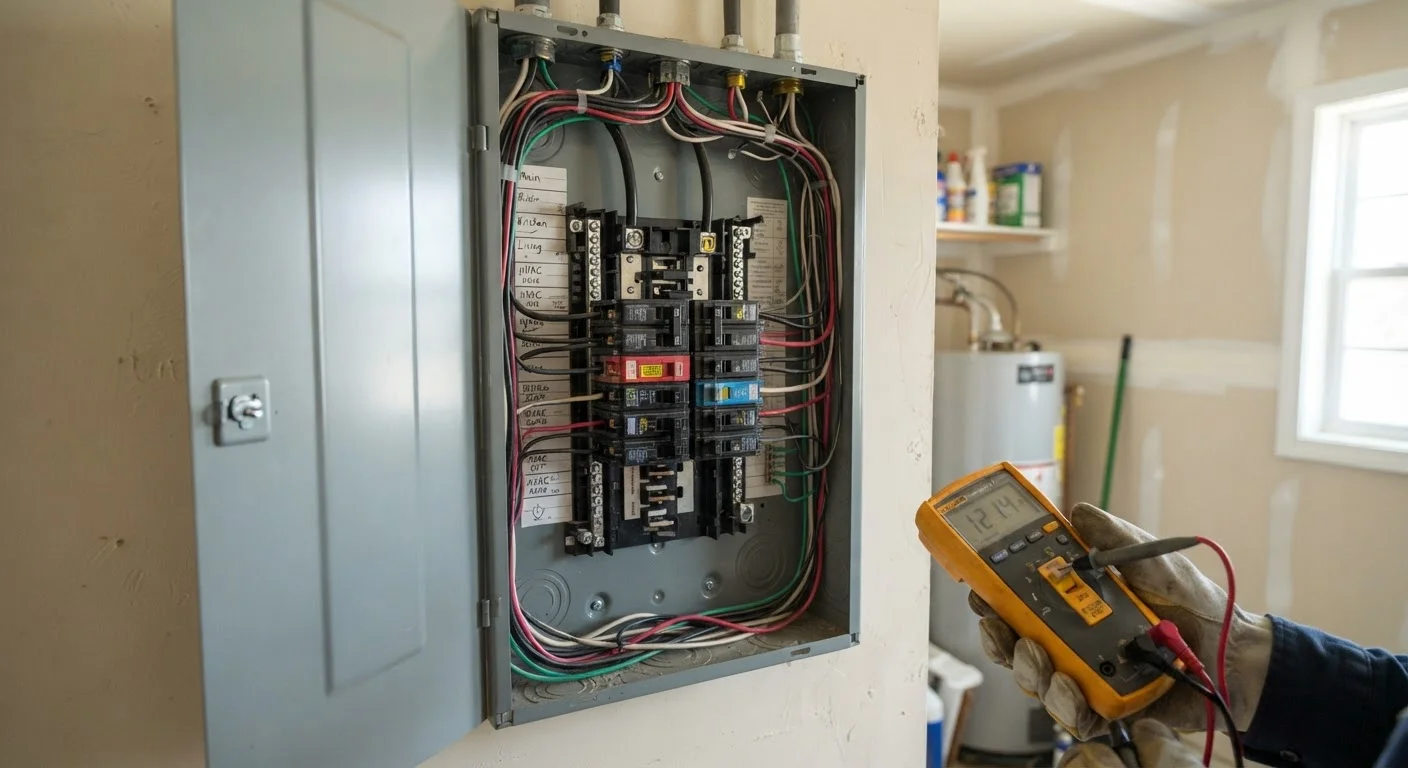
- Panel upgrades and service changes: Work inside the main electrical panel, especially near the service entrance where utility lines connect, involves wires that cannot be de-energized without utility company intervention. This work requires a licensed electrician in virtually every jurisdiction.
- New circuit installation: Running a new circuit from the panel - for a kitchen appliance, EV charger, or workshop - typically requires a permit and inspection to verify it meets local code.
- Aluminum wiring remediation: Homes built between roughly 1965 and 1973 may have aluminum branch-circuit wiring, which requires specific handling. Improperly terminated aluminum wiring is a documented fire risk.
- Subpanel installation: Adding a subpanel for a garage, addition, or workshop involves significant panel work and load calculations that go beyond typical DIY scope.
- Whole-home rewiring: Rewiring an older home is a major project involving permits, inspections, and coordination with the utility - always a licensed-professional task.
If you're unsure whether your project requires a permit, your local building department is the right first call. Many offer free guidance on what's required before work begins.
For related upkeep tasks that are easier to manage yourself, see maintenance jobs new homeowners often miss.