

Key Takeaways
The Maintenance Gap Most New Homeowners Don't See Coming
Buying a home comes with a mental checklist most people picture clearly - mortgage payments, lawn mowing, maybe a fresh coat of paint. What rarely makes that list are the quieter, behind-the-scenes tasks that keep a house structurally sound, safe, and energy-efficient. Skip them long enough and they stop being invisible: they become expensive.
The good news is that most of these tasks are genuinely manageable. They don't require specialized skills or costly professionals. They just require knowing what to look for - and when. Use this list as a starting point, and consider pairing it with a seasonal maintenance calendar to stay consistently on track throughout the year.
Flush the Water Heater
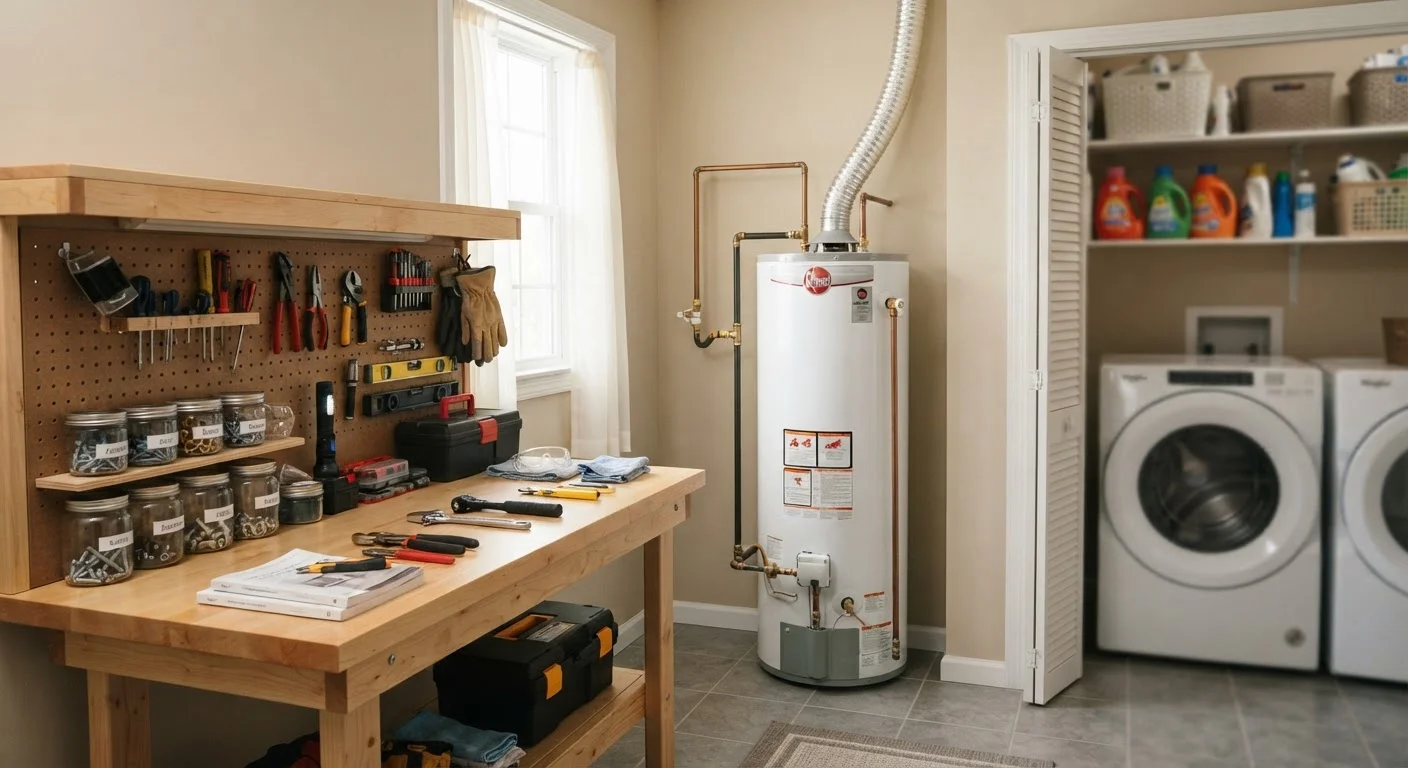
Sediment - primarily minerals like calcium and magnesium from your water supply - gradually settles at the bottom of a traditional tank water heater. Over time, this layer forces the heater to work harder to heat the same volume of water, raising energy use and accelerating wear on the tank lining. Most manufacturers recommend flushing the tank at least once a year.
The process involves connecting a garden hose to the drain valve and letting the tank empty until the water runs clear. Before attempting this, review your heater's manual and, if your unit hasn't been flushed in several years, consider having a plumber assess it first - heavily scaled valves can fail when disturbed. For a broader look at water heater upkeep, see our comparison of tankless vs. traditional water heaters.
Sediment buildup quietly shortens your water heater's lifespan and raises your energy bill.
Clean the Dryer Vent
The lint trap catches a lot - but not everything. Over months and years, lint accumulates inside the ductwork that vents your dryer to the outside. A restricted vent forces the dryer to run longer, wears out the heating element faster, and - critically - creates a fire hazard. Lint is highly flammable, and a blocked vent concentrates heat where it shouldn't be.
Check the exterior vent cap to make sure it opens freely when the dryer runs. At least once a year, disconnect the duct from the back of the dryer and clean the interior with a long flexible brush. If your vent run is long or includes bends, professional cleaning is a reasonable option. This task is also covered in our exterior winter preparation checklist.
Lint-clogged dryer vents are one of the most preventable causes of home fires.
Inspect and Replace Caulk
Caulk is the flexible sealant used around tubs, showers, sinks, windows, and exterior joints to keep water and air out. It doesn't last forever - exposure to moisture, temperature swings, and normal house movement causes it to crack, shrink, or pull away from surfaces. Once it fails, water can work its way into walls, subfloors, and framing, leading to rot and mold.
Walk through your home every six to twelve months looking for caulk that has discolored, cracked, or pulled away from the surface. Removing old caulk with a utility knife or caulk remover tool and applying a fresh bead is a low-skill task most homeowners can handle confidently. Pay particular attention to areas around plumbing fixtures and exterior window frames.
Failed caulk is a small problem with a large price tag if water reaches your framing.
Test GFCI Outlets and Safety Detectors
Ground fault circuit interrupter (GFCI) outlets - the ones with small test and reset buttons found near sinks, in bathrooms, garages, and outdoor locations - protect against electrical shock by cutting power when they detect a fault. They can fail silently over time. Testing them is simple: press the test button to confirm power cuts off, then press reset to restore it. If an outlet doesn't respond correctly, it needs replacement.
Smoke detectors and carbon monoxide alarms deserve the same attention. Test each one monthly using the built-in test button and replace batteries at least annually - or according to the manufacturer's recommendation. Most smoke detectors should be replaced every ten years regardless of apparent function. For a thorough safety review, see our guide on smoke detectors and carbon monoxide alarm testing.
A GFCI outlet or smoke detector that fails silently offers no protection at all.
Clear and Inspect Gutters
Gutters serve one essential function: directing rainwater away from your home's foundation and siding. When they fill with leaves, shingle granules, and debris, water overflows and pools against the foundation, seeps under roofing materials, and saturates fascia boards. The downstream repairs - foundation waterproofing, rot remediation, basement flooding - are significantly more expensive than gutter cleaning.
Plan to clean gutters at least twice a year: once in late spring after trees finish seeding, and again in late fall after leaves have dropped. While you're up there, check that gutters are pitched correctly toward downspouts, that downspout extensions direct water well away from the foundation, and that no sections have pulled away from the fascia. Our deeper look at gutter maintenance and what happens when it's skipped covers what to watch for.
Overflowing gutters can quietly cause foundation damage that costs far more to fix than cleaning would have.
Check Weatherstripping on Doors and Windows
Weatherstripping - the flexible seal around door frames and operable windows - degrades with use and age. Gaps allow conditioned air to escape and outdoor air to infiltrate, putting continuous load on your HVAC system. In winter, those same gaps can allow moisture-laden cold air to condense on interior surfaces.
Close each exterior door and window and look for daylight around the frame, or run your hand along the edges on a windy day to feel for drafts. Replacing worn weatherstripping is a straightforward DIY task in most cases: the old material peels or unscrews away, and replacement strips are cut to length and pressed or screwed into place. For a broader approach to reducing energy loss, our home weatherization guide walks through the full picture.
Worn weatherstripping is one of the most cost-effective fixes for reducing energy loss at home.
Turn Awareness Into a Routine
None of these tasks are complicated once you know they exist. The challenge for most new homeowners isn't skill - it's awareness. A home doesn't announce when its dryer vent is clogged or when its water heater sediment has hit a critical level. Building the habit of regular walkthroughs is how you catch problems before they escalate.
Build a Simple Home Maintenance Log
Keep a running document - even a basic notes app entry - recording what you checked, what you found, and when. This log becomes invaluable when you're troubleshooting a problem, selling the home, or simply trying to remember when the water heater was last flushed. A few notes per task takes seconds and saves real headaches later.
If any of these tasks surfaces something beyond routine upkeep - a crack in the flashing, a breaker that trips repeatedly, persistent moisture behind caulk lines - treat it as a signal to consult a qualified professional rather than push through. The hidden costs of deferred maintenance rarely stay hidden for long.