

Key Takeaways
Start here
What Is a Ryokan, Exactly?
Next
The Etiquette You Need to Know Before You Arrive
Then
Meals, Onsen, and the Flow of a Ryokan Stay
Prepare
What to Pack (and What to Leave at Home)
When you're ready
Choosing the Right Ryokan for Your Trip
What Is a Ryokan, Exactly?
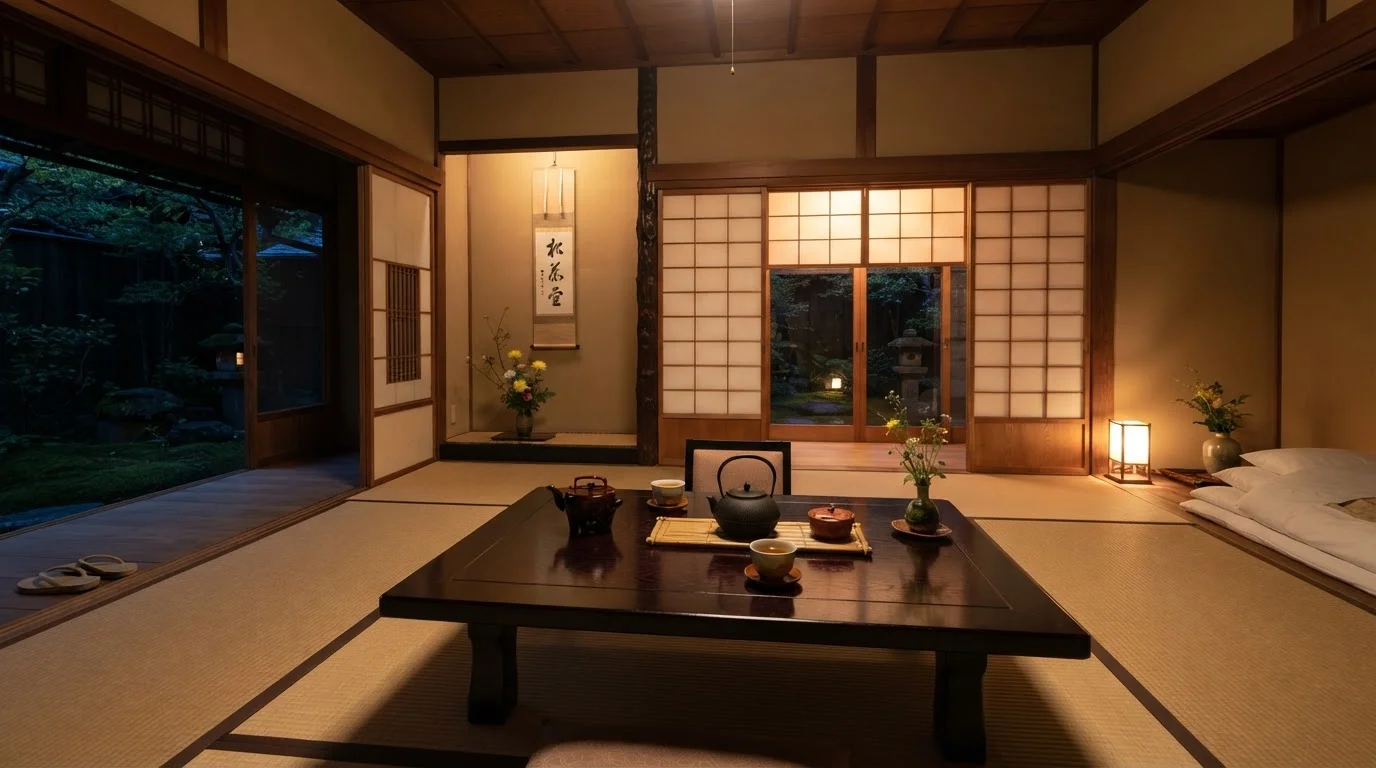
A ryokan is a traditional Japanese inn, and staying in one is genuinely unlike any hotel experience you've had before. The concept dates back centuries - these inns served travelers along Japan's historic road networks - and the best ones have preserved the aesthetics and rituals of that era while adding modern comforts.
Rooms are typically built around tatami mat flooring, low furniture, and minimal decoration. Instead of beds, staff lay out futon bedding on the tatami floor each evening. Natural materials - wood, paper shoji screens, ceramic - dominate the design. The overall effect is one of deliberate calm.
What sets a ryokan apart from a boutique hotel isn't just the decor, though. It's the philosophy of hospitality behind it. The Japanese concept of omotenashi - wholehearted, anticipatory service - shapes every interaction. Staff often greet guests with tea and a small seasonal sweet before they've even sat down.
If you're new to international travel generally, it's worth reading our guide on common mistakes first-time international travelers make before your trip - ryokan customs are just one layer of a broader cultural shift.
The Etiquette You Need to Know Before You Arrive
Ryokan customs aren't difficult once you understand the logic behind them, but walking in uninformed can lead to awkward moments. Here's what actually matters:
- Remove shoes at the entrance (genkan). This is non-negotiable. You'll leave your shoes at the entryway and slip into provided indoor slippers. Separate slippers are provided for toilet rooms - never wear those outside the bathroom.
- Treat tatami with care. Don't walk on tatami mats with slippers - bare feet or socks only. Placing luggage or furniture directly on tatami is considered poor form.
- Keep noise levels low. Ryokans are built around quietude. Loud conversations in hallways, common areas, or near communal baths disrupt other guests and run against the ethos of the stay.
- Yukata etiquette matters. Wrap your yukata left side over right (right over left is reserved for funerals). It sounds minor, but staff will notice and appreciate the effort.
Cultural respect at a ryokan has parallels with behavior at sacred sites. Our guide on being a respectful guest at foreign sacred sites covers that broader mindset well.
A Small Gesture That Goes a Long Way
Learning two or three phrases in Japanese - 'sumimasen' (excuse me), 'arigatou gozaimasu' (thank you very much), and 'itadakimasu' (said before eating) - signals genuine respect and is warmly received by ryokan staff. You don't need fluency; the effort itself communicates a great deal.
Meals, Onsen, and the Flow of a Ryokan Stay
Most traditional ryokans operate on a half-board model - dinner and breakfast are included in the rate and served in a set sequence. Dinner is typically kaiseki, a multi-course meal built around seasonal, regional ingredients. Dishes arrive in a specific order, each carefully composed. Expect small portions presented with obvious care - this isn't about volume, it's about craft.
Meals are often served in your room or a private dining area, and timing is usually fixed when you check in. Be prompt; the kitchen prepares each course to a schedule.
The onsen (hot spring bath) is central to the ryokan experience. Communal baths are gender-separated and require guests to shower thoroughly before entering the water - this is both a hygiene standard and a cultural expectation. No swimwear is worn in traditional onsen. Many properties rotate bath access so guests can use both at different times of day.
The rhythm of a ryokan day tends to be unhurried: a long soak, a multi-course dinner, an early night on a futon, a morning bath, and a leisurely breakfast. If that pacing sounds foreign, lean into it - that deliberateness is the point of the stay.
What to Pack (and What to Leave at Home)
Packing for a ryokan stay is refreshingly light, because the inn provides more than you might expect:
- Provided by the ryokan: Yukata robe, towels (small and large), toiletries, slippers, and futon bedding. High-end ryokans often include seasonal skincare products and wooden combs.
- Bring with you: Any personal medications, earplugs if you're a light sleeper (older wooden buildings carry sound), a small travel bag for carrying your towel to the onsen, and your own preferred toiletries if you have specific needs.
- Leave at home (or in your hotel): There's no reason to haul a full suitcase to a ryokan. Many travelers use a ryokan as a one- to three-night detour from a larger itinerary, leaving larger luggage at a city hotel via luggage forwarding services (called takkyubin in Japan) - a genuinely convenient option worth researching before you travel.
Solo travelers in particular tend to find the ryokan format well-suited to their trips. Our guide to traveling solo for the first time covers how to make the most of experiences like this when you're going it alone.
Choosing the Right Ryokan for Your Trip
The range of ryokan experiences is wider than most visitors realize. A basic minshuku (family-run inn) in a mountain village offers something very different from a centuries-old, design-forward property in Kyoto or a thermal resort town like Beppu or Kinosaki Onsen. Neither is better - they serve different travel goals.
A few practical factors to weigh when selecting a ryokan:
- Location
- Onsen resort towns like Hakone, Nikko, and Yufuin are built around the ryokan experience. Urban ryokans in Kyoto or Tokyo offer cultural immersion alongside city access.
- Private vs. communal baths
- If you have tattoos, mobility considerations, or simply prefer privacy, look specifically for ryokans offering kashikiri (private, reserved baths).
- English support
- Confirm this before booking if communicating in Japanese isn't possible. Many ryokans catering to international guests provide English-language staff or printed guidance.
- Price range
- Rates vary enormously - from modest rural inns to luxury properties charging several hundred dollars per person per night. The higher end typically reflects the quality of the kaiseki meal as much as the room itself.
Always verify entry requirements, cancellation policies, and any guest conduct rules (including tattoo policies) directly with the property before confirming. Conditions and policies can change, and official property communications are your most reliable source.