

Key Takeaways
Price vs. Value
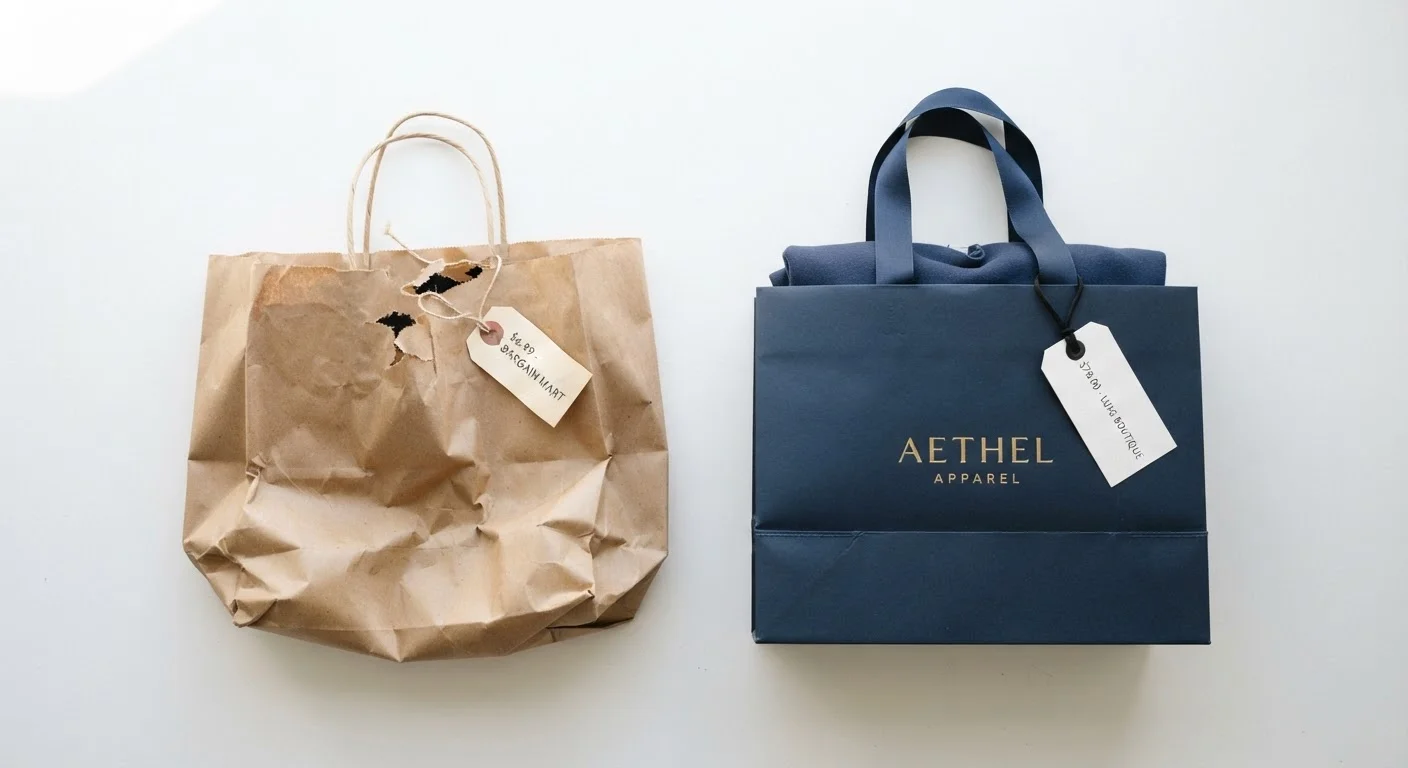
Price is what you pay at the register. Value is what you actually get in return - measured by how well a purchase meets your needs, how long it lasts, and what it costs you over time. These two numbers are rarely the same. A low price can represent excellent value or terrible value depending on the circumstances.
In economics, value is often framed as 'utility per dollar' - the ratio of benefit received to cost incurred. A higher-priced item can deliver superior utility if it lasts longer, requires fewer replacements, or performs better in ways that matter to the buyer.
Why Price and Value Get Confused
Most of us learn to shop by scanning price tags. The number is visible, concrete, and easy to compare. Value, by contrast, takes more work to assess - it requires thinking about what you actually need, how long something will last, and what it might cost you beyond the initial purchase. Because value is harder to calculate, price often wins by default.
Retailers know this. Pricing psychology - from anchored 'original' prices to tiered product lines - is designed to shape your sense of what something is worth before you've had a chance to think critically. Understanding the difference between what something costs and what it's worth to you is one of the most practical skills in everyday shopping. Our Buying Smart hub covers this and related concepts in depth.
Price Signals Aren't Reliable Quality Indicators
Research on consumer behavior consistently shows that people assume higher-priced products are better quality - even when they're functionally identical. This bias is built into how we process price information, not a reflection of actual product differences. Being aware of this tendency is the first step toward more objective evaluation.
The Real Components of Value
Value isn't a single number - it's a combination of factors that add up to how much you actually get per dollar spent. When evaluating any purchase, it helps to think in four dimensions:
- Performance: Does it do the job it's supposed to do, reliably and consistently?
- Durability: How long will it last under the conditions you'll actually use it in?
- Total cost of ownership: What will you spend on maintenance, replacement parts, or consumables over the item's lifetime?
- Fit for purpose: Does it match your specific situation - or does it overdeliver or underdeliver relative to your needs?
A tool you use once a year doesn't need to be built to professional-grade standards. A pair of running shoes used daily does. Paying more upfront isn't always the right call - it depends heavily on how, how often, and how long you'll use something.
60%
Shoppers who regret impulse purchases
A survey by the National Retail Federation found that roughly 60% of shoppers reported buyer's remorse linked to price-focused decisions made without fully considering product quality or fit.
2-3x
Lifetime cost multiplier for low-durability goods
Consumer research consistently finds that low-durability versions of frequently used products can cost two to three times more over a five-year period than mid-tier alternatives when replacement frequency is factored in.
Up to 80%
Cost savings with equivalent generics
The FDA notes that generic drugs can cost 80-85% less than brand-name equivalents while meeting the same standards for safety, purity, and effectiveness.
What Hidden Costs Do to a 'Good Deal'
The sticker price is just the starting point. Many purchases carry costs that only appear after you've bought them - and those costs can completely flip the math on what looked like a bargain. Common hidden cost categories include:
- Replacement frequency: A $15 item you replace every six months costs $30 a year. A $40 item that lasts three years costs about $13 annually.
- Maintenance and repairs: Some products require regular servicing, accessories, or consumables that add up quickly.
- Compatibility and ecosystem lock-in: Buying into a product ecosystem can mean ongoing costs if you need peripherals or replacements to stay compatible.
- Opportunity cost of failure: If a product fails at a critical moment - a power outage, a work deadline, a health situation - the indirect cost can far exceed the item's purchase price.
For a structured look at how these costs compound, see our article on hidden costs that make a good deal expensive over time.
How to Assess Value Before You Buy
Developing a reliable value-assessment habit takes practice, but the core process is consistent regardless of what you're buying:
- Define your actual need. Be specific. What problem does this purchase solve? How often? In what conditions?
- Estimate total cost of ownership. Add up expected lifetime costs, not just the upfront price. Divide by expected years of use for an annual cost comparison.
- Separate brand premium from real quality difference. In some categories, the brand markup reflects genuine engineering or formulation advantages. In others, it's mostly marketing. Our article on what research shows about generic vs. name brand quality breaks this down by category.
- Check your perception against the discount. If an item is on sale, ask whether you'd consider it a good deal at the sale price with no reference to the original. Sale pricing psychology often makes moderate deals appear exceptional.
Try the Cost-Per-Use Calculation
Before comparing two items by price, divide each item's total expected cost (including likely maintenance and replacement) by the number of times you expect to use it. This turns an abstract price comparison into a concrete value-per-use figure. A $100 item used 200 times costs $0.50 per use; a $40 item used 30 times costs $1.33 per use. The math often tells a different story than the price tag.
When Cheaper Actually Is Better
None of this means you should always spend more. In plenty of situations, the cheaper option is genuinely the smarter choice - and overspending is just as much a value error as underspending.
Consider basic commodity goods - items where the underlying product is essentially identical regardless of brand or price point. Certain medications, basic hardware, standard office supplies, and many grocery staples fall into this category. For infrequently used items, a lower-cost option that gets the job done a handful of times is often more rational than paying a premium for durability you'll never use. Our article on when store brands are a smart call walks through category-specific thinking.
The goal isn't to spend more or spend less - it's to spend in proportion to what you actually need. That requires asking the right questions before you buy, not just comparing price tags. For a broader framework, the practical guide to understanding value is a solid starting point.