

Key Takeaways
Where the 'Buy Quality Once' Idea Comes From
The idea that spending more upfront saves money in the long run has roots in real experience. A well-made pair of boots that lasts a decade can easily outperform three cheap pairs purchased over the same period. A durable kitchen appliance that never needs repair clearly beats a budget model replaced twice. The logic is sound - under the right conditions.
The problem is that this principle gets applied indiscriminately, treating a nuanced framework as a universal law. That leap leads to real financial mistakes: overspending on categories where quality differences are minimal, or investing in durability on items you'll stop using before they wear out. Understanding when the logic holds is what separates smart buying from expensive rationalization.
For a deeper look at how price and value diverge, see our guide to price vs. value.
The Myths and the Facts
Several widely held beliefs shape how consumers approach upfront spending. Some hold up under scrutiny. Others collapse the moment you run the numbers. The myth-and-fact pairs below walk through the most common ones.
Myth
Spending more upfront always saves money over time.
Fact
It only saves money when the quality difference is real, the item is used often, and you own it long enough to recoup the cost difference.
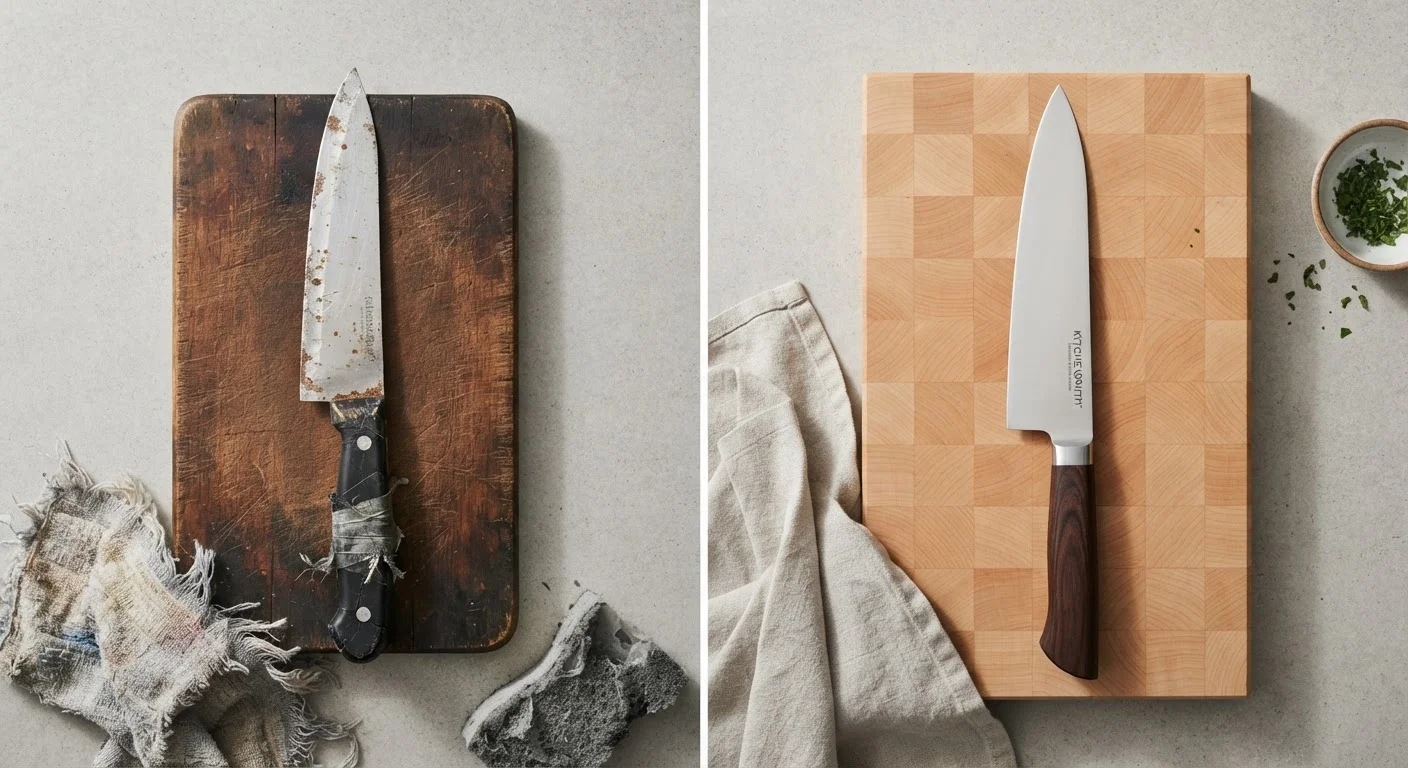
The financial case for a premium purchase depends on three variables working together: a genuine performance or durability advantage, sufficient usage frequency, and enough ownership time for the savings to materialize. If any one of those conditions isn't met, the premium evaporates. A $400 chef's knife used daily for 15 years can be excellent value. The same knife purchased by someone who rarely cooks is just an expensive drawer item.
Myth
A higher price tag signals higher quality.
Fact
Price and quality correlate inconsistently across product categories - in many cases, brand premiums account for the difference, not better materials or engineering.
Consumer testing organizations and independent product research consistently find that the relationship between price and measurable performance varies widely by category. In some segments - certain hand tools, professional cookware, HVAC equipment - price tracks real differences in materials and longevity. In others - basic household cleaners, generic medications, many pantry staples - the premium version and the store-brand version are functionally identical. See what research shows about generic vs. name brand quality for a category-by-category breakdown.
Myth
Cheap items always end up costing more because they break faster.
Fact
Budget items sometimes offer equivalent durability for their expected use case - and replacement is occasionally cheaper than maintenance on a premium alternative.
The "cheap costs more" argument assumes the budget item will fail significantly earlier. That's sometimes true and sometimes not. A low-cost item used occasionally may never fail before it's outgrown, replaced by a newer model, or simply no longer needed. Additionally, some premium products carry high repair costs that shift the long-term math. Before assuming the expensive option wins, calculate what full ownership - purchase plus upkeep plus eventual replacement - actually costs for each option.
Myth
If you can't afford the premium version, you should wait until you can.
Fact
Waiting to afford a premium item is only financially sound if the premium version genuinely outperforms the alternative for your specific usage pattern.
Delaying a necessary purchase hoping to afford the "best" version can mean going without something useful in the meantime - and that has its own cost. More importantly, waiting is only worth it if the premium product will actually serve you better. If independent evidence suggests the quality gap is modest, or if your usage doesn't demand top-tier durability, the wait may not pay off. Our analysis of when waiting improves outcomes covers the cases where patience genuinely helps - and where it doesn't.
Myth
Premium products in any category are worth the investment for serious users.
Fact
Even heavy users don't always benefit from the top price tier - the performance gains above mid-range options are often marginal and not worth the added cost.
Product categories often follow a curve where mid-range options deliver most of the performance of premium products at a fraction of the cost. The final increment of quality at the top of the market tends to be the most expensive per unit of improvement. For most consumers - even frequent users - mid-range products represent the best value. True professionals with specific technical demands may find premium tools justified, but that's a much narrower group than marketers suggest.
A Simple Framework for Deciding
Rather than defaulting to either "always buy quality" or "always go cheap," apply a short decision filter before any significant purchase:
- Frequency of use: Daily-use items benefit most from durability. Occasional-use items rarely do.
- Expected ownership period: If you'll own it for years, a higher upfront cost spreads across more time. If you'll replace it in two years regardless, that math changes.
- Repair and replacement costs: Some premium items cost significantly more to fix. Factor in parts and labor, not just the purchase price.
- Verifiable quality difference: Is there independent evidence - consumer testing, professional reviews, engineering specs - that the premium version actually performs better? Or is the price gap driven by branding? Our explainer on premium pricing breaks this down further.
- Break-even point: Calculate the cost per year or cost per use for both options. If the cheaper option's total cost over your expected ownership period is lower, the premium likely isn't justified.
This same logic applies beyond consumer goods. Our piece on homebuying beliefs that can cost you money explores how the same upfront-vs-long-term tradeoffs play out in real estate decisions.
For a more detailed look at the durability tradeoff specifically, see Durability vs. Disposability.