

Key Takeaways
The Psychology Behind the Price-Quality Assumption
The belief that price tracks quality isn't irrational - it's a cognitive shortcut that sometimes works and sometimes doesn't. When you lack information about a product, price becomes a proxy. The problem is that this shortcut is easily exploited by anyone setting a price point.
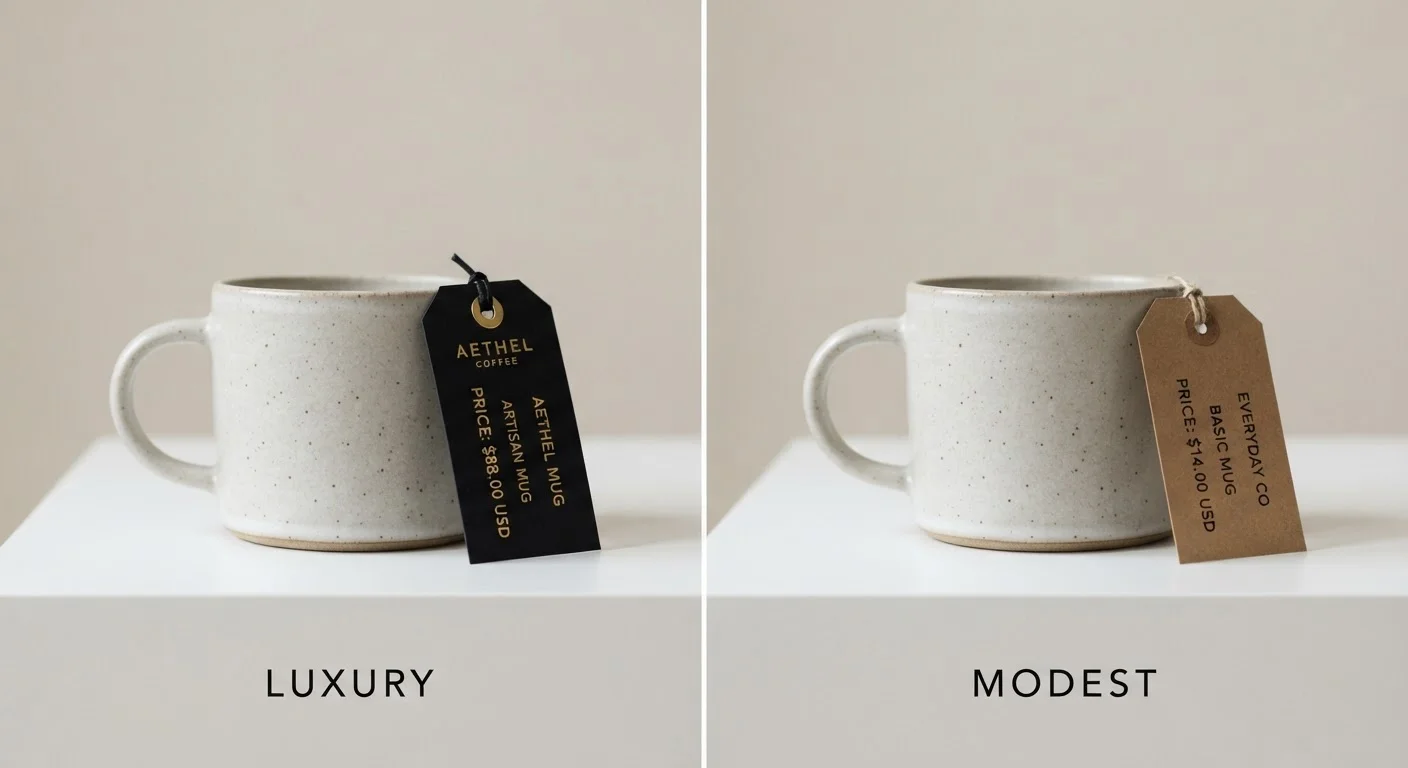
Marketers understand the heuristic well. Pricing a product higher than competitors - without changing anything substantive - can actually increase perceived desirability. This phenomenon, documented in consumer psychology research, means that the sticker price you see may be engineered to shape your perception rather than reflect production reality.
Myth
If something costs more, it must be made better. Price reflects quality.
Fact
Price reflects many factors - demand, brand positioning, supply chain costs, marketing budgets - and quality is only one of them.
Consumer psychology research consistently shows that people rate identical products as superior when told they cost more. This "price-quality heuristic" is a mental shortcut, not a reliable evaluation tool. Manufacturers know this and price strategically. In commodity categories - think basic cotton T-shirts, unbranded kitchen staples, or generic over-the-counter medications - price often has little correlation with actual performance. In specialized categories - precision tools, some electronics components, technical outdoor gear - a higher price can reflect genuine engineering trade-offs worth paying for. The category matters enormously.
Myth
Premium packaging means a premium product inside.
Fact
Packaging is a marketing investment, not a quality investment. It says nothing reliable about the contents.
A significant portion of a premium product's retail price can go toward the box, the bottle, the tissue paper, and the unboxing experience - none of which affects performance. Cosmetics and personal care are a well-documented example: the formulation inside a elegantly designed jar and a plain drugstore tube is sometimes chemically identical or functionally equivalent. If you want to evaluate what you're actually buying, look at the ingredient list, material spec sheet, or third-party lab results - not the presentation. See our guide to what "quality" actually means for a breakdown of which signals are meaningful.
Myth
Name brands invest more in quality control, so they're always more reliable.
Fact
Many name-brand and store-brand products are manufactured in the same facilities to very similar specifications.
Private-label and store-brand products are often produced by the same contract manufacturers that supply major national brands. The difference is frequently the label and the margin structure, not the production line. That said, this isn't universal - some brand premiums do reflect proprietary formulations, stricter sourcing standards, or longer product testing cycles. The honest answer is: it depends on the category and the specific product. Research on generic vs. name brand quality shows meaningful variation by product type rather than a blanket rule in either direction.
Myth
Expensive products last longer, so they're better value over time.
Fact
Durability correlates with specific construction details and materials - not price alone.
The "buy it once" logic is appealing but only holds when you can actually verify that a higher-priced item is built to last. Price alone doesn't tell you that. A $200 item may have the same plastic chassis as a $60 one, while a modestly priced item may use higher-grade materials in a less-marketed category. Look for observable durability signals: stitching density on textiles, gauge thickness on cookware, component sourcing transparency on electronics. Our guide to signals that a product will last walks through what to look for before committing. For the broader cost-benefit picture, see when spending more upfront actually saves money.
Myth
If I can't taste or feel the difference, the premium product is still worth it for quality reasons I can't perceive.
Fact
If a difference isn't detectable in normal use, it isn't functionally relevant to most consumers.
Blind testing across categories - wine, coffee, cooking oils, audio equipment at consumer listening levels - repeatedly shows that people's preferences shift dramatically when they don't know what they're consuming. A preference that only exists when you can see the label is a preference shaped by perception and marketing, not by the product itself. That doesn't mean premium products are never worth it - sometimes the experience of ownership, aesthetics, or brand values matter to a buyer. But that's a personal values decision, not a quality decision, and it's worth being clear about the difference.
Understanding when price is a useful signal versus when it's noise is a core buying smart skill. It requires shifting attention away from the number and toward verifiable product attributes.
How to Evaluate Products Beyond the Price Tag
Once you stop treating price as a quality guarantee, you need replacement tools. A few practical approaches hold up across categories:
- Check material and component specifications. Manufacturers who invest in quality typically document it. If a spec sheet is vague or unavailable, that itself is informative.
- Look for third-party certifications. Independent standards bodies test products against defined criteria. Certification logos from recognized organizations carry more weight than marketing copy. See our guide to genuine quality signals for a closer look.
- Read structured reviews, not star ratings. Written reviews describing specific failure points or durability over time are more actionable than aggregate scores.
- Consider the category. For store brand vs. name brand decisions, the category context shapes how much price should factor in at all.
Sunk-Cost Thinking Can Compound the Problem
Once you've paid a premium, it's psychologically tempting to justify the purchase by perceiving the product as better - even when evidence says otherwise. This is a form of sunk-cost bias. Recognizing it is the first step to evaluating your next purchase more objectively rather than doubling down on expensive habits.
Price and value are related but distinct concepts. Our companion piece on price vs. value explores the other side of this - situations where paying less is also the wrong call.
This article provides general consumer education. It is not financial advice, and individual purchasing decisions depend on personal needs and circumstances.