

Key Takeaways
What Subscription Traps Actually Are
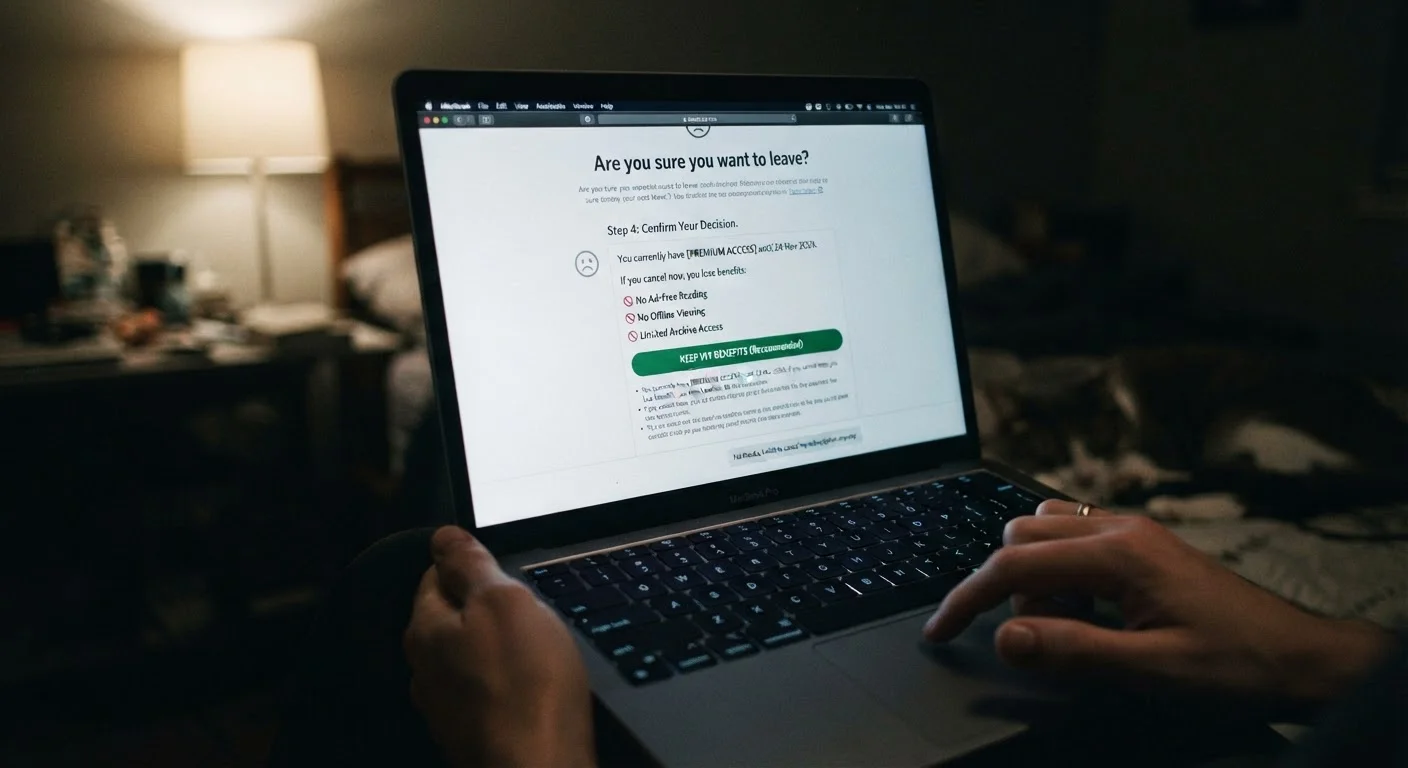
A subscription trap - sometimes called a negative option arrangement - is a billing setup where your silence or inaction is treated as ongoing consent to be charged. You don't have to re-authorize the payment each cycle; it happens automatically until you explicitly cancel. That structure isn't inherently predatory, but it becomes a trap when the enrollment is unclear, the terms are buried, or the exit is made deliberately hard to find.
The Federal Trade Commission (FTC) has identified negative option marketing as one of the most persistent sources of consumer complaints. The mechanics vary, but the most common forms include: free-to-paid trial conversions, continuity programs (where a product ships and bills you monthly by default), and add-on subscriptions attached to a primary purchase at checkout.
These arrangements are often paired with intentional design choices that make enrollment easy and cancellation effortful - a deliberate asymmetry. Understanding that asymmetry is the first step to protecting yourself. See also: questions to ask before starting any free trial.
Your Right to Cancel and Dispute
Under the FTC's Negative Option Rule, companies that use recurring billing must clearly disclose the subscription terms, get your affirmative consent, and provide a simple cancellation mechanism. If a company makes cancellation unreasonably difficult, you can file a complaint with the FTC at ReportFraud.ftc.gov. You may also have the right to dispute unauthorized or unclear charges directly with your card issuer under the Fair Credit Billing Act.
The Warning Signs to Spot Before You Sign Up
Most subscription traps are detectable before you enter a payment method - if you know what to look for. Watch for these specific patterns:
- Vague or hidden trial length: The offer emphasizes "free" without stating clearly when and how much billing begins.
- Pre-checked add-on boxes: Membership programs or protection plans selected by default during checkout.
- No stated cancellation method: The sign-up page doesn't tell you how you'd cancel if you wanted to.
- "Special introductory" pricing without a clear end date: A low price that quietly shifts to a higher rate after a defined or undefined period.
- Urgency framing: Language designed to rush you past the fine print rather than read it.
Pricing disclosures that are technically present but styled in light grey, small font, or placed after the payment button are worth particular scrutiny. Legitimate services make their billing terms findable - companies relying on confusion do not. This connects directly to why the price you see rarely equals the price you pay without careful attention to the full terms.
Use a Virtual Card Number for Trials
Many banks and credit unions offer single-use or merchant-locked virtual card numbers. Using one for a free trial creates a natural barrier against unauthorized future charges. If the merchant attempts to bill after you've cancelled, the charge simply won't go through. Check whether your card issuer offers this feature in their app or online portal.
How to Protect Yourself: Step-by-Step
The steps below walk you through a consistent approach to evaluating and managing any subscription offer - from the moment you encounter it to the follow-up after cancellation. Having a repeatable process matters because subscription traps work partly by exploiting time pressure and inattention.
What you will need
Credit or debit card statement
Reviewing transaction history regularly to catch unrecognized recurring charges early.
Email search function
Searching your inbox for subscription confirmation emails to locate billing terms and cancellation links.
Calendar or reminder app
Setting alerts before free trials convert to paid subscriptions.
Virtual card number (from your bank)
Limiting a merchant's ability to charge you after a trial ends or after you've cancelled.
Screenshot tool
Documenting cancellation confirmations and subscription terms as evidence if a dispute arises.
Read the billing terms before entering payment information
Before clicking "Start Free Trial" or "Subscribe," scroll past the headline offer and find the billing disclosure - usually in smaller text near the payment button or in a linked terms document. Look specifically for: how long the trial lasts, what price kicks in afterward, how often you'll be billed, and whether the price can change. If this information is missing or vague, treat that as a red flag.
Uncheck any pre-selected subscription boxes
Pre-ticked opt-in boxes are a textbook dark pattern used to enroll shoppers without deliberate consent. When checking out online, slow down and look for checkboxes related to memberships, protection plans, or auto-refill programs. These are often styled to blend in with required form fields. Uncheck anything you didn't consciously select.
Set a calendar reminder before the trial ends
The moment you sign up for any trial requiring payment information, open your calendar and set a reminder at least two days before the trial period expires. This gives you time to evaluate the service and cancel without rushing. Don't rely on the company's reminder emails - they may not come, or may arrive the day billing occurs.
Locate and test the cancellation path before you need it
Right after signing up, navigate to the account settings and find where you would cancel. This serves two purposes: you know where to go when the time comes, and you can immediately spot if the process is unreasonably complex (multiple confirmation screens, mandatory phone calls, or cancellation windows limited to specific hours). If you can't find a clear cancellation path, document that as well.
Document your cancellation with a screenshot
When you cancel, take a screenshot of the confirmation screen or save the confirmation email. Note the date and time. This documentation matters if the company continues to charge you after cancellation - it gives you clear evidence when disputing the charge with your card issuer. Store the screenshot somewhere you can retrieve it easily.
Audit your card statements monthly for recurring charges
Set aside a few minutes each month to scroll through your credit or debit card transactions and flag any recurring charge you don't immediately recognize. Even small amounts - $4.99, $9.99 - add up and may represent services you forgot you subscribed to or never intended to join. Hidden ongoing costs are one of the most reliable ways a low-price offer becomes an expensive habit.
If you've already been charged unexpectedly, contact your card issuer to dispute the charge, providing whatever documentation you have. You can also report the practice to the FTC. Being a more cautious shopper across the board - including building smarter buying habits generally - reduces overall exposure to these tactics.