

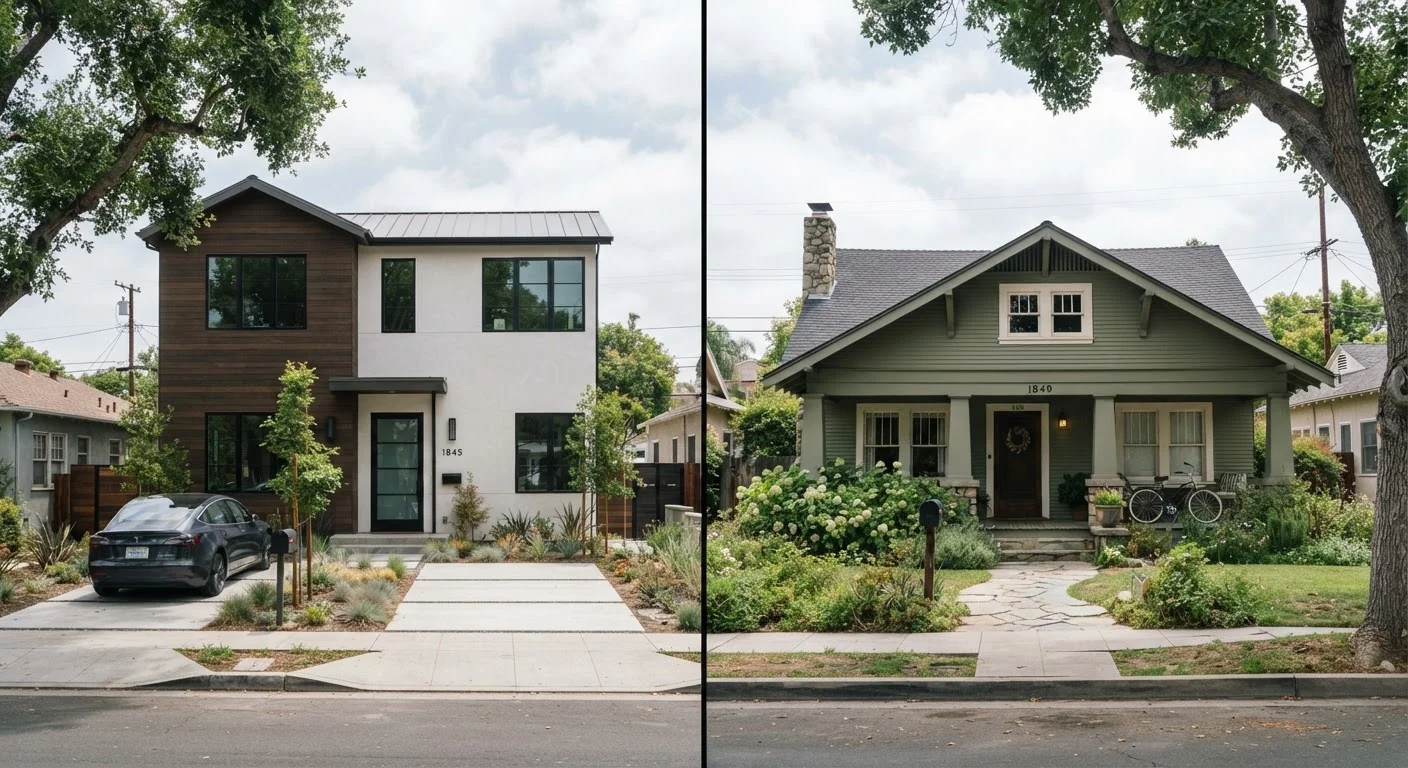
Key Takeaways
Our Verdict
Neither new construction nor an existing home is the universally superior choice - the right fit depends on your priorities around timing, budget, location, and tolerance for uncertainty. New builds reward buyers who value modern efficiency and move-in readiness, while existing homes suit those seeking established communities or specific locations where new development is limited.
| Best for | Recommended |
|---|---|
| Buyers who want modern energy efficiency and builder warranties | New Construction |
| Buyers prioritizing specific school districts or established neighborhoods | Existing Home |
| Buyers with flexible timelines willing to wait through build phases | New Construction |
| Buyers needing a faster closing or a competitive seller's market | Existing Home |
What Sets These Two Paths Apart
When you enter the housing market, your options broadly divide into two categories: homes that have never been lived in - built by a developer or custom builder - and homes with prior ownership history. That distinction shapes far more than aesthetics. It affects your negotiating leverage, financing structure, timeline, maintenance exposure, and the neighborhood you'll ultimately call home.
If you're still working through whether homeownership is the right move at all, this comparison of renting vs. buying lays out the foundational trade-offs. Once you've committed to buying, the new vs. existing question becomes one of the most consequential decisions in the process.
| New Construction | Existing Home | |
|---|---|---|
| Price | Typically higher per square foot | Often more affordable; varies by market |
| Timeline to close | 6-18+ months if not yet built | 30-60 days typical |
| Warranty coverage | Builder warranty included | No warranty; as-is condition |
| Customization | High during pre-build phase | Limited to post-purchase renovation |
| Energy efficiency | Built to current codes | Varies widely by age and updates |
| Location options | Limited to active developments | Wider geographic variety |
| Maintenance risk (year 1) | Very low - systems are new | Higher; depends on inspection findings |
| Neighborhood maturity | May be developing | Established character and amenities |
The Case for New Construction
A newly built home delivers features that are genuinely difficult to replicate through renovation: current building codes, modern insulation standards, fresh plumbing and electrical systems, and appliances under full manufacturer warranty. Many builders also offer a structural warranty - often covering major defects for up to ten years - which significantly reduces early ownership risk.
Energy efficiency is a particular advantage. Homes built to current energy codes frequently outperform older stock on heating and cooling costs, which affects monthly expenses well beyond the mortgage payment. Understanding what drives long-term home values includes energy performance, and newer builds tend to hold up well on that dimension.
Customization is another draw. Many builders allow buyers to select finishes, floor plans, and upgrades during a pre-construction or early-build phase - something simply not available with existing homes. The trade-off is time: build timelines commonly run six months to over a year, and delays are not unusual.
The Case for Existing Homes
Existing homes offer something new construction often cannot: a known location within an established community. Schools, transit access, mature trees, and neighborhood character are already visible and verifiable - you're not betting on what a development will look like in five years.
The transaction process is also generally more straightforward. You make an offer, negotiate with a seller, conduct inspections, and close - typically within 30 to 60 days. There's no waiting for drywall or weather delays. And in markets with limited new development, existing homes may simply be the only realistic option in a target area.
The risk that requires honest evaluation is deferred maintenance and aging systems. A home built several decades ago may have a roof nearing end-of-life, older HVAC equipment, or outdated electrical panels. A thorough home inspection is essential. Before making an offer on any property, these questions can help surface hidden issues that affect both price and risk.
If you do purchase a home needing updates, budget carefully. Renovation costs frequently exceed initial estimates once permits, structural surprises, and disposal fees enter the picture.
Always Hire an Independent Inspector
Even with new construction, a third-party home inspection is worth every dollar. Builders and their subcontractors make mistakes, and a licensed inspector unaffiliated with the builder can catch issues before your warranty clock starts. Schedule an inspection before your final walkthrough - not just after closing.
Financing and Negotiation Differences
Financing a new construction home - especially one not yet built - works differently than a standard purchase mortgage. Many buyers use a construction-to-permanent loan, which funds the build and then converts to a traditional mortgage at completion. Interest rates and terms can differ from conventional purchase loans, and lenders typically require stronger financial profiles for these products.
When buying from a builder, understand that the builder's in-house lender may offer incentives tied to using their financing. These packages can be attractive, but should be compared objectively against independent lenders. Negotiation with builders also differs from negotiating with individual sellers - builders may be less flexible on price but more willing to include upgrades or cover closing costs, particularly toward the end of a sales quarter.
With existing homes, the negotiation is more familiar: offer price, contingencies, closing date, and requested repairs after inspection. Buyers generally have more leverage in a balanced or buyer's market, and the process moves faster from accepted offer to keys in hand.