

Key Takeaways
Our Verdict
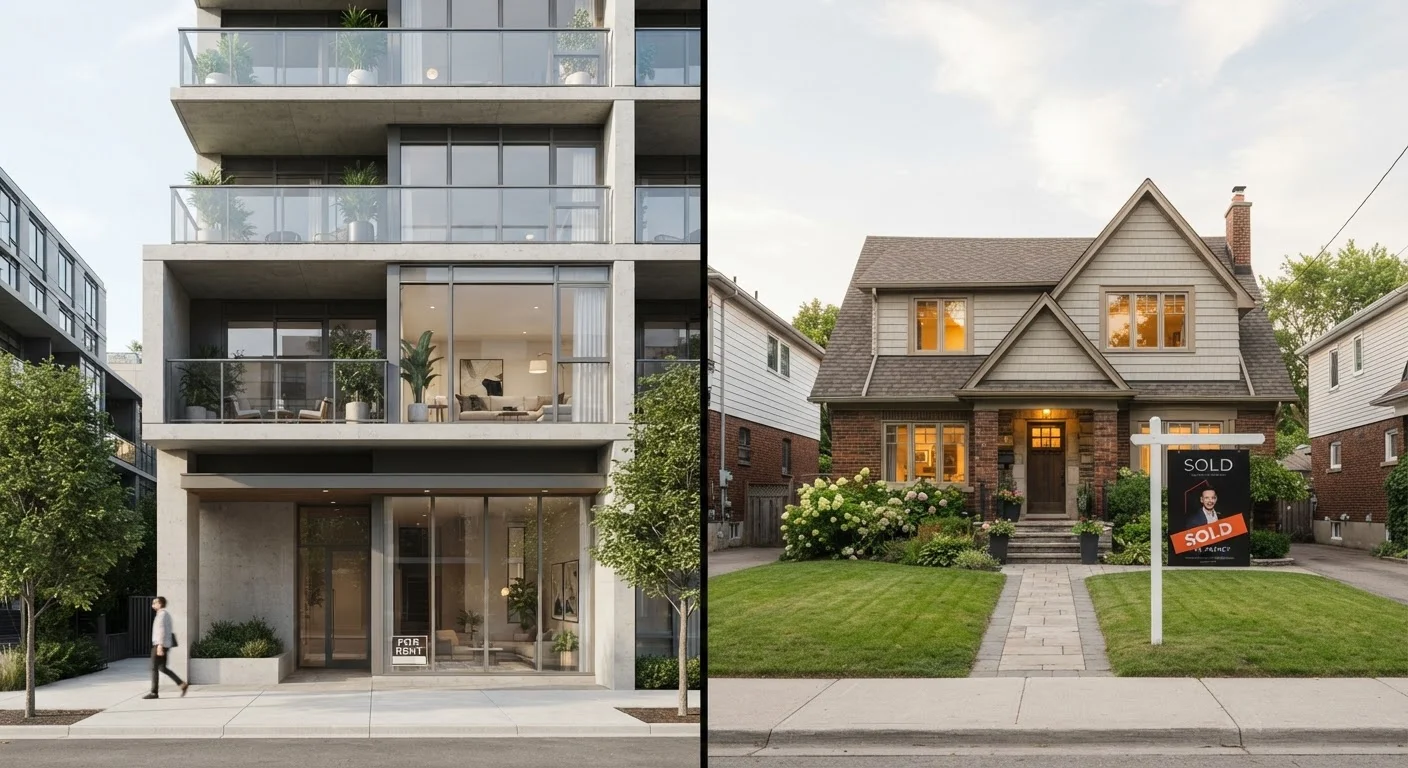
Buying generally makes more financial sense for those with stable income, long-term location commitment, and sufficient savings for a down payment and closing costs. Renting is often the wiser choice for those prioritizing flexibility, facing high-cost markets, or still building their financial foundation. Neither path is inherently superior - the decision turns on individual circumstances, local market conditions, and personal goals.
| Best for | Recommended |
|---|---|
| Those planning to stay in one location for five or more years | Buying |
| Those with geographic flexibility or near-term life changes | Renting |
| Those ready with a down payment, stable income, and strong credit | Buying |
| Those in high-cost markets where price-to-rent ratios are elevated | Renting |
Why This Decision Is More Complex Than It Looks
The renting-vs-buying debate is often framed as a simple financial contest, but that framing misses the point. Both options involve real trade-offs across financial, practical, and lifestyle dimensions - and what's optimal for one household may be clearly wrong for another.
For context, the U.S. homeownership rate hovers around 65%, according to U.S. Census Bureau data - meaning a substantial portion of Americans at any given time are choosing to rent, often deliberately. Understanding why can sharpen your own thinking. Our guide to renting basics covers the full landscape for those exploring the rental path.
The Financial Case for Each Option
Buying a home builds equity - the share of the property you actually own outright, which grows as you pay down your mortgage and (typically) as property values appreciate over time. Historically, real estate has appreciated in value over long periods, though this varies significantly by market and is not guaranteed.
However, the upfront costs of buying are substantial. A conventional mortgage typically requires a down payment of 3%-20% of the purchase price, plus closing costs that commonly run 2%-5%. Add to that property taxes, homeowner's insurance, and maintenance - often estimated at 1%-2% of a home's value annually.
Renting, by contrast, requires far less capital to start. Security deposits, application fees, and the first month's rent represent a fraction of buying costs. Renters also transfer most maintenance risk to landlords. The trade-off: monthly rent payments build no equity. For a fuller look at what renting actually costs, see costs beyond the monthly rent.
| Renting | Buying | |
|---|---|---|
| Upfront costs | Low (deposit + first month) | High (down payment + closing costs) |
| Equity building | None | Yes, over time |
| Flexibility to relocate | High | Low to moderate |
| Maintenance responsibility | Landlord handles most | Owner responsible |
| Monthly cost stability | Rent can increase at renewal | Fixed-rate mortgage is stable |
| Customization freedom | Limited by lease terms | Full control |
| Potential for appreciation | None | Yes, though not guaranteed |
A useful analytical tool is the price-to-rent ratio - a market-level metric calculated by dividing a home's purchase price by its annual rent equivalent. A ratio above 20 generally suggests renting may be more cost-effective; below 15 often favors buying. Many major U.S. metros have seen ratios climb well above 20 in recent years, shifting the short-term math toward renting in those areas.
The Role of Time Horizon and Flexibility
Perhaps no single factor matters more than how long you plan to stay. Transaction costs in homebuying are significant - when spread over a short period, they can easily exceed any equity gains. Most financial analysts suggest a minimum five-year horizon before buying makes clear financial sense, though this threshold varies by market.
Renting preserves mobility. If your career, family structure, or preferences shift, ending a lease is far simpler than selling a home. This flexibility has real dollar value that's easy to underweight. Understanding your lease structure matters here too - our comparison of month-to-month vs. fixed-term leases explains the trade-offs in detail.
Buyers, meanwhile, benefit from payment stability on a fixed-rate mortgage - a known principal-and-interest payment that won't rise with rental markets. Over a 15- or 30-year loan term, this predictability can be a meaningful financial advantage.
Lifestyle and Non-Financial Considerations
Financial math alone rarely resolves this decision. Homeownership brings autonomy - freedom to renovate, paint, keep pets, or landscape without landlord approval. It can also anchor community ties and provide a sense of stability that renters may not experience to the same degree.
Renting, on the other hand, offers freedom from the demands of property ownership. Unexpected repairs - a failed HVAC system, a leaking roof - fall to the landlord, not the tenant. For those who prefer predictable monthly costs or simply don't want the responsibility of maintenance, renting can be the genuinely better lifestyle fit, not merely a financial compromise.
If you're currently renting and navigating your next steps, apartment hunting without losing your mind offers practical guidance for approaching a competitive rental market efficiently.
This article is for general informational purposes only and does not constitute financial, legal, or real estate advice. Consult a licensed financial adviser or real estate professional for guidance specific to your circumstances.