

Key Takeaways
Lawn Thatch
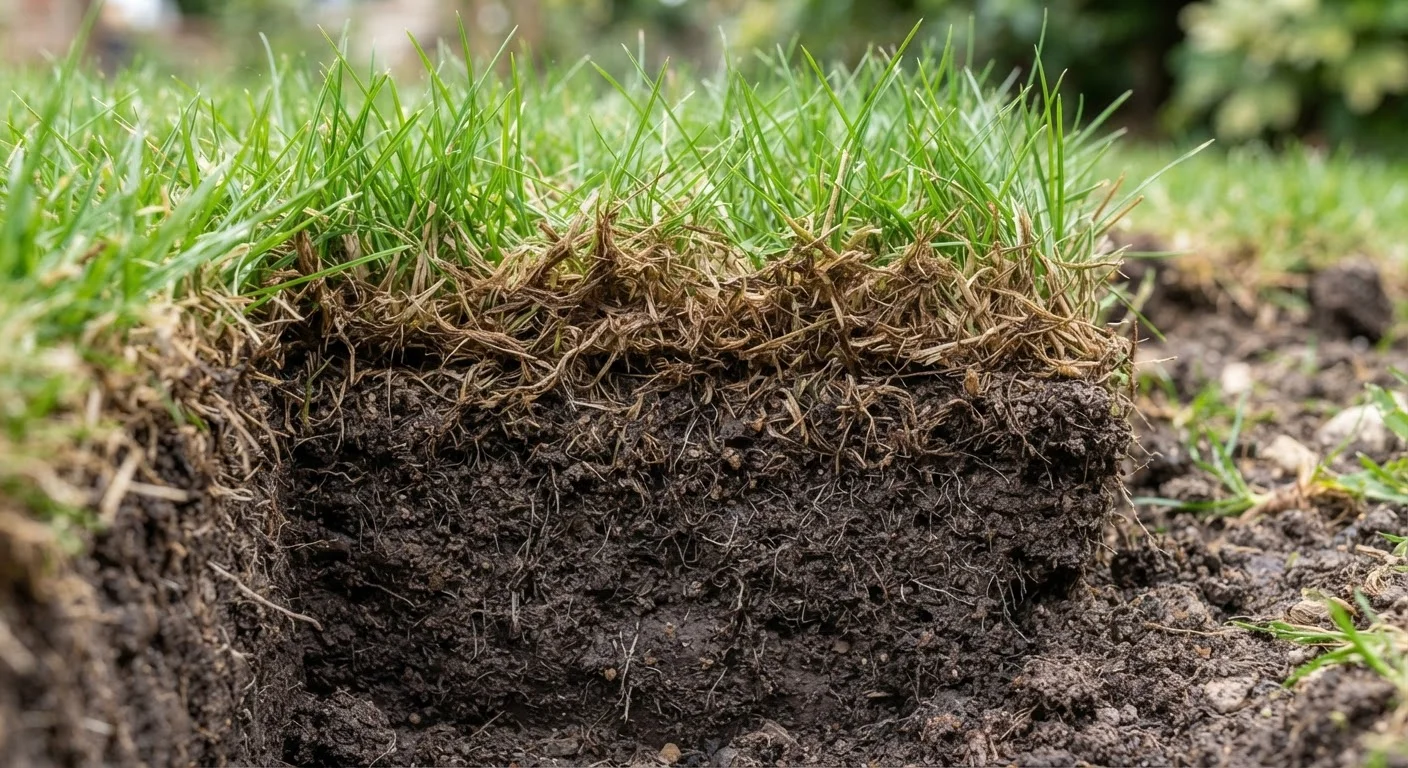
Thatch is the layer of dead and living organic material - including grass stems, roots, and runners - that accumulates between the green blades of grass and the soil surface. A thin layer of thatch is completely normal and even beneficial, acting as a natural mulch. Problems arise when that layer grows too thick for water, air, and nutrients to pass through freely.
Thatch is composed primarily of lignin-rich plant material that resists quick decomposition; it is not caused by leaving grass clippings on the lawn, as clippings break down rapidly.
What Thatch Is Made Of
Thatch is not a single substance - it's an accumulation of organic debris caught between actively growing grass and the soil below. The primary components are stems, crowns, rhizomes (underground horizontal stems), stolons (above-ground runners), and dead root material. These parts of the plant contain significant amounts of lignin, a structural compound that resists quick breakdown by soil microorganisms.
Contrary to popular belief, grass clippings are not a meaningful contributor to thatch. Clippings are roughly 85% water and decompose within days, releasing nutrients back into the soil. The common lawn care myth that clippings cause thatch has led many homeowners to unnecessarily bag their clippings - adding unnecessary work without any real benefit to the turf.
Why Thatch Accumulates
Thatch builds up when organic matter is produced faster than soil microbes can break it down. Several conditions tilt that balance:
- Grass species: Varieties that spread aggressively via stolons or rhizomes - including Kentucky bluegrass, bermudagrass, zoysiagrass, and creeping red fescue - generate more structural plant material and are more prone to rapid thatch buildup.
- Excessive nitrogen fertilizer: Heavy feeding pushes fast, lush top growth, which increases the volume of dense stem and root tissue entering the thatch layer. The rate of production can outpace decomposition.
- Overwatering: Consistently soggy soil creates anaerobic (low-oxygen) conditions that suppress the microorganisms responsible for breaking down organic matter. Watering deeply but less frequently keeps soil microbes active while encouraging deeper root growth.
- Acidic or compacted soil: Low soil pH and compaction both reduce microbial activity. Checking your soil pH and amending if needed can restore the microbial environment that naturally keeps thatch in check.
- Pesticide overuse: Some pesticides, particularly fungicides, can unintentionally reduce soil microbial populations, slowing organic matter decomposition.
Mow at the Right Height
Cutting grass too short - a practice sometimes called scalping - removes green leaf tissue and stresses the plant into producing more lateral growth, contributing to a denser thatch layer over time. Most cool-season grasses do best cut at 3 to 4 inches; warm-season varieties vary. Keeping mower blades sharp and avoiding removing more than one-third of the blade height per mowing session reduces undue stress on the lawn.
When Thatch Becomes a Problem
A quarter to a half inch of thatch is considered normal and even helpful - it cushions turf traffic, insulates roots against temperature swings, and limits surface moisture evaporation. The trouble starts when the layer surpasses roughly three-quarters of an inch.
At that depth, thatch begins to act as a barrier rather than a buffer. Water and fertilizer bead off or pool in the spongy mat instead of reaching the root zone. Oxygen exchange at the soil surface is reduced. Grass roots may begin growing into the thatch layer itself - which dries out far faster than the soil - leaving them vulnerable during dry periods. Thick thatch also creates a hospitable environment for fungal disease and insect pests, which favor the warm, humid conditions the mat traps.
¾ inch
Thatch depth at which lawn problems begin
Turfgrass specialists generally agree that thatch layers exceeding three-quarters of an inch restrict water, air, and nutrient movement to the root zone.
85%
Water content of fresh grass clippings
Because clippings are mostly water, they decompose rapidly and do not contribute meaningfully to thatch buildup, contrary to popular belief.
2-3 years
Typical thatch buildup timeline for prone species
In lawns dominated by stoloniferous or rhizomatous grasses, problematic thatch depth can develop within a few growing seasons without intervention.
To check your thatch depth, use a pocket knife or screwdriver to pry up a small section of turf. The brownish, spongy layer sitting above the dark soil is the thatch. Measure it. If it exceeds three-quarters of an inch, it's worth addressing.
How to Manage and Reduce Thatch
The two primary mechanical approaches to thatch removal are dethatching (also called vertical mowing or power raking) and core aeration.
Dethatching uses vertical blades or tines to slice through and pull up accumulated thatch. It's effective but stresses the lawn, so timing matters - cool-season grasses handle it best in early fall, while warm-season grasses recover better when dethatched in late spring or early summer, during their peak growth.
Core aeration is a gentler option for moderate thatch. It removes small plugs of soil and deposits them on the surface, where they introduce microbes directly into the thatch layer. Over weeks, those microbes begin breaking down the organic buildup from within.
Beyond mechanical intervention, sustainable practices help prevent thick thatch from returning. Avoid excessive nitrogen applications, improve drainage where water pools regularly, and address compaction or soil pH issues that suppress microbial life. If you're considering re-establishing turf from scratch, understanding the trade-offs between grass seed and sod - including which species are thatch-prone - is a worthwhile step before you lay a new lawn.