

Key Takeaways
Gutter Maintenance
Gutter maintenance refers to the routine cleaning, inspection, and repair of the troughs and downspouts that channel rainwater away from your home's roof and foundation. When gutters are clear and properly pitched, they do their job invisibly. When they're clogged, sagging, or leaking, water gets redirected somewhere it shouldn't go - often into your walls, basement, or soil directly beside your foundation.
Gutters are typically pitched at a slope of roughly 1/4 inch per 10 feet toward the downspout to maintain adequate drainage; improper slope is one of the most common causes of standing water and overflow.
The Hidden Damage a Clogged Gutter Causes
Gutters rarely get attention until something goes visibly wrong - water cascading over the edge during a rainstorm, a sagging trough pulling away from the roofline, or worse, a damp patch spreading across a basement wall. By those points, damage is already underway.
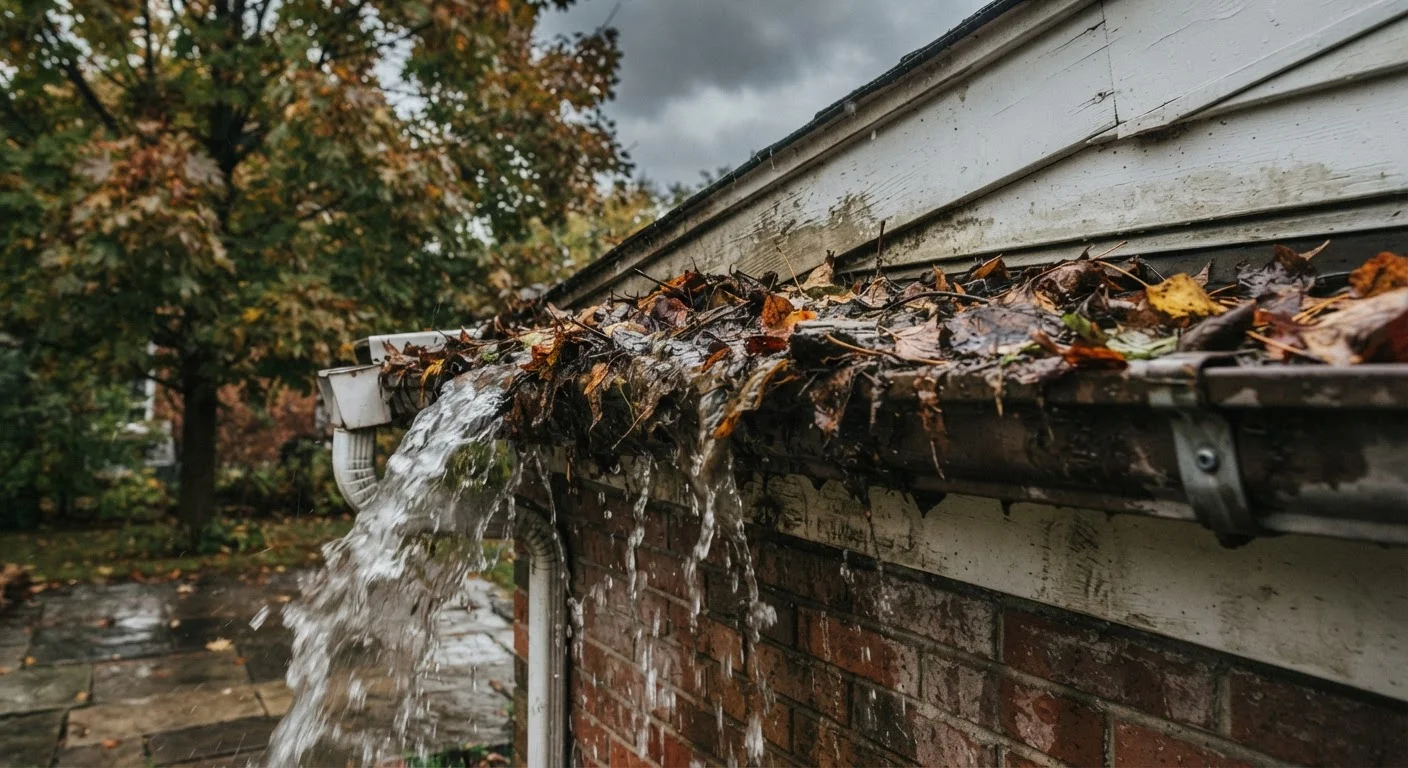
When gutters fill with leaves, seed pods, and compacted debris, water has nowhere to go except over the edge or backward under the roof decking. That overflow doesn't just splash harmlessly on the ground. It saturates the soil directly against your foundation, which increases hydrostatic pressure - the force water exerts against buried walls - and is a leading cause of basement and crawl space water intrusion.
Simultaneously, water backing up toward the roof can work under shingles and into the fascia boards (the flat boards behind the gutter) and soffits (the underside of the roof overhang). Wood rot in those areas is expensive to remediate and can invite insects and wildlife. If you've been noticing granules collecting in your downspout discharge, that's also worth investigating - see our guide to catching roof problems early for what to watch for.
$10,000+
Potential cost of foundation water damage
The American Society of Home Inspectors notes that water intrusion is among the most common and costly deficiencies found during home inspections.
2x/year
Minimum recommended gutter cleaning frequency
Home maintenance authorities generally recommend at least two cleanings annually, with more frequent service for homes near heavy tree cover.
4-6 feet
Minimum downspout extension distance from foundation
Most building and drainage guidance recommends discharging gutter water at least 4 to 6 feet away from the home's foundation to reduce soil saturation.
How Often Gutters Actually Need Attention
The standard advice - clean gutters twice a year - holds up for most American homes. Late fall, after the majority of leaves have dropped, is the most critical cleaning window because debris sitting wet in gutters through winter creates ideal conditions for ice damming in colder climates and sustained wood moisture damage in warmer ones. A second pass in late spring clears out the pollen, seed pods, and shingle granules that accumulate over winter and early spring.
Homes under or near mature trees - particularly oaks, maples, and pines - may need cleaning three or four times a year. Pine needles are especially problematic because they shed continually and pack tightly, blocking even large downspouts.
Gutter maintenance fits naturally into a broader seasonal routine. The seasonal home maintenance calendar is a useful reference for timing gutter tasks alongside other exterior work like caulk inspection and downspout drainage checks before winter sets in.
What a Thorough Gutter Inspection Actually Covers
Cleaning out visible debris is only part of the picture. A complete inspection should also check:
- Slope and pitch: Water should flow freely toward the downspout, not pool in the middle of a run. If gutters hold standing water after rain, the hangers may need adjustment.
- Hanger spacing and condition: Gutters are typically supported every 24 to 36 inches. Loose, missing, or corroded hangers allow sections to sag and separate from the fascia.
- Seams and end caps: Sectional gutters join at seams that are susceptible to separation and leaking over time. Check for rust staining or water trails on the fascia below.
- Downspout extensions: Water discharged at the foundation is almost as bad as overflowing gutters. Extensions should direct water at least four to six feet from the house, and the surrounding grade should slope away from the structure.
These checks take under an hour and align well with the exterior prep tasks covered in preparing your home's exterior for winter.
DIY Cleaning vs. Calling a Professional
Single-story gutter cleaning is a manageable DIY task for most homeowners. The essentials are a stable, properly positioned ladder, heavy work gloves, a small plastic scoop or trowel, and a garden hose to flush the downspouts once debris is cleared. Work from a ladder rather than from the roof when possible, and never lean a ladder against the gutter itself - it's not designed to bear that load.
Two-story and multi-story homes are a different calculation. Falls from ladders are among the most common causes of serious home-maintenance injuries. If your gutters are above a single story, if your roof pitch is steep, or if you're not comfortable working at height, hiring a professional is the safer, reasonable choice - not an admission of defeat.
Gutter maintenance is one of those tasks that new homeowners frequently overlook until a problem surfaces. Building it into a regular schedule - the same way you'd schedule furnace filter changes or dryer vent cleaning - is what prevents it from becoming a surprise expense.
Test Your Downspouts After Every Cleaning
After clearing debris, run a garden hose at full pressure into each downspout inlet and watch the outlet end. Water should flow freely and without backup within a few seconds. If it drains slowly or backs up, there's a blockage deeper in the downspout that needs to be cleared with a plumber's auger or a high-pressure nozzle before the next rain event.