

Key Takeaways
Why Roofs Fail Quietly - Until They Don't
Most roof failures don't happen overnight. They develop gradually through a series of small, overlooked problems - a cracked flashing here, a clogged gutter there - until one heavy rainstorm turns a minor issue into a soaked ceiling and a five-figure repair bill. The frustrating truth is that the warning signs were almost always visible well in advance.
Unlike a broken furnace or a burst pipe, roof deterioration tends to progress out of sight and out of mind. Homeowners simply don't look up often enough. Understanding the most common mistakes in roof maintenance - and why they happen - is the first step toward protecting one of the most expensive components of your home.
If you're also thinking about the bigger picture of seasonal home upkeep, our guide on preparing your home's exterior for winter covers complementary tasks worth doing before temperatures drop.
The Most Common Roof Maintenance Mistakes
The errors below aren't rare - they show up repeatedly in homes across every climate and age range. Recognizing them is the most actionable thing you can do right now.
Skipping routine inspections because the roof looks fine from the driveway.
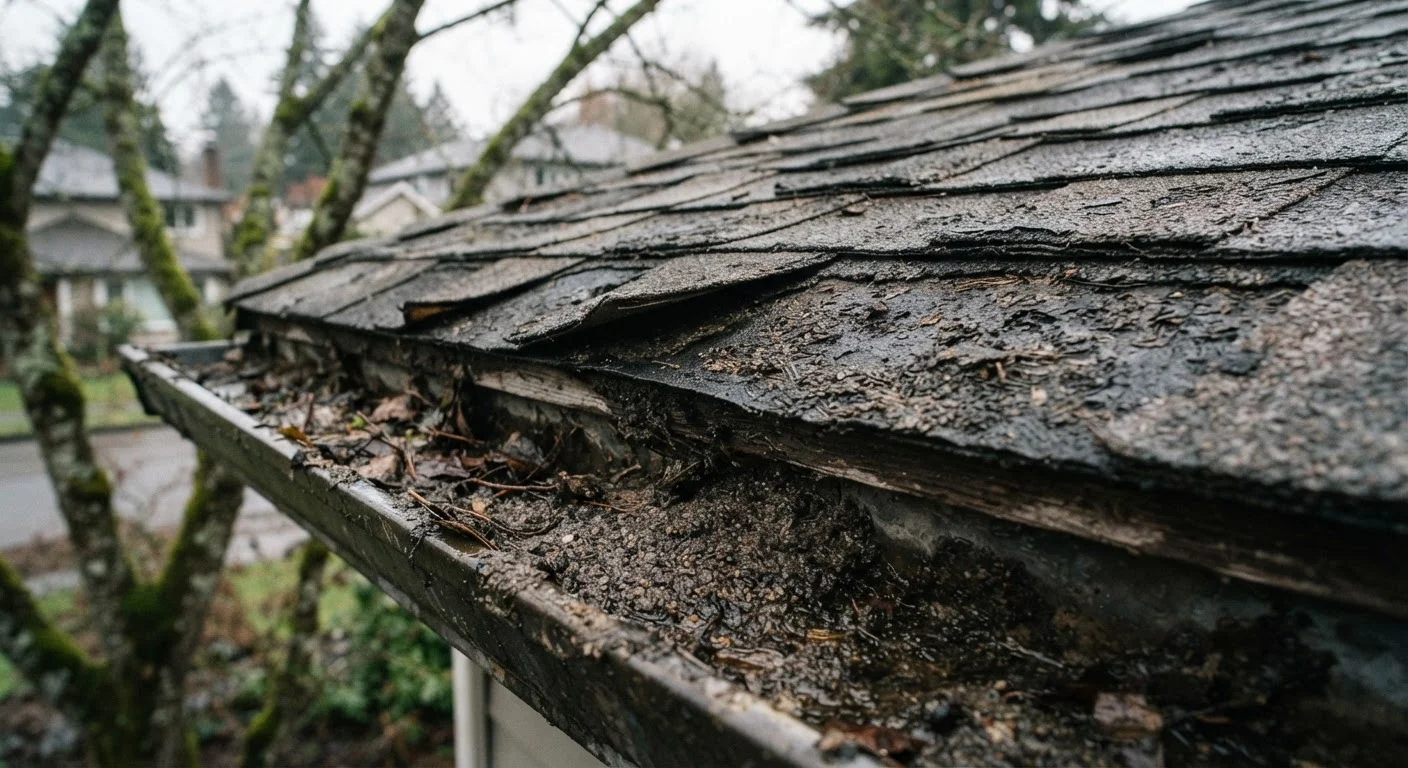
Why it happens: Without an obvious leak, most homeowners assume the roof is holding up. Visual inspection from ground level misses flashing gaps, lifted shingles, and early-stage granule loss.
Ignoring granules collecting in gutters or at downspout outlets.
Why it happens: Granule shedding looks like minor debris and is easy to dismiss during routine gutter cleaning. Most homeowners don't know what it signals.
Letting damaged or missing flashing go unrepaired.
Why it happens: Flashing - the thin metal strips that seal roof joints around chimneys, vents, and skylights - is rarely visible from the ground and is often omitted from DIY inspection checklists.
Allowing moss or algae to colonize the roof surface.
Why it happens: Many homeowners view moss as a cosmetic issue or even a charming aesthetic feature. In reality, it holds moisture against shingles and accelerates deterioration.
Patching over old shingles instead of addressing the underlying problem.
Why it happens: Adding a new layer of shingles over an existing worn layer is sometimes marketed as a cost-saving approach. It delays dealing with decking issues and can add excessive weight to the roof structure.
Roof problems rarely travel alone. A failing roof also tends to compromise attic conditions. If your energy bills are climbing or rooms feel drafty, it's worth reviewing what's happening overhead - our article on attic insulation performance explains the connection between roofing, ventilation, and heat retention.
How to Build a Simple Roof Inspection Habit
You don't need to climb on the roof to catch most early warning signs. A pair of binoculars and a walk around your home's perimeter twice a year - typically in spring and fall - can reveal a surprising amount. Look for shingles that are curling, buckled, or visibly missing. Check the ridge line (the peak of your roof) for straightness; a sagging or wavy ridge can indicate structural issues beneath the surface.
Inside, inspect your attic after any significant rain. Daylight visible through the roof deck, damp insulation, or water staining on the rafters all warrant a call to a licensed roofing contractor. On the ground, check your gutters during and after cleaning - granule accumulation is one of the clearest signals that asphalt shingles are reaching the end of their serviceable life. Our dedicated guide on gutter maintenance explains exactly why keeping gutters clear directly protects your roof and foundation.
Don't Walk the Roof Without Professional Training
Walking on your own roof without the right footwear, equipment, and experience is genuinely dangerous - falls from roofs are among the leading causes of serious home improvement injuries. Beyond personal safety, improper foot placement can crack brittle shingles or dislodge sealed edges, creating new leak points. For any inspection beyond what you can see from the ground or attic interior, hire a licensed roofing professional.
Walking on your roof without proper training and equipment carries a real risk of injury and can also crack or dislodge shingles. For anything beyond visual inspection from the ground or attic interior, hire a qualified professional.
Finally, if you're buying a home, the roof deserves specific scrutiny before you commit. Our article on questions to ask before making an offer includes roof-related due diligence that many buyers skip entirely.