

Key Takeaways
Why These Devices Deserve More Than a Glance
Smoke detectors and carbon monoxide (CO) alarms are two of the most cost-effective safety tools in any home - yet surveys consistently show that a significant share of households have at least one device that is dead, disabled, or well past its useful life. A detector sitting on the ceiling with a missing battery offers zero protection.
The good news: keeping these systems reliable requires very little time. What it does require is consistency. Building testing and replacement into your regular home maintenance routine - like changing furnace filters or flushing the water heater - is the habit that actually saves lives. See our seasonal home maintenance calendar for a month-by-month framework that includes detector checks alongside other essential tasks.
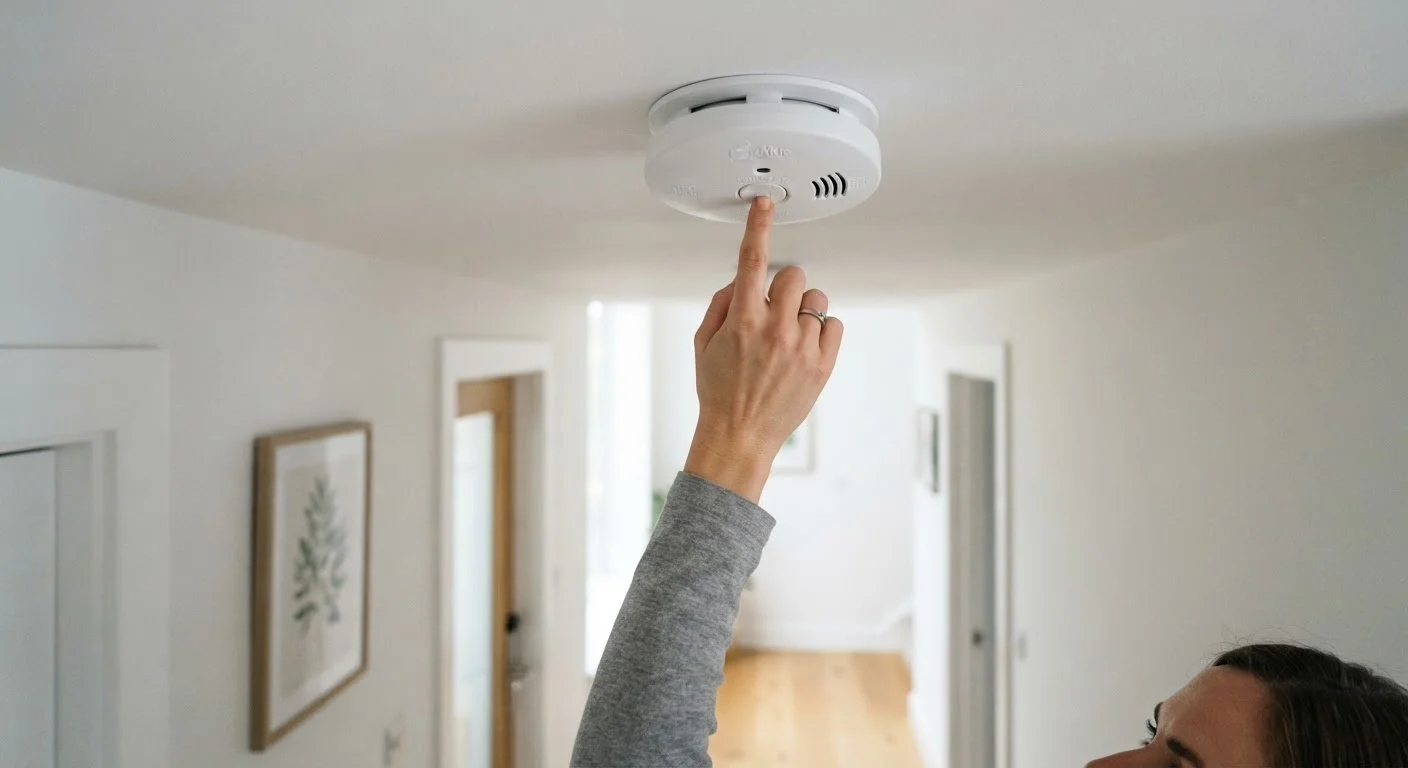
Test every smoke and CO detector in your home on the first day of each month.
Sensors degrade over time, and batteries can drain unexpectedly. Monthly testing ensures every device is functional before an emergency occurs - not discovered to be dead during one.
Replace smoke detector batteries annually, even if the low-battery alert hasn't sounded.
Batteries can weaken below the alarm threshold without triggering the low-battery chirp, leaving a device that appears functional but may not respond to actual smoke. Proactive replacement removes this risk entirely.
Replace smoke detectors after 10 years and CO alarms after 5-7 years, regardless of apparent function.
Sensing technology inside these devices breaks down over time, even when the test button sounds the horn. An aging unit may still beep on test but fail to detect an actual emergency.
Vacuum smoke detector grilles lightly every six months to prevent dust buildup from interfering with sensing.
Dust and debris can partially block the sensing chamber, slowing or preventing response to actual smoke. This is especially common in homes with pets, heavy cooking, or renovation activity.
Interconnect alarms throughout the home so that when one triggers, all sound simultaneously.
In a larger home, a detector going off in the basement may not wake someone sleeping on the second floor. Interconnected alarms - whether wireless or hardwired - eliminate this dangerous gap.
Where to Install Detectors and Why Location Matters
Even well-maintained alarms can't help if they're in the wrong place. The NFPA recommends installing smoke detectors on every level of the home, inside each bedroom, and outside every sleeping area. For CO alarms, at minimum one per floor and at least one near sleeping areas is the standard guidance - carbon monoxide is odorless and can incapacitate someone before they wake.
A few placement principles to keep in mind:
- Smoke detectors should be mounted on the ceiling or high on a wall (within 12 inches of the ceiling), away from cooking appliances to reduce nuisance trips.
- CO alarms can be placed at outlet height on walls - CO disperses more evenly than smoke, so height matters less.
- Keep detectors away from windows, doors, and vents where drafts can disrupt sensing.
- Avoid placing smoke detectors directly in kitchens or garages - use CO alarms in attached-garage areas instead if combustion sources are present.
If you're unsure whether your home's current layout meets these standards, a home inspection can identify gaps. Our guide on what happens during a home inspection explains what inspectors look for and how to act on their findings.
Combination Units Can Simplify Coverage
Combination smoke and CO detectors are widely available and can reduce the number of devices needed to meet placement guidelines. However, they still follow the same replacement schedules as standalone units - check the manufacturer label for the specific lifespan of the combined device. Don't assume a unit that's within the 10-year smoke detector window is still reliable for CO sensing, as CO sensing elements often expire sooner.
Testing, Battery Replacement, and Knowing When to Replace
Testing is the single most neglected maintenance step. Most detectors have a test button - press and hold it for a few seconds. A loud, functional alarm confirms the horn works. It does not, however, confirm the sensing chamber is clean and responsive. That's why physical testing should be paired with regular replacement on schedule.
3 in 5
Home fire deaths with missing or non-working smoke alarms
According to the National Fire Protection Association, roughly three of every five home fire deaths occur in properties without working smoke alarms.
~400
Annual U.S. deaths from unintentional CO poisoning
The CDC estimates that approximately 400 Americans die each year from unintentional, non-fire-related carbon monoxide poisoning - a largely preventable cause of death.
Battery-powered units: Replace batteries at least once a year, or whenever the low-battery chirp begins. Many homeowners use a memorable annual event - like daylight saving time - as a prompt. Don't silence a chirp without swapping the battery; the reminder exists for good reason.
Hardwired units: These connect to your home's electrical system but almost always have a backup battery. Test them monthly just as you would a standalone unit, and replace the backup battery annually.
Replacement timelines: Smoke detectors have a lifespan of roughly 10 years from the manufacture date (printed on the back of the device). CO alarms typically last 5-7 years. When in doubt, check the manufacturer label - if the date is absent or the device predates your memory of installing it, replace it.
These habits fit neatly alongside other often-overlooked home upkeep tasks. Our article on upkeep tasks new homeowners consistently overlook covers similar easy-to-miss but high-impact maintenance steps.