

Key Takeaways
Attic Thermal Envelope
The attic thermal envelope refers to the combination of insulation and ventilation that controls heat and moisture in your attic space. Insulation slows heat transfer between your living space and the attic, while ventilation moves air through the attic to prevent moisture buildup and excessive heat accumulation. Together, they protect your home's comfort, energy efficiency, and roof structure.
In building science, these two systems are intentionally designed to complement each other: insulation reduces heat flow (measured by R-value), while ventilation manages attic air temperature and vapor pressure differentials.
Why These Two Systems Are Often Confused
Most homeowners think of attic insulation as the solution to high energy bills and uncomfortable rooms - and it plays a major role. But insulation is only half the equation. Ventilation handles something insulation cannot: the movement of air and moisture through the attic space itself.
Insulation slows the transfer of heat between your conditioned living space and the unconditioned attic above it. Its effectiveness is measured in R-value - the higher the number, the greater the resistance to heat flow. If you're unfamiliar with terms like R-value or soffit, the plain-English reference for homeowners is a helpful starting point.
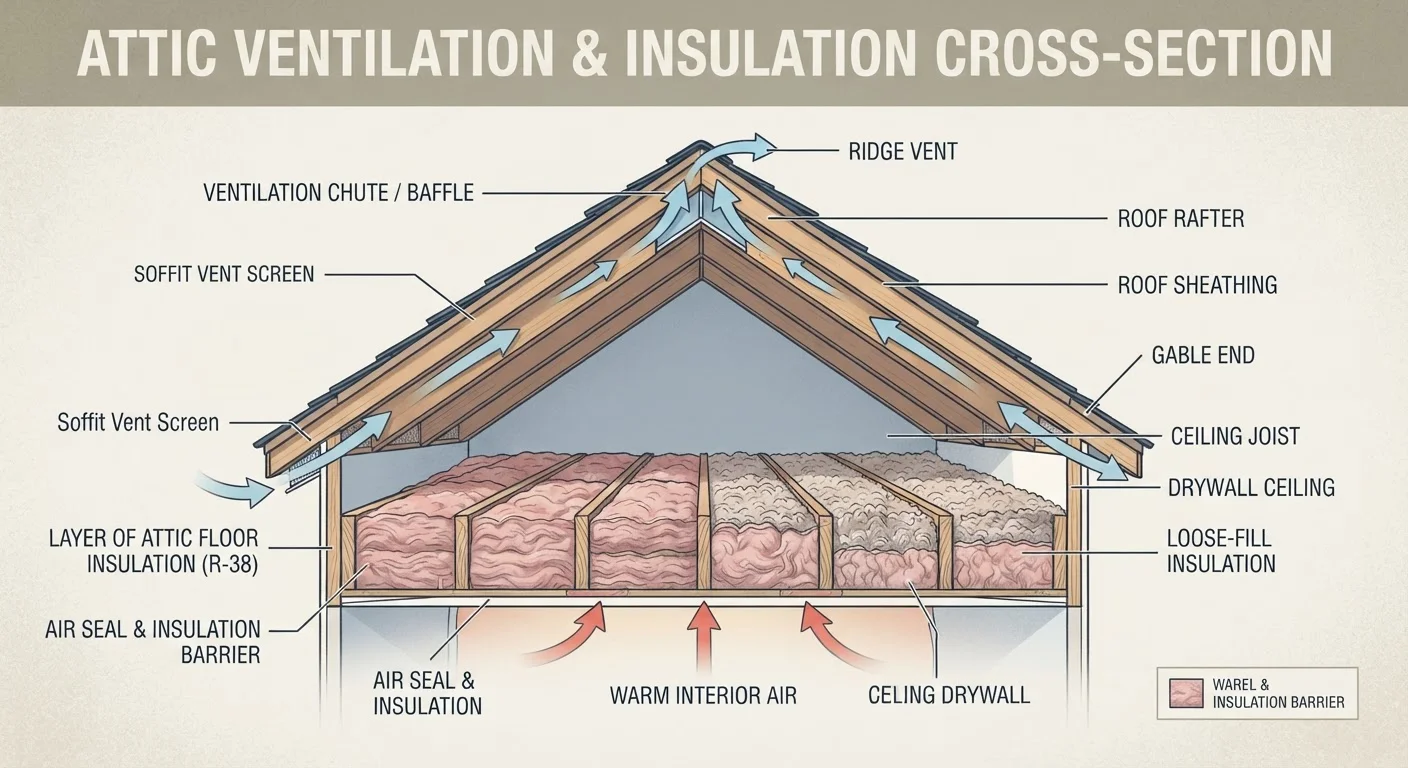
Ventilation, by contrast, controls temperature and humidity within the attic by moving air from intake points (typically soffit vents at the eaves) to exhaust points (typically a ridge vent at the roof peak). Without this airflow, heat and moisture build up - and that's where problems begin.
What Happens When One System Fails the Other
The interaction between insulation and ventilation becomes most visible when something goes wrong. Consider two common failure patterns:
- Too little insulation, adequate ventilation: Heat from your living space escapes freely into the attic. In winter, this warms the roof deck unevenly, which can cause ice dams along the eaves - a damaging and expensive problem. In summer, your HVAC system works harder to compensate for heat radiating back down through the ceiling.
- Good insulation, poor ventilation: Moisture generated by cooking, bathing, and breathing rises into the attic and gets trapped. Over time, this moisture condenses on cold roof sheathing and rafters, leading to mold growth and wood rot - even if the insulation itself appears fine.
This second scenario is particularly common after insulation upgrades that inadvertently block soffit vents. Blown-in insulation, if installed without vent baffles (also called rafter baffles), can fill the space between rafters and block the airflow channel entirely. For a broader look at signs your insulation may not be performing as expected, see what actually causes heat loss in attics.
Install Vent Baffles Before Adding Insulation
If you're planning to add blown-in or batt insulation to your attic, install rafter baffles (also called insulation baffles or wind baffles) first. These inexpensive cardboard or foam channels staple between rafters at the eaves and preserve the airflow path from soffit vents into the open attic - even when insulation depth increases. Skipping this step is one of the most common and costly attic insulation mistakes.
The Mechanics of a Balanced Ventilation System
Effective attic ventilation relies on a consistent flow of outside air entering low (at the soffits) and exiting high (at the ridge or gable vents). This is called passive ventilation, and it works through natural convection: warm air rises and escapes at the top, drawing cooler air in at the bottom.
For this to work, the intake and exhaust areas must be roughly balanced and unobstructed. Common problems include:
- Soffit vents blocked by insulation or debris
- Ridge vents installed without a corresponding soffit intake
- Gable vents that short-circuit airflow before it can travel along the full roof deck
- Bathroom or kitchen exhaust fans vented into the attic rather than outside
Exhaust fans are a particularly overlooked issue. When moist air from a bathroom fan is dumped into the attic rather than routed through ducting to an exterior vent, moisture accumulates rapidly - especially in cold months. This is one of the maintenance tasks new homeowners consistently overlook.
90%
U.S. homes that are under-insulated
The U.S. Department of Energy has estimated that the vast majority of American homes lack adequate insulation, contributing to unnecessary energy loss.
10-25%
Heating and cooling energy lost through the attic
The EPA's ENERGY STAR program estimates that air sealing and insulating the attic can reduce heating and cooling costs significantly for typical homes.
1:150
Ventilation ratio required by many building codes
Many U.S. building codes specify 1 square foot of net free vent area per 150 square feet of attic floor without a vapor barrier; this can be reduced to 1:300 with balanced intake and exhaust.
How Poor Attic Conditions Affect Your Roof
Your roof shingles are rated for a certain lifespan under normal conditions - but extreme attic heat accelerates their deterioration. On a hot summer day, a poorly ventilated attic can reach temperatures significantly above outdoor ambient temperatures. That sustained heat bakes shingles from the underside, causing them to crack and curl prematurely.
Beyond shingles, the roof deck itself - typically oriented strand board (OSB) or plywood - is vulnerable to repeated moisture cycling. Boards that absorb moisture and then dry out repeatedly can delaminate, warp, or lose structural integrity over time. If you're watching for early signs of roof trouble, catching a roof problem early can help you know what to look for before damage becomes extensive.
This is why roofing contractors often inspect attic ventilation when evaluating a roof claim or replacement - inadequate ventilation may void a shingle manufacturer's warranty.
Practical Steps for Homeowners
You don't need to be a contractor to take a useful first look at your attic systems. Here's where to start:
- Inspect soffit vents from inside the attic. Look for insulation packed tightly against the eaves. Vent baffles (foam or cardboard channels stapled between rafters) should be visible, creating a clear airway from soffit to open attic.
- Check for daylight at the ridge. If you have a ridge vent, you should be able to see a thin gap of light from inside the attic on a sunny day. No light may mean the vent is blocked or improperly installed.
- Measure insulation depth. Many attics are under-insulated. A ruler or tape measure will give you the depth; your insulation type and the DOE's climate zone map will tell you if it meets the recommended R-value for your region.
- Look for moisture stains or frost. Dark staining on rafters or sheathing, or frost visible in winter, are reliable indicators of a moisture problem.
If you find problems, consult a licensed insulation contractor or energy auditor before making changes. Attic work near electrical fixtures, improperly vented appliances, or older materials like vermiculite (which may contain asbestos) requires professional evaluation.
This article is for general informational and educational purposes. It is not a substitute for professional inspection or advice tailored to your home's specific conditions. Always verify local building codes and consult a qualified contractor before undertaking attic work.