

Key Takeaways
Nutrition Facts Label
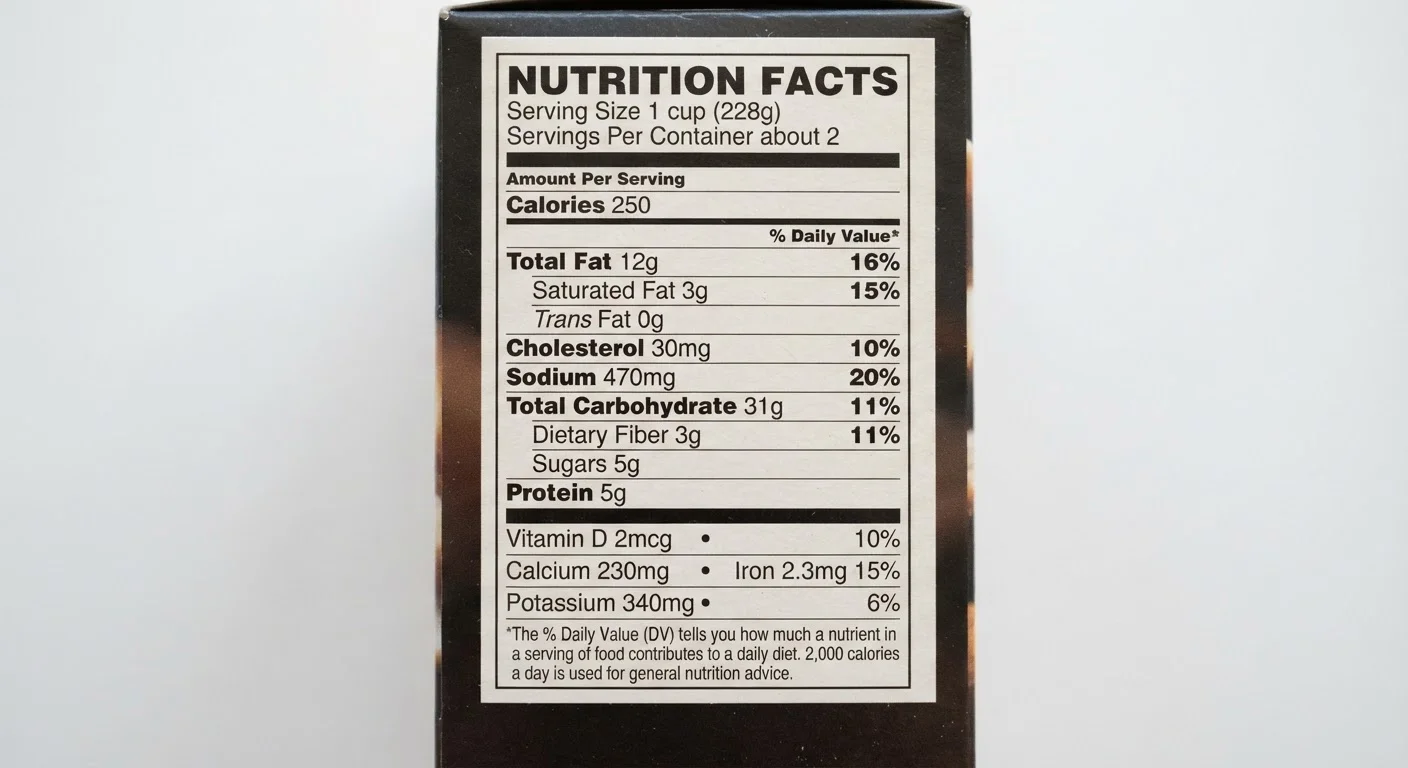
The Nutrition Facts label is the standardized panel required by the FDA on most packaged foods sold in the United States. It lists serving size, calorie count, and the amounts of key nutrients - such as fat, sodium, carbohydrates, protein, and selected vitamins and minerals - found in one serving of that food. The label is designed to help consumers compare foods and make informed choices based on their dietary needs.
The current label format, updated by the FDA in 2016 and phased in through 2020, reflects updated dietary science - including a mandatory line for added sugars (separate from total sugars) and updated Daily Values based on more recent research.
Start Here: Serving Size Sets the Stage
The single most important line on any Nutrition Facts label is the serving size - because every other number on the panel is calculated from it. If a bag of crackers lists a serving as 15 pieces and you eat 30, every figure on the label doubles for your actual intake.
Serving sizes are set by the FDA based on reference amounts that reflect typical consumption patterns, not dietary ideals. A serving of ice cream is roughly two-thirds of a cup - not because that is the "right" amount to eat, but because that is what survey data suggested people typically consumed when the reference amounts were established.
Before reading anything else on a label, check how many servings are in the entire package. A single-looking bottle of juice or a snack bag can easily contain two or three servings. This is where many readers unintentionally undercount calories and nutrients. For a broader look at how individual foods fit into an overall eating pattern, see how dietitians think about daily eating.
Calories and % Daily Value: What the Numbers Mean
Calories measure the total energy a serving provides. The label now displays this figure in a larger, bolder font - a deliberate FDA design choice to make it more visible. Calories alone, however, say nothing about the quality or nutritional makeup of a food.
Below calories, each listed nutrient is paired with a % Daily Value (% DV). This percentage shows how much of that nutrient one serving contributes toward a reference intake based on a 2,000-calorie daily diet. A quick rule of thumb: 5% DV or less is low; 20% DV or more is high.
Use % DV to spot where a food is concentrated or sparse in a given nutrient. A food with 30% DV of sodium is high in sodium. A food with 15% DV of fiber is a meaningful source. You can also use % DV to compare two products at a glance - as long as their serving sizes are identical.
70%+
Of U.S. adults report using nutrition labels
According to FDA consumer research, more than 70% of U.S. adults say they use the Nutrition Facts label when buying food - though comprehension of specific elements like % DV varies significantly.
20%+
% DV considered high for any nutrient
The FDA's established benchmark defines 20% DV or more per serving as a high amount of a given nutrient, useful for spotting concentrated sources of both beneficial and limiting nutrients.
4
Micronutrients required on updated labels
The FDA mandates that vitamin D, calcium, iron, and potassium appear on all updated Nutrition Facts labels because data shows these are the nutrients Americans are most commonly deficient in.
Understanding what nutrients actually do for the body adds context to these numbers. How your body uses protein, carbs, and fat and what vitamins and minerals do are useful companion reads.
Nutrients to Watch: Limit vs. Get Enough
The FDA organizes label nutrients into two functional groups, even if they are not labeled as such on the panel itself.
Nutrients most Americans are advised to limit
- Saturated fat: Consistently linked to cardiovascular risk in large bodies of research. The label lists it separately from total fat.
- Sodium: A key factor in blood pressure management; many processed foods are high in sodium relative to their serving size.
- Added sugars: The updated label now distinguishes these from naturally occurring sugars, reflecting guidance from major health organizations to reduce intake of added sweeteners.
Nutrients many Americans fall short on
- Dietary fiber: Supports digestive health and is associated with reduced chronic disease risk.
- Vitamin D, calcium, iron, and potassium: These four micronutrients are required on the label precisely because deficiency is common in the U.S. population.
No single nutrient defines whether a food is worth eating. Nutrient density vs. calorie density offers a practical framework for thinking about the overall value a food delivers.
The Ingredient List: A Parallel Story
The ingredient list sits below or beside the Nutrition Facts panel and tells a different kind of story. Ingredients are listed in descending order by weight - the first ingredient makes up the largest proportion of the product.
If enriched white flour, sugar, or a refined oil appears first, those dominate the food. If a whole grain, vegetable, or lean protein leads the list, that food has a different nutritional character - even if the calorie count is similar to a less nutrient-dense alternative.
The ingredient list also reveals additives, preservatives, colorings, and flavorings that do not appear on the Nutrition Facts panel. It is also where allergens are disclosed. Shorter lists are not automatically healthier - some minimally processed foods have long lists of spices and natural ingredients - but scanning the first three to five ingredients gives a reliable snapshot of what you are primarily consuming.
This article is for general informational and educational purposes only and is not a substitute for professional medical or dietary advice. Consult a qualified healthcare provider or registered dietitian for guidance tailored to your individual health needs.