

Key Takeaways
Our Verdict
Neither nutrient density nor calorie density tells the whole story on its own. Nutrient density helps you identify foods that do the most nutritional work per calorie, while calorie density helps you understand portion context. Together, they form a more complete picture than calorie counting alone - and most dietitians agree that shifting attention toward the overall dietary pattern is the most sustainable approach.
| Best for | Recommended |
|---|---|
| Those wanting to maximize nutritional value from every meal | Nutrient density as the primary lens |
| Those managing portion sizes or energy intake | Calorie density as a practical guide |
| Those building sustainable, long-term eating habits | Both concepts used together within a whole dietary pattern |
Two Ways of Measuring What Food Delivers
When most people evaluate a food, they reach for one number: calories. But calories measure only energy - not how much the body gains beyond that energy. Two concepts from nutrition science offer a richer view: nutrient density and calorie density.
Nutrient density describes how much nutritional value - vitamins, minerals, fiber, protein, and other beneficial compounds - a food provides relative to the calories it contains. A food that is high in nutrients but relatively low in calories is considered nutrient-dense. Spinach, legumes, and fatty fish are common examples: they deliver substantial nutritional payload without a large caloric cost.
Calorie density (sometimes called energy density) refers to how many calories are packed into a given weight or volume of food. Oils and butter sit at one extreme - very high calories in a small volume. Watery vegetables sit at the other - large volume, very few calories. Neither extreme is inherently bad; context determines whether high or low calorie density is useful.
If you are new to thinking about nutrition in these terms, the foundational overview of nutrition science is a helpful starting point before diving deeper.
How Each Concept Works in Practice
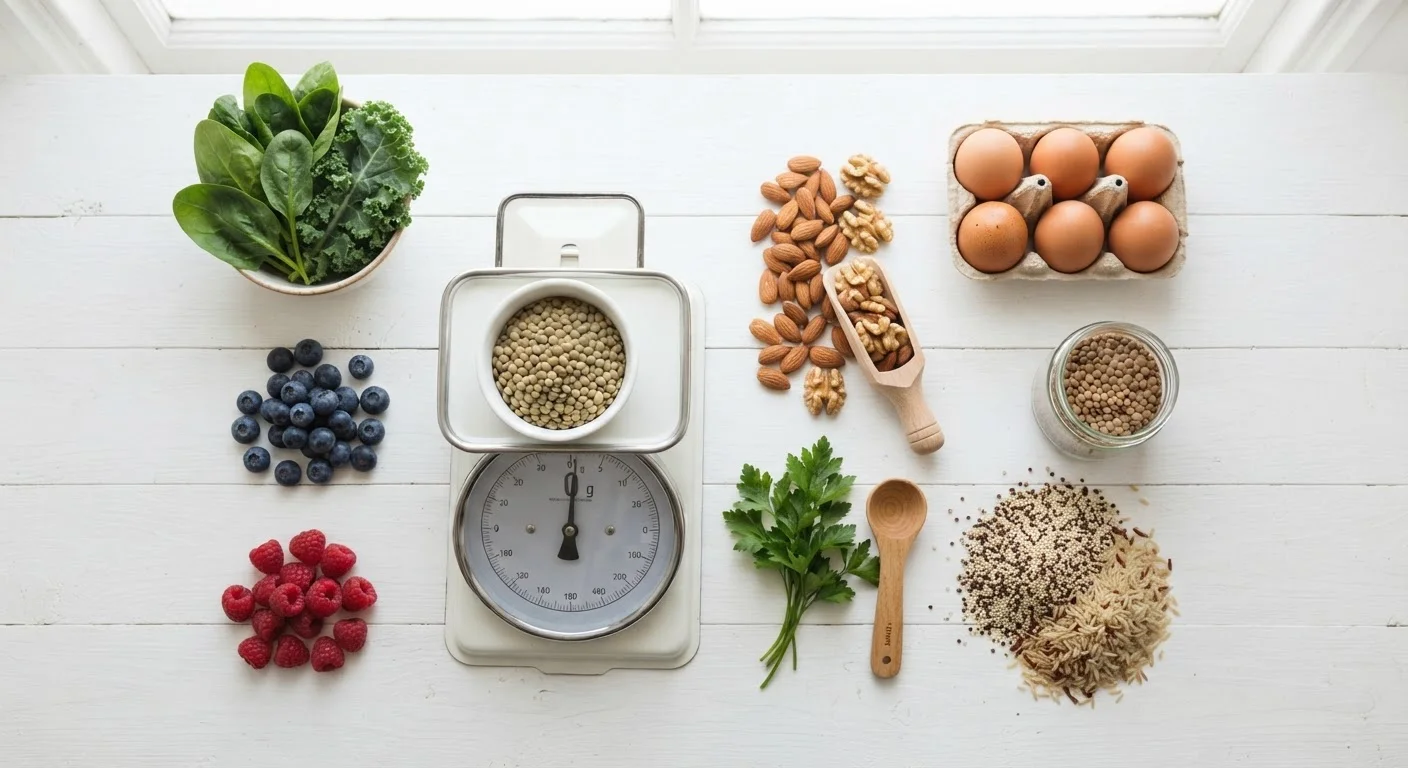
Consider two snacks that each provide roughly 200 calories: a small handful of almonds and a serving of a heavily processed snack chip. The almonds deliver protein, healthy unsaturated fats, magnesium, and vitamin E. The chips provide very little beyond refined starch, salt, and added fat - calories with minimal nutritional return. By the nutrient-density lens, the almonds are clearly the stronger choice.
Now consider calorie density. Almonds are quite calorie-dense - a small physical volume contains a lot of energy. That is not a flaw; it reflects their fat content, which is largely beneficial. But it does mean portions matter more than they would with, say, a large bowl of steamed broccoli, which you could eat in a large quantity for the same 200 calories.
Understanding calorie density becomes particularly practical when managing total energy intake. Research in appetite regulation suggests that foods with lower calorie density tend to produce greater feelings of fullness per calorie consumed, because their higher water and fiber content contributes volume to a meal. This is not a guarantee of any outcome, but it helps explain why dietary guidance frequently emphasizes vegetables, fruits, and whole grains.
| Nutrient Density | Calorie Density | |
|---|---|---|
| What it measures | Nutritional value per calorie | Calories per unit of weight or volume |
| Primary question it answers | Does this food do nutritional work? | How much energy is concentrated here? |
| High score means | Rich in vitamins, minerals, fiber, or protein | Many calories in a small portion |
| Low score means | Few nutrients relative to calories | Few calories in a large portion |
| Example: high end | Leafy greens, legumes, fatty fish | Oils, nuts, cheese |
| Example: low end | Sugary sodas, refined snack foods | Cucumbers, celery, broth-based soups |
| Most useful for | Evaluating nutritional quality | Understanding portion and fullness context |
For a practical breakdown of how these figures appear on packaged food, see what the nutrition label is actually telling you.
Common Misconceptions Worth Correcting
A persistent myth is that low-calorie automatically means healthy. Fat-free products, for instance, can be low in calories yet high in added sugars and stripped of fat-soluble vitamins. They may score poorly on nutrient density while appearing virtuous by calorie count alone.
The inverse is also misunderstood. Olive oil, avocado, and nuts are very calorie-dense, yet they rank well on nutrient density and feature prominently in dietary patterns - such as the Mediterranean diet - that are associated with positive long-term health outcomes in population research.
A related misconception is that single foods need to be optimized. Dietitians typically assess the whole day of eating, not individual items in isolation. A high-calorie-density food eaten in a moderate portion as part of a varied, nutrient-rich meal pattern is meaningfully different from the same food eaten in excess within a diet that is otherwise lacking. The way dietitians read a full meal pattern reflects this whole-pattern thinking.
Putting Both Lenses to Work
Rather than replacing one concept with the other, the two frameworks are most useful together. A practical approach many nutrition educators suggest is to anchor meals around foods that score well on nutrient density - leafy greens, legumes, whole grains, lean proteins, and colorful produce - and then consider calorie density when adjusting portion size to match your own energy needs and satiety signals.
This is not about rigid tracking or eliminating any food category. It is a shift in how you frame food choices: from asking only "how many calories?" to also asking "what does this give me beyond energy?" That reframe aligns with how nutrition researchers think about dietary quality, which focuses on overall patterns rather than single nutrients or foods.
Eating patterns that tend to score well on both measures - high nutrient density relative to calorie load - include largely plant-forward approaches, though omnivorous diets can achieve similar quality with thoughtful composition. The evidence on plant-based versus omnivorous eating explores those trade-offs in detail.
This article is for general informational and educational purposes only and does not constitute medical or dietary advice. Speak with a registered dietitian or qualified healthcare professional for guidance tailored to your individual health circumstances.