

Key Takeaways
Why Keeping a Log Is Worth the Two Minutes It Takes
Most drivers know they should maintain their car. Far fewer keep any written record of what was actually done. That gap creates real problems: it's harder to sell the car, harder for mechanics to diagnose recurring issues, and easier to accidentally skip a critical service.
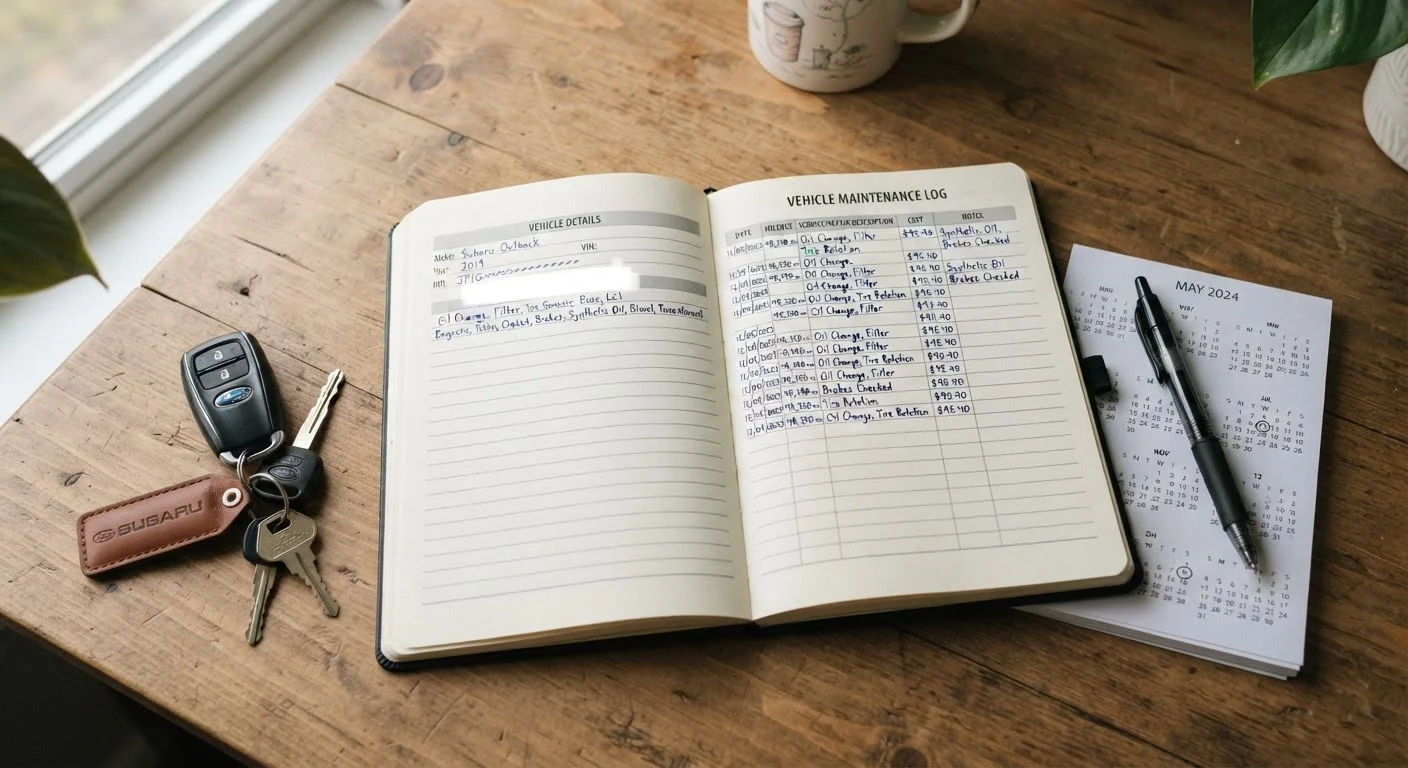
A maintenance log is simply a running record of everything done to your vehicle - oil changes, tire rotations, fluid top-offs, brake work, filter replacements, and any repairs. It doesn't need to be elaborate. A few lines per service visit, consistently recorded, produces a document that tells the story of your car's life.
From a resale standpoint, a documented service history is tangible evidence that a vehicle was cared for. Buyers - and dealers - routinely pay more for cars with clear records. For mechanics, a log can compress a diagnostic session from an hour to a few minutes by showing exactly when something was last serviced or when a symptom first appeared.
If you sometimes handle your own basic maintenance, knowing which tasks are appropriate to DIY and which belong in a shop is a useful companion to log-keeping - because your log should capture both shop work and anything you do yourself.
Your Owner's Manual Sets the Baseline
Before you log anything, check what your manufacturer actually recommends. Every model has a service schedule built around its specific engine, transmission, and operating conditions. See our guide to reading your owner's manual for a walkthrough on finding and using that schedule. Logging arbitrary intervals won't serve you as well as tracking what your vehicle actually needs.
What to Track, Where to Keep It, and How to Start Today
The sections below walk through what you'll need before you start, the tools worth having, and the exact steps to set up and maintain your log going forward.
What you will need
Dedicated logbook or spiral notebook
Provides a physical, portable record that stays in the glove box and is always with the vehicle.
Maintenance tracking app (e.g., any reputable vehicle log app)
Stores entries digitally with reminders and easy search - useful for drivers who prefer their phone over paper.
Vehicle owner's manual
Contains the manufacturer's recommended service schedule, which determines what intervals to track.
Folder or envelope for receipts
Keeps physical shop invoices organized alongside the log for a complete, verifiable record.
Gather your starting information
Pull together whatever service history you already have - receipts from past oil changes, inspection stickers, dealership records. If you've owned the car since new, you may have most of this. If you bought it used, contact the previous owner or the dealership; many shops can print a service history by VIN (Vehicle Identification Number).
Write down your current odometer reading. This becomes the baseline from which all future intervals are measured.
Choose your format
Pick one format and commit to it. A spiral notebook kept in the glove box works reliably for most drivers. A digital app can add automatic reminders and mileage calculations. A simple spreadsheet saved to cloud storage is another solid option.
The single rule: your log needs to be somewhere you'll actually update it. A fancy app you never open is less useful than a plain notepad you reach for every time the car goes in for service.
Record the right details after every service
Each entry should include:
- Date of the service
- Odometer reading at the time of service
- What was done - oil change, tire rotation, brake inspection, etc.
- Parts or fluids used, if relevant (e.g., oil type and viscosity, filter brand)
- Shop name or note that it was DIY
- Cost
- Next service due (date or mileage, whichever comes first)
That's it. You don't need paragraphs - a few lines per visit is plenty.
Log observations between services too
Your log doesn't have to be limited to shop visits. If you notice a new noise, a dashboard warning light, or a change in how the car handles, jot it down with the date and mileage. When you do visit a mechanic, this timeline helps them narrow down what changed and when - saving diagnostic time and potentially saving you money.
Review your log periodically
Every few months, scan back through your entries. Look for services that are coming due based on mileage or time. Check whether anything was flagged as 'monitor this' at a past visit. A quick review takes five minutes and keeps you from missing an interval.
For vehicles with high mileage, this review is especially worthwhile - see our article on how maintenance needs shift after 100,000 miles for context on what to watch more closely as a car ages.
Keep Receipts Alongside Your Log
A log entry is useful, but a shop invoice is proof. When selling your vehicle or disputing a warranty claim, physical or digital receipts carry far more weight than handwritten notes alone. Store receipts in the same folder or app as your log so they're always together.
One last note: if you've heard that certain maintenance rules - like strict oil change intervals - are set in stone, it may be worth checking what the evidence actually says. Our article on common maintenance myths that cost drivers money separates outdated habits from sound practice, so your log is tracking intervals that actually make sense for your vehicle.