

Why Iceland Defies a Single "Best Time" to Visit
Ask a dozen travelers when to visit Iceland and you'll get a dozen different answers - and they'll all be right. Iceland is one of the rare destinations where the season you choose doesn't determine whether the trip is good; it determines what kind of trip it is. The landscape transforms so completely between summer and winter that returning visitors often describe it as visiting an entirely different country.
The deciding factors come down to your priorities: Do you want endless daylight for hiking? The possibility of seeing the northern lights? Puffins nesting on clifftops? Waterfalls roaring at full volume? Iceland delivers all of these - just not simultaneously. This reference guide breaks down each season honestly so you can match your travel style to the version of Iceland that fits you best.
Season-by-Season Breakdown
Winter (November - February)
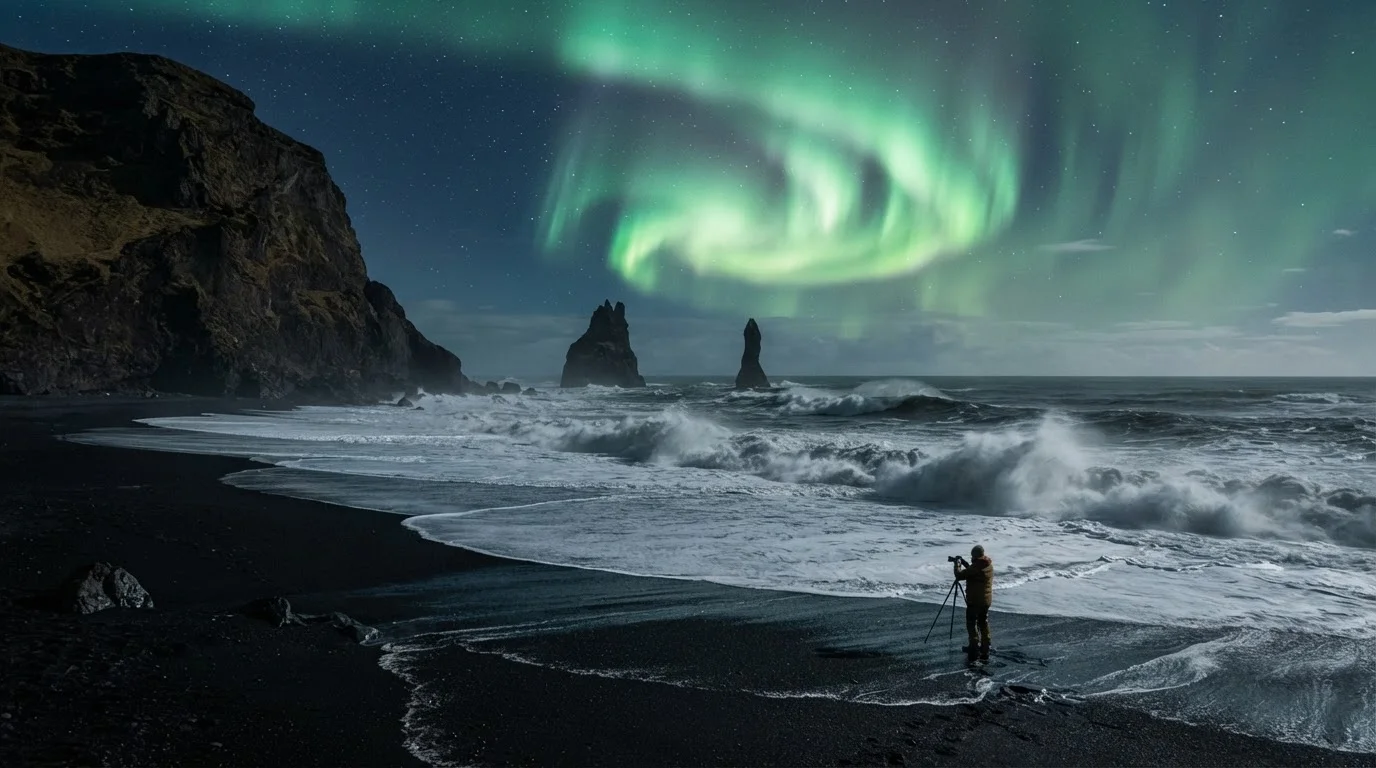
Iceland's winter is raw, dark, and genuinely dramatic. Daylight in Reykjavík shrinks to as little as four to five hours around the December solstice. The upside is a long, ink-dark sky - the prime window for aurora borealis sightings, assuming clear conditions. Snow-dusted lava fields, frozen waterfalls, and ice caves in glaciers like Vatnajökull make the landscape feel mythic. Roads in highland interiors (the F-roads) are closed and impassable. Expect temperatures typically ranging from 23°F to 39°F (-5°C to 4°C), icy roads, and unpredictable storms. Travelers who drive the Ring Road in winter should be well-prepared - the same seasonal readiness principles that apply to driving in any extreme climate apply here; see our winter vehicle preparation guide for what to check before tackling challenging winter roads.
Spring (March - May)
Spring is Iceland's quiet, underrated chapter. Daylight returns rapidly - Reykjavík gains several minutes of light per day through April. Snow retreats, waterfalls surge with melt water, and puffins begin arriving in May. Crowds are noticeably thinner than summer, and accommodation prices tend to be lower. Aurora visibility remains possible through late March before nights grow too bright. It's a genuinely rewarding time for travelers who prefer breathing room at popular sites like Seljalandsfoss or the Golden Circle.
Summer (June - August)
Summer is peak Iceland in every sense. The midnight sun reigns - near the June solstice, the sun barely dips below the horizon, giving photographers an almost surreal extended golden hour. Highland F-roads open for 4WD vehicles, unlocking interior landscapes like the Landmannalaugar rhyolite mountains and Þórsmörk valley. Puffin colonies are active, lupine blooms purple across the lowlands, and whale-watching conditions are favorable. Temperatures are mild - typically 50°F to 59°F (10°C to 15°C) - but this is also when visitor numbers peak sharply, particularly July. Book accommodation and popular tours well in advance.
Autumn (September - October)
Many seasoned Iceland travelers quietly prefer autumn. The summer crowds thin, highland roads are still open into early October, foliage shifts to russet and gold, and northern lights become visible again as darkness returns. September especially offers a compelling overlap: long enough daylight for sightseeing, short enough nights for aurora hunting. It's arguably the most balanced window the island offers.
What Stays Spectacular Year-Round
Regardless of season, several things about Iceland remain reliably extraordinary. The geothermal hot springs - including public pools found in nearly every town - are open year-round and genuinely beloved by locals. The Ring Road (Route 1) connecting major attractions circumnavigates the island in all seasons, though winter driving demands experience and caution. Iconic waterfalls like Skógafoss and Gullfoss run in all seasons; in winter, their edges freeze into dramatic ice formations. The dramatic geology - the rifting tectonic plates, volcanic craters, and lava fields - is, of course, timeless.
F-Roads
Iceland's interior mountain roads, designated with an 'F' prefix. They require 4WD vehicles and are only open during summer months, typically June through early October. Driving them in a standard car is prohibited and dangerous.
Aurora Borealis
Also called the northern lights, these are natural light displays in the sky caused by solar particles interacting with Earth's atmosphere. In Iceland, they are visible during dark nights, generally September through March.
Midnight Sun
A phenomenon near the summer solstice in high-latitude countries where the sun remains above or just below the horizon through the night, resulting in continuous daylight. In Iceland, this occurs roughly from mid-May to late July.
Ring Road (Route 1)
Iceland's main national highway, approximately 828 miles (1,332 km) long, that circles the entire island connecting major towns and attractions. It is accessible year-round, though winter conditions require careful preparation.
One honest trade-off to understand: Iceland's popularity has grown substantially, and even "shoulder season" travel now requires planning. Accommodation in smaller towns books out faster than many travelers expect, particularly on weekends and holidays.