

Key Takeaways
Option A
Lisbon
The vibrant, walkable capital with culture at every corner.
Best for: Travelers who want history, food, nightlife, and neighborhoods to explore on foot.
Option B
The Algarve
Portugal's sun-soaked southern coast, built for relaxation.
Best for: Travelers who want warm water, dramatic cliffs, and long, unhurried beach days.
If you want culture, history, and urban energy
Lisbon
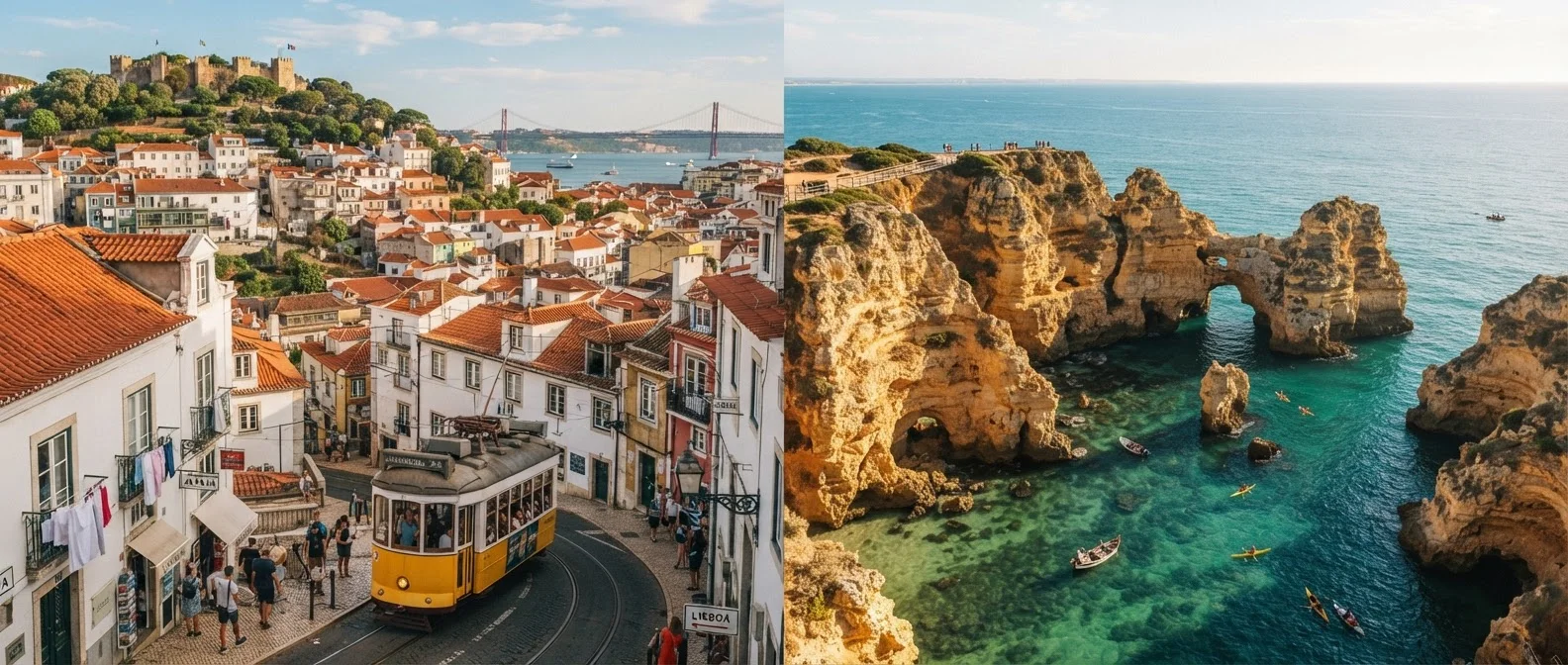
Lisbon's neighborhoods, tram lines, hilltop viewpoints, and restaurant scene reward every hour of exploration. There's always one more miradouro (viewpoint) to find.
If you want to decompress with sun, sea, and cliffs
The Algarve
The Algarve's beaches - from the dramatic sea stacks of Ponta da Piedade to the wide sands of Meia Praia - are among Europe's most stunning. It's designed for genuine rest.
If you're traveling with young children
The Algarve
Calm, shallow coves and resort-style infrastructure make the Algarve easier to navigate with kids in tow, especially in the western Sotavento region.
If you're visiting Portugal for the first time
Lisbon
Lisbon delivers an efficient, memorable introduction to Portuguese culture, food, and history within a compact, highly walkable city.
If you want the best of both worlds on one trip
Lisbon
Start in Lisbon for a few days, then take the train south. The city makes an ideal base before transitioning to coastal relaxation in the Algarve.
What Each Destination Actually Feels Like
Lisbon is a city that earns its hype. Built across seven hills, it's dense with history - Moorish castle ruins, ornate 18th-century tiles, and fado music drifting from open tavern doors. The neighborhoods do real work here: Alfama is ancient and atmospheric, Príncipe Real is leafy and design-forward, LX Factory is industrial-chic on a weekend morning. It's the kind of place where wandering without a plan still yields something worth remembering.
The Algarve operates on an entirely different frequency. Portugal's southernmost region stretches roughly 100 miles along the Atlantic, combining the jagged limestone formations of the western coast with the flatter, more sheltered beaches of the eastern Sotavento. The pace is deliberate. Days organize themselves around which beach to visit, when to eat fresh grilled fish, and whether to kayak to a sea cave before sundown. The Algarve doesn't compete with cities - it's the antidote to them.
Neither is objectively better. They're simply built for different kinds of trips - and different kinds of travelers.
A Head-to-Head Look at the Key Differences
Comparing Lisbon and the Algarve across practical categories helps clarify which suits your priorities. Both destinations are well-developed for international tourism and genuinely safe for solo travelers, couples, families, and groups.
| Criterion | Lisbon | The Algarve |
|---|---|---|
| Primary appeal | Culture, history, food scene | Beaches, coastline, relaxation |
| Best season | Year-round; mild winters | May through October |
| Daily pace | Active, walkable, stimulating | Slow, beach-anchored, unhurried |
| Getting around | Trams, metro, on foot | Car rental strongly recommended |
| Dining character | Diverse neighborhoods, late-night | Fresh seafood, coastal restaurants |
| Family-friendliness | Good; hilly terrain is a factor | Very high; calm coves and resorts |
| Travel from Lisbon | - | ~2.5 hrs by train to Faro |
One meaningful nuance on timing: Lisbon is a year-round destination with mild winters, making it attractive even in January. The Algarve, while pleasant in spring and autumn, is most rewarding between May and early October when sea temperatures are warm enough for comfortable swimming. Summer (July-August) brings peak crowds and heat in both locations - worth factoring in if you're sensitive to either.
For help structuring your days once you decide, see our guide to building a travel itinerary that actually works.
How to Think Through the Decision
The most useful question isn't "which destination is better" but "what kind of traveler am I on this particular trip?" A few prompts worth sitting with:
- What's your energy level? Lisbon demands leg power - its hills and stairs are part of the charm, but they're also genuinely tiring. The Algarve's pace is gentler and easier to adapt around mobility needs.
- How long is your trip? Three or four days lends itself to Lisbon. A full week or more opens up genuine beach relaxation in the Algarve, where slowing down is the point.
- Who are you traveling with? Couples and solo travelers often gravitate toward Lisbon's social scene. Families with young children frequently find the Algarve's infrastructure - beach proximity, calm waters - more practical.
- What's your relationship with planning? Lisbon rewards a light itinerary with room to wander. Our fixed itinerary vs. open-ended travel comparison can help you figure out which approach fits your style before you go.
~2.5 hrs
Train journey from Lisbon to Faro (Algarve)
Portugal's intercity rail connects Lisbon's Oriente station to Faro, making a combined itinerary practical for trips of a week or more.
150+
Distinct beaches across the Algarve region
The Algarve coastline spans roughly 100 miles and includes beaches ranging from sheltered lagoon inlets to dramatic Atlantic-facing cliffs.
Top 5
Lisbon's ranking among European city-break destinations
Lisbon has consistently ranked among Europe's most visited city destinations in European Tourism Association surveys over recent years.
If you're still genuinely torn, the good news is you don't have to choose entirely. Lisbon to Faro (the Algarve's main city) takes about 2.5 hours by intercity train. Splitting a week between both is one of Portugal's most popular itinerary structures for good reason - and thinking about how far ahead to book each leg is worth reading up on. Our piece on planning far ahead vs. booking last minute covers exactly that trade-off.
Making the Most of Whichever You Choose
If you go to Lisbon, resist the urge to fill every hour. Some of the best experiences - a spontaneous pastry at a neighborhood bakery, catching a sunset from Miradouro da Graça - can't be pre-booked. Take the historic Tram 28 for context, but do most of your exploring on foot. Day trips to Sintra or Cascais are popular and genuinely worthwhile if your schedule allows.
If you go to the Algarve, consider basing yourself in a smaller town rather than a major resort strip. Lagos, Tavira, and Sagres each offer distinct characters - Lagos for a lively social scene, Tavira for a quieter, more historic atmosphere, Sagres for surfers and rugged coastline. Renting a car gives you access to beaches that can't be reached by bus, which is often where the most dramatic landscapes are.
In either case, verify entry requirements, travel advisories, and any transportation bookings with official government and provider sources before you travel - conditions can change, and the details matter. For broader trip-planning strategy, our guide to touring vs. independent travel is a useful next read.