

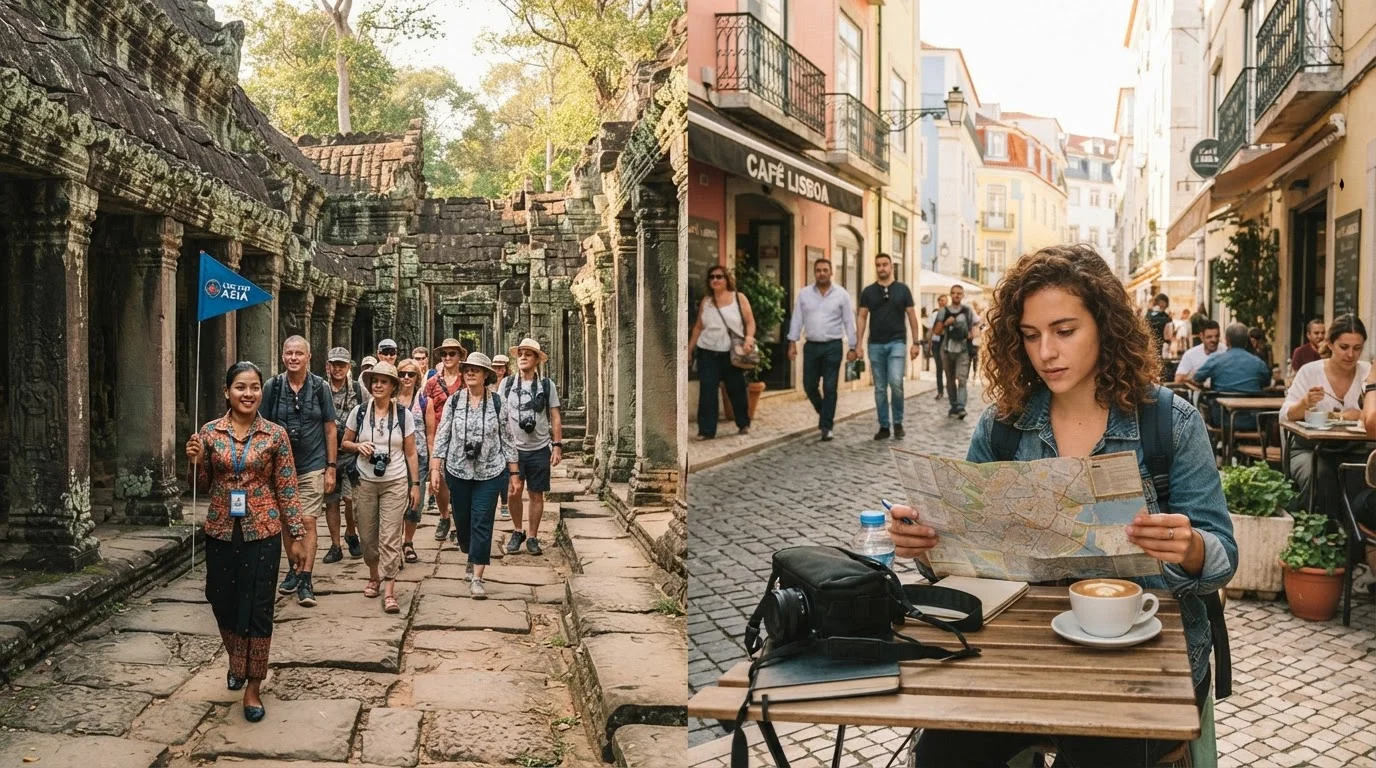
Key Takeaways
Logistics handled by experts from day one
Permits, transportation, and scheduling are managed by the operator, significantly reducing the planning burden for complex multi-site itineraries.
Access to local knowledge and cultural context
Knowledgeable guides provide historical, cultural, and practical insights that independent research rarely replicates, particularly at heritage sites or in regions with rich oral traditions.
Built-in social connection with fellow travelers
Group tours naturally create opportunities to meet other travelers, which can be especially valuable for solo participants who want company without planning around it.
Predictable costs and fewer surprise expenses
Most guided packages bundle major costs upfront, making it easier to budget accurately and avoid unexpected transportation or entry fees.
Safer navigation in unfamiliar or remote regions
In destinations with safety considerations or limited tourist infrastructure, traveling with a vetted operator provides an additional layer of security and local contacts.
Fixed schedule leaves little room to linger
Tour itineraries move at a group pace, which means you may spend 45 minutes at a site you'd happily explore for half a day - or rush past something unexpectedly moving.
Less authentic interaction with local communities
Organized tours often route travelers through tourist-facing experiences; spontaneous encounters with locals, neighborhood restaurants, and off-the-beaten-path spots are harder to stumble into.
Premium pricing for convenience and curation
The markup built into group tours reflects real value, but travelers willing to plan independently can sometimes allocate that budget differently - choosing where to splurge on their own terms.
Group dynamics can be unpredictable
A single difficult group member or mismatched travel styles within the group can affect the entire experience in ways that are difficult to anticipate or resolve mid-trip.
Our Verdict
Guided tours are a genuinely strong choice for complex destinations, first-time international travelers, and anyone who values having logistics handled by experts. Independent travel is the better fit for seasoned travelers, those with niche interests, or anyone who finds a fixed schedule more limiting than liberating. The good news: these aren't mutually exclusive - booking a guided component for one leg of a trip while traveling freely through another is a well-tested strategy.
Travelers who prefer logistical simplicity, deep cultural context, or are navigating an unfamiliar region for the first time will typically get the most out of a guided tour.
Why This Decision Matters More Than People Expect
Choosing between a guided tour and independent travel isn't just a stylistic preference - it shapes your entire experience on the ground. The wrong match can leave a structured traveler overwhelmed by open days, or an adventurous explorer frustrated by rigid schedules. Getting this decision right means understanding your own travel personality as clearly as you understand your destination.
The framing matters too. This isn't a question of which approach is objectively better. It's about which model aligns with your specific trip, timeline, budget, and comfort level. A first-time visit to Morocco's medinas calls for a different calculation than a two-week road trip through national parks. For a deeper look at how planning style affects the experience, compare fixed itineraries against open-ended travel to see where your instincts land.
The Case for Guided Tours
Guided tours remove the friction that can derail a trip before it starts. Entry permits, transportation between sites, local guides who speak the language and know the history - all of it is bundled. For destinations where language barriers are steep or infrastructure is less predictable, that support structure isn't a luxury; it's a practical asset.
Logistics handled by experts from day one
Permits, transportation, and scheduling are managed by the operator, significantly reducing the planning burden for complex multi-site itineraries.
Access to local knowledge and cultural context
Knowledgeable guides provide historical, cultural, and practical insights that independent research rarely replicates, particularly at heritage sites or in regions with rich oral traditions.
Built-in social connection with fellow travelers
Group tours naturally create opportunities to meet other travelers, which can be especially valuable for solo participants who want company without planning around it.
Predictable costs and fewer surprise expenses
Most guided packages bundle major costs upfront, making it easier to budget accurately and avoid unexpected transportation or entry fees.
Safer navigation in unfamiliar or remote regions
In destinations with safety considerations or limited tourist infrastructure, traveling with a vetted operator provides an additional layer of security and local contacts.
Tours also create built-in social connection. Travelers going solo who want company, or couples who prefer not to spend every evening planning the next day, often find the group dynamic genuinely enjoyable. If you're headed somewhere like Vietnam or Egypt for the first time, a tour can deliver access and context that independent research rarely matches. Check out our thoughts on navigating Southeast Asia on a first trip for a sense of how destination complexity shapes this choice.
The Case for Independent Travel
Freedom is the central argument for going it alone - but it's more specific than it sounds. Independent travel means you can linger at a museum for three hours because you're fascinated, skip the crowded landmark everyone else photographs, and eat lunch at the neighborhood spot with no English menu. That flexibility pays off enormously for travelers who know what they want and enjoy the process of finding it.
Fixed schedule leaves little room to linger
Tour itineraries move at a group pace, which means you may spend 45 minutes at a site you'd happily explore for half a day - or rush past something unexpectedly moving.
Less authentic interaction with local communities
Organized tours often route travelers through tourist-facing experiences; spontaneous encounters with locals, neighborhood restaurants, and off-the-beaten-path spots are harder to stumble into.
Premium pricing for convenience and curation
The markup built into group tours reflects real value, but travelers willing to plan independently can sometimes allocate that budget differently - choosing where to splurge on their own terms.
Group dynamics can be unpredictable
A single difficult group member or mismatched travel styles within the group can affect the entire experience in ways that are difficult to anticipate or resolve mid-trip.
Cost control is another real advantage. Without markup built into a package price, independent travelers can often optimize their spending - splurging on accommodation they care about and saving elsewhere. That said, the research burden is real. Building a trip from scratch takes time and planning skill. Building a travel itinerary that actually works is a practical place to start if you're ready to take that on.
Key Factors to Evaluate Before You Decide
Rather than defaulting to habit, run through these practical considerations before committing to either model:
- Destination complexity: Countries with difficult visa logistics, unreliable public transit, or significant language barriers often reward the tour structure more than simpler destinations do.
- Trip length: Shorter trips (under ten days) benefit from the efficiency of guided travel; longer trips give independent travelers room to breathe and adjust.
- Group composition: Families with young children or travelers with specific accessibility needs may find tour operators better equipped to handle their requirements.
- Planning appetite: If pre-trip research feels like a chore rather than part of the fun, a tour removes that burden entirely.
- Timing flexibility: Independent travelers can act on the planning-versus-spontaneity spectrum in ways tour participants generally cannot.
72%
Travelers who research trips online before booking
According to Google Travel research, the vast majority of travelers conduct extensive online research before finalizing any booking decision.
8-10 days
Average length of a guided international tour
Industry data from the U.S. Tour Operators Association suggests most organized international tours run between eight and ten days, shaping how much itinerary depth they can realistically offer.
Many experienced travelers land on a hybrid: book a guided excursion for one or two high-value days in a complex region, then travel freely through the rest. It's a pragmatic approach that doesn't force a false choice. For those traveling alone, solo travel planning from start to finish offers a fuller picture of what independent travel actually involves.
The Hybrid Approach Is Worth Considering
Many travelers assume they must choose entirely between a tour and independent travel for a given trip. In practice, mixing both within one journey is common and often highly effective. You might book a guided experience for a complex region - a cooking class with a local family, a specialized heritage tour - while structuring the surrounding days entirely on your own. This flexibility is worth building into your planning from the start rather than treating it as an afterthought.