

Key Takeaways
Why Renovation ROI Is Never Guaranteed
Homeowners spend billions each year improving their properties, often with the expectation that upgrades will pay off at resale. The reality is more nuanced. Return on investment (ROI) for renovations varies significantly by project type, local market, and how the improvement compares to neighboring homes. What actually determines your home's value goes well beyond square footage and finishes-location, lot size, and comparable sales all shape what buyers will ultimately pay.
Remodeling cost-vs-value data, compiled annually by industry researchers, consistently shows that few projects recoup 100% of their cost at resale. Most return somewhere between 50% and 80 cents on every dollar spent. That doesn't mean renovating is a bad idea-comfort, livability, and personal enjoyment matter-but it does mean approach matters enormously. The projects below reflect broad national patterns; always weigh them against your specific market before committing. Hidden renovation costs like permits and structural surprises can quietly erode even a well-planned project's return.
Minor Kitchen Updates (High ROI Potential)
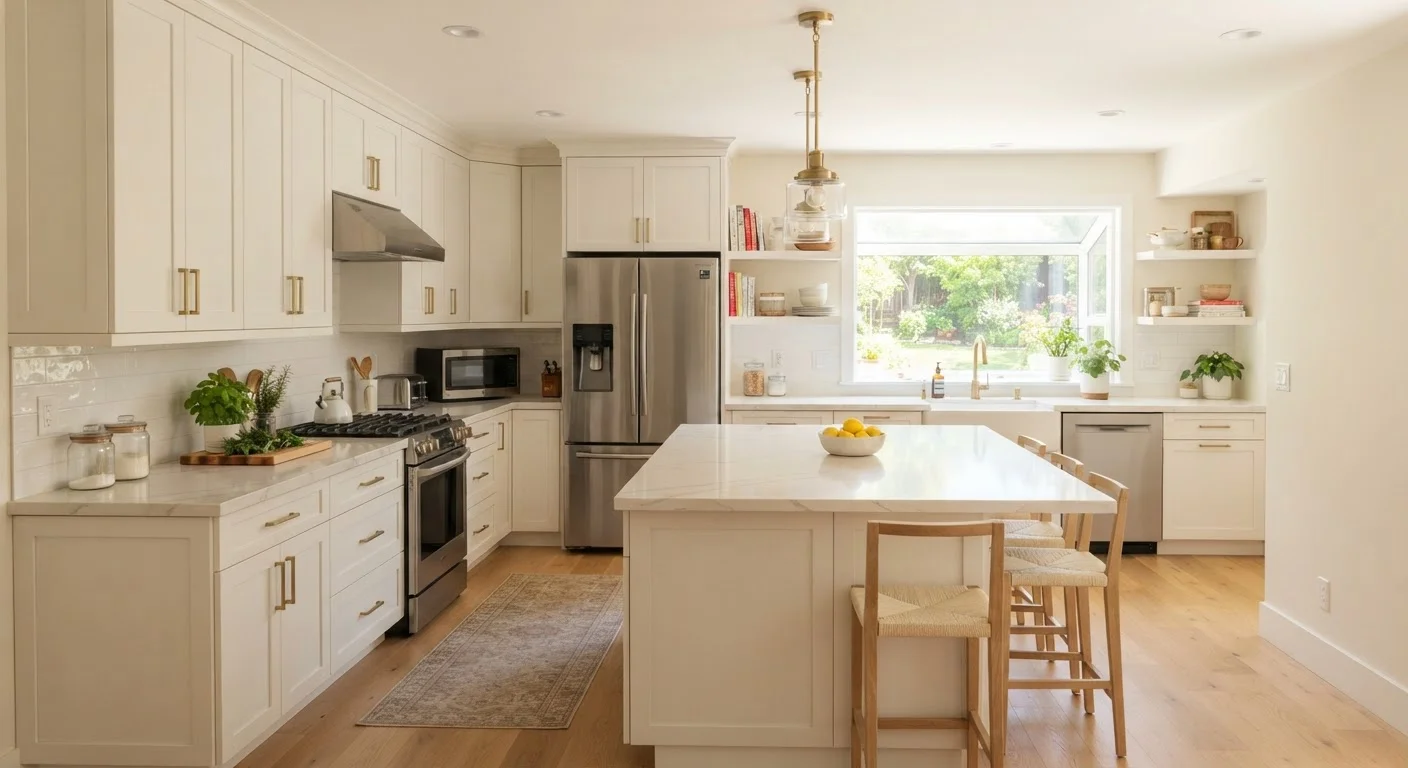
A full kitchen gut renovation can cost $75,000 or more and may recoup only 50-60% at resale, according to recurring cost-vs-value industry surveys. A targeted minor remodel-new cabinet fronts, updated hardware, a modern faucet, and fresh countertops-can cost a fraction of that and perform significantly better as a percentage of spend. Buyers respond to kitchens that feel clean and functional; they don't require perfection.
The key is avoiding over-improvement relative to the rest of the home and the surrounding neighborhood. Installing professional-grade appliances in a modest starter home rarely earns back their cost. Keep finishes mid-range and broadly appealing.
Mid-range kitchen refreshes often outperform full gut renovations in cost recovery at resale.
Bathroom Refreshes (Solid Returns for Modest Spend)
Like kitchens, bathrooms are high-scrutiny spaces for buyers. Replacing an outdated vanity, re-grouting tile, upgrading lighting, and installing a new toilet and fixtures can transform the perception of a bathroom without a complete rebuild. Mid-range bathroom remodels have historically recouped a higher percentage of cost than upscale renovations in the same space.
Adding a bathroom where one doesn't exist-particularly converting a half-bath to a full bath in a home that has only one-can be meaningfully value-additive, because it addresses a genuine functional gap buyers care about.
Targeted bathroom updates address buyer priorities without the diminishing returns of a luxury overhaul.
Entry Door Replacement (Strong Curb Appeal ROI)
A steel entry door replacement consistently ranks among the highest-returning projects in national remodeling surveys, often recouping 65-80% or more of its cost. The door is the first thing a buyer physically interacts with, and it signals the overall quality and security of the home. A worn, dated, or poorly sealing door creates a negative first impression that other improvements struggle to overcome.
Curb appeal broadly-including landscaping, exterior paint, and driveway condition-shapes buyer perception before they step inside. Neighborhood comparables also factor in here; a well-maintained exterior that fits the street's standard reads as competent ownership.
A quality entry door replacement is one of the most cost-efficient ways to improve buyer first impressions.
Attic Insulation (Energy Efficiency That Buyers Notice)
Adding or upgrading attic insulation reliably appears in the top tier of cost-recovery projects. It reduces utility costs, addresses a practical concern buyers increasingly ask about, and is inspectable-meaning its value is verifiable. Unlike aesthetic upgrades, which are subjective, insulation improvements speak to buyers across nearly all market segments.
Energy efficiency improvements more broadly-including HVAC upgrades, smart thermostats, and window replacements-tend to resonate with buyers who understand ongoing operating costs. They may not add dollar-for-dollar value, but they reduce buyer objections and can support faster sales.
Attic insulation is one of the few projects where practical function and resale return consistently align.
Garage Door Replacement (Underestimated Visual Impact)
The garage door often occupies a substantial portion of a home's front-facing visual real estate. An outdated or damaged door can drag down curb appeal significantly, while a new, well-matched replacement creates a disproportionately positive impression relative to its cost. Garage door replacements have ranked among the top ROI projects in national surveys for several consecutive years.
This is a project where aesthetics and function intersect: buyers notice safety features, insulation ratings, and modern openers as well as appearance. It's generally a strong spend regardless of whether you're preparing to sell soon or holding the home long-term.
Garage door replacement delivers outsized curb appeal impact relative to its cost in most markets.
Swimming Pools (Low and Market-Dependent ROI)
In most US markets, an in-ground pool adds far less to a home's appraised value than it costs to install-and it can actively deter buyers who don't want the maintenance responsibility, insurance implications, or safety concerns for young children. Pool installation costs typically range from $35,000 to $65,000 or more, while the value added at appraisal is often a fraction of that.
Exceptions exist in warm-weather markets-parts of Florida, Arizona, and Southern California-where pools are more expected and may contribute more meaningfully to value. But even there, returns are not guaranteed. The myth that pools always add value persists despite consistent data to the contrary.
A swimming pool rarely recoups its installation cost at resale and can narrow your pool of buyers.
Over-Personalized Interior Work (Risk of Narrowing Buyer Appeal)
Bold wallpaper, highly specific built-ins designed around a particular hobby or collection, exotic tile choices, or unconventional room conversions (a bedroom turned into a recording studio, for example) tend to serve the current owner well and future buyers poorly. The more specific the design, the smaller the audience willing to pay full price for it.
Buyers generally want to see themselves living in a home. When a space is too distinctly someone else's vision, they mentally price in the cost of undoing it. Common renovation mistakes that reduce home value frequently involve well-intentioned personalization that creates resale friction.
Highly personalized renovations serve the current owner but can shrink the buyer pool and suppress offers.
Sunroom Additions (High Cost, Modest Return)
Sunrooms and enclosed patios add livable square footage and personal enjoyment, but they consistently rank among the lower-returning additions in cost-recovery data-often recouping less than 50% of their construction cost. Part of the reason is that this space isn't counted the same as climate-controlled living area in most appraisals, limiting its contribution to appraised value.
If the primary motivation is personal enjoyment and you plan to stay in the home for many years, a sunroom can be a reasonable choice. As a resale investment, however, it rarely pencils out. Structural changes to living space carry similar trade-offs worth evaluating carefully.
Sunrooms add enjoyment but rarely recover their construction cost when it comes time to sell.
The Bottom Line on Renovation Value
Improvements that align with neighborhood norms, address functional needs, and present well to a broad pool of buyers tend to hold their value best. Highly customized, luxury-only, or taste-specific projects routinely disappoint at resale. Before committing to any major project, research what comparable homes in your area offer-buyers rarely pay for features that exceed the neighborhood standard.
It's also worth understanding that deferred maintenance can offset any renovation gain. A new kitchen means little to a buyer who spots a failing roof or outdated electrical panel. Routine home maintenance protects existing value before new improvements can add to it. For a deeper look at common misconceptions, home value myths that mislead even savvy owners is worth reading before you pick up a sledgehammer.
Research Comparable Homes Before You Renovate
Before starting any significant project, review recent sales of comparable homes in your neighborhood to understand what finishes and features buyers are actually paying for. If every comparable home has granite countertops, adding them may be expected rather than value-adding. If yours is the only home without a second bathroom, adding one likely matters more. A licensed real estate agent familiar with your local market can help you prioritize projects that close the gap between your home and what buyers expect at your price point.
This article is for general informational purposes only and does not constitute financial, legal, or professional real estate advice. Renovation returns vary by market, property condition, and individual circumstances. Consult a licensed real estate professional or contractor before undertaking significant projects.