

Key Takeaways
Reading What Your Tomato Plant Is Telling You
Tomatoes are expressive plants. Every crack in the skin, every drooping leaf, and every flower that falls off before setting fruit is communicating something specific about the growing conditions around it. The challenge for most home gardeners isn't a lack of effort - it's interpreting those signals correctly before applying the wrong fix.
Most tomato problems fall into a handful of predictable categories: water management issues, temperature stress, nutrient imbalances, pest pressure, and disease. Understanding which category applies to your plant matters because the solutions are different - and the wrong intervention can make things worse. This guide walks through the most common mistakes homeowners make when something goes wrong with their tomato plants, and what to do instead.
~90%
Of tomato problems tied to water management
University extension services consistently note that the vast majority of common tomato plant complaints - cracking, blossom drop, wilting - trace back to irregular or incorrect watering practices.
55-90°F
Ideal temperature range for tomato fruit set
According to horticultural guidance from land-grant university extension programs, tomatoes set fruit most reliably when daytime highs stay below 90°F and nighttime lows stay above 55°F.
The Most Common Mistakes - and How to Avoid Them
Whether you're growing tomatoes in raised beds, containers, or an in-ground garden, the errors that lead to cracked fruit, curling leaves, and wilting plants tend to follow the same patterns. Learning to recognize them early gives you the best chance of course-correcting before the season is lost.
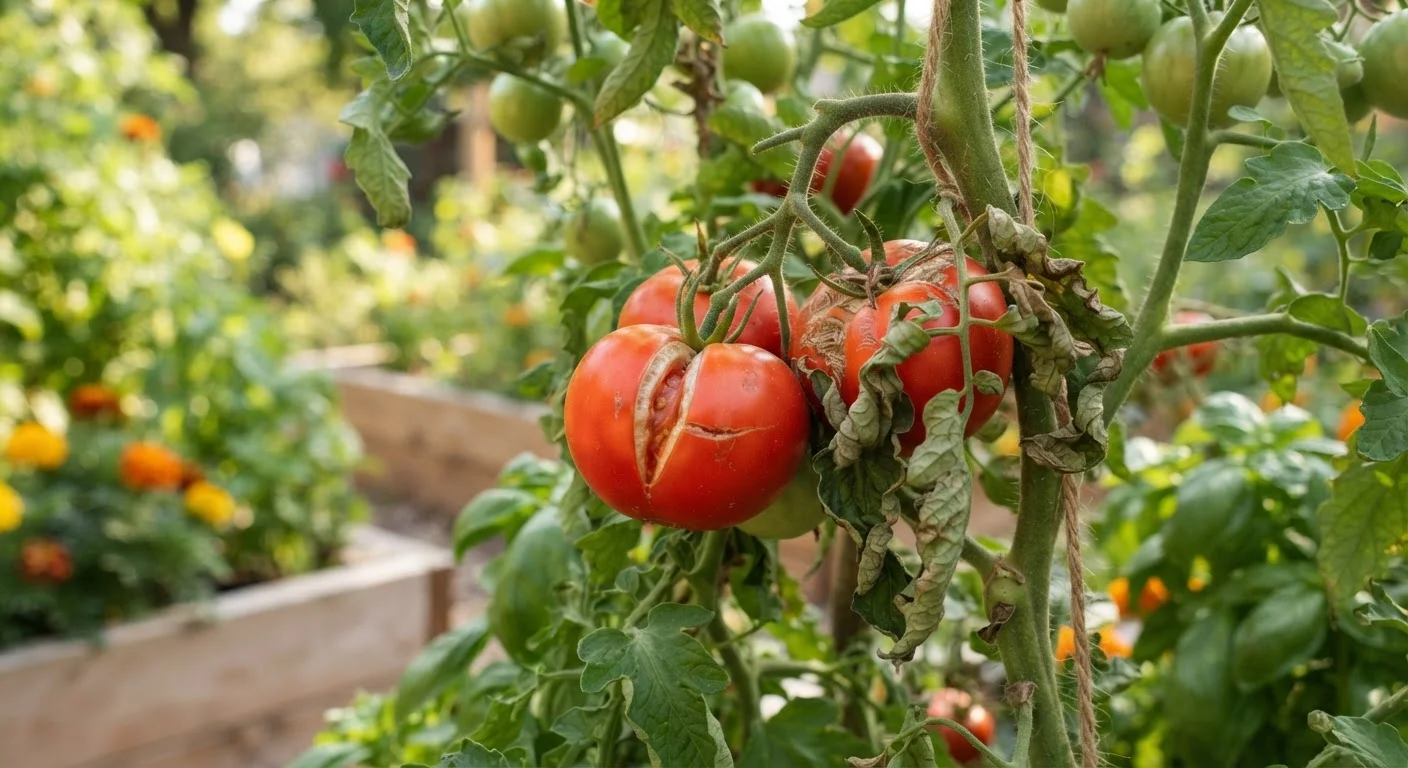
Watering inconsistently, leading to fruit that cracks or splits open on the vine.
Why it happens: Gardeners often water based on schedule rather than soil conditions, resulting in cycles of drought followed by heavy irrigation. When a tomato plant suddenly receives a large amount of water after a dry spell, the fruit expands faster than the skin can stretch.
Ignoring leaf curl and assuming the plant is simply thirsty.
Why it happens: Leaf rolling looks alarming, and the instinct is to water immediately. However, physiological leaf roll - where leaves curl inward during hot afternoons - is a normal self-protective mechanism and does not indicate a watering problem.
Planting too close together, which promotes disease and reduces airflow.
Why it happens: Seed packets and transplant labels often suggest spacing that works for small gardens, leading many homeowners to crowd plants to maximize yield in limited space. Poor airflow traps humidity around foliage, creating ideal conditions for fungal diseases like early blight and septoria leaf spot.
Allowing blossom drop by planting too early or during a heat wave.
Why it happens: Tomatoes are temperature-sensitive when it comes to pollination. When nighttime temperatures drop below 55°F or daytime temperatures exceed 90°F, pollen becomes nonviable and flowers drop before setting fruit. Many gardeners assume something is wrong with the plant itself.
Assuming yellowing lower leaves always mean overwatering.
Why it happens: Yellow leaves on the lower portion of a tomato plant are common and have multiple causes including magnesium deficiency, nitrogen deficiency, or early blight - not just waterlogged roots. Misdiagnosing this leads to cutting back water when the real solution is a soil amendment.
Viral Disease Cannot Be Reversed
If your tomato plant shows mosaic-patterned, distorted, or stunted new growth alongside curling leaves, it may be infected with a viral disease such as tomato mosaic virus. There is no cure once a plant is infected. Remove and bag affected plants immediately - do not compost them - to prevent the virus from spreading to healthy plants nearby.
Just as not every crack signals catastrophe - much like how foundation cracks aren't always structural - not every tomato symptom requires drastic action. The key is accurate diagnosis before you intervene.
When to Stop Troubleshooting and Start Over
Some tomato problems resolve on their own once growing conditions stabilize. Blossom drop from a brief heat wave, minor leaf curl on hot afternoons, and a handful of cracked fruits after an unexpected rainstorm don't necessarily mean the season is lost. Most healthy plants bounce back once the stressor passes.
Don't Overwater to Fix Wilting
Wilting during the hottest part of the day is often a temporary response to heat, not a sign that the plant is dry. Watering an already adequately moist plant can lead to root rot, which causes far more lasting damage than brief midday wilt. Check soil moisture at a 2-inch depth before reaching for the hose.
However, if a plant shows progressive decline - spreading yellowing, persistent wilt even in cool morning temperatures, or severely distorted new growth - it may be time to remove it rather than continue nursing it. A diseased or severely stressed plant draws resources away from other tomatoes nearby and can act as a reservoir for pests and pathogens. Pulling one plant to protect five others is a sound gardening decision, not a failure. Document what you observed, consider a soil test before next season, and adjust your spacing, watering, and variety choices accordingly.