

Key Takeaways
Why Budget Eating Has a Bad Reputation
The idea that healthy eating costs more is widespread - and partly understandable. Premium health-food products, specialty superfoods, and organic labels do carry higher price tags. But the assumption that nutritious food requires a generous grocery budget conflates marketing with nutrition science.
Research consistently shows that dietary patterns centered on whole grains, legumes, vegetables, and eggs - foods that are among the least expensive in any supermarket - score well on standard nutritional quality measures. The problem isn't that good food is expensive; it's that much of the guidance around healthy eating implicitly assumes a certain level of spending. If you've ever felt skeptical of diet advice for this reason, see our checklist for evaluating dietary changes before overhauling what you eat.
The practical principles below are grounded in nutrition evidence and designed for real grocery budgets.
Build Around Protein and Fiber, Not Cost Per Pound
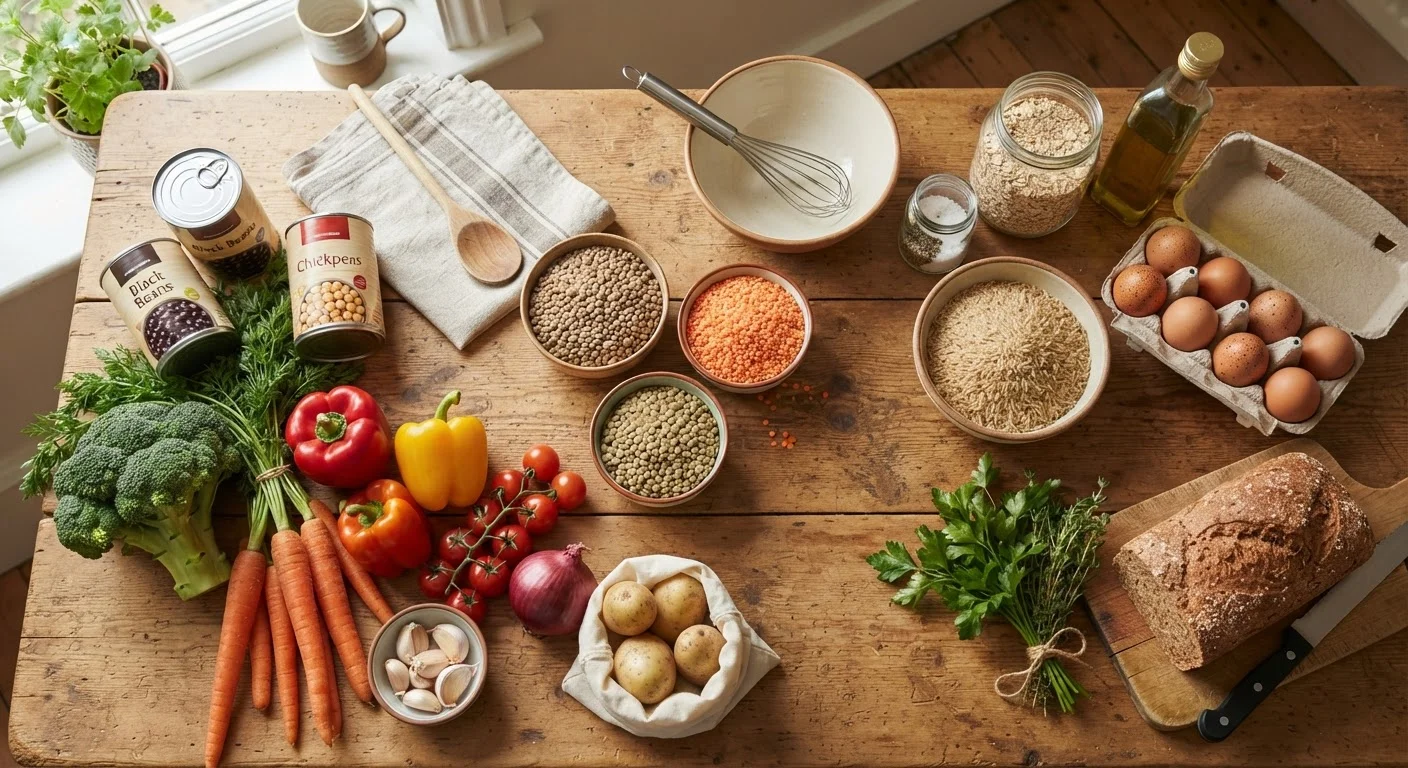
Two nutrients - protein and dietary fiber - anchor satiety and long-term dietary quality, and both are available cheaply. Dried or canned beans, lentils, chickpeas, and split peas are among the most nutrient-dense foods available by cost. Eggs are a complete protein source at low expense. Canned fish such as sardines and tuna deliver omega-3 fatty acids and protein at a fraction of the price of fresh fillets.
Fiber is where many Americans fall short - and most of the best fiber sources are inexpensive: oats, brown rice, barley, frozen peas, canned tomatoes, and seasonal vegetables. Our article on fiber and why most Americans don't get enough breaks down exactly which everyday foods make the biggest difference.
Anchor weekly meals around one or two inexpensive protein staples
Diversifying protein sources mid-week drives up costs and complexity. Choosing a foundation - such as lentils and eggs - and building varied meals around them keeps spending predictable while maintaining nutritional adequacy.
Buy dry or canned legumes instead of pre-seasoned or convenience versions
Seasoned and ready-to-eat legume products carry significant markup for minimal nutritional gain. Plain canned or dried versions deliver identical protein and fiber at substantially lower cost per serving.
Default to frozen vegetables for any item not in local season
Out-of-season fresh produce is often more expensive, has traveled further, and has had more time for nutrient degradation. Frozen alternatives are harvested and flash-frozen at peak ripeness, preserving nutritional value effectively.
Plan meals before shopping - even roughly
Shopping without a plan leads to impulse purchases, duplicates, and unused ingredients that become food waste. Even a loose weekly outline dramatically reduces both overspending and the decision fatigue that drives last-minute takeout.
Learn to use whole grains as a cost-effective calorie and fiber foundation
Whole grains like oats, brown rice, and barley are inexpensive, shelf-stable, and deliver sustained energy alongside meaningful fiber content - making them one of the highest-value items in budget grocery shopping.
For those weighing whether to reduce meat, evidence suggests that shifting even partially toward plant proteins can improve both dietary quality and food costs simultaneously. See what the evidence shows about plant-based versus omnivorous diets for a balanced look at the trade-offs.
Strategic Habits That Make the Difference
Nutritious eating on a budget isn't a one-time optimization - it's a system of repeatable habits. The biggest levers are planning, purchasing, and waste reduction.
Meal planning - even loosely - prevents the drift toward expensive, less nutritious convenience food that tends to happen mid-week when decisions are made under fatigue. Planning doesn't require rigid menus; a rough idea of five dinners using overlapping ingredients is enough to anchor better choices. If building consistent financial habits alongside dietary ones interests you, the principles in habits that make budgeting stick long-term apply surprisingly well to grocery routines too.
On the shopping side, the produce section warrants a specific mindset shift: frozen vegetables are not a nutritional compromise. Freezing typically occurs shortly after harvest, preserving vitamins well. For items like spinach, peas, corn, and broccoli, frozen is often both cheaper and more nutritious than out-of-season fresh equivalents.
What to Deprioritize Without Sacrificing Quality
Eating well on a budget partly means recognizing what isn't worth the premium. This isn't about eliminating food groups - blanket elimination usually backfires nutritionally and behaviorally. It's about understanding where the price-to-nutrition ratio breaks down.
Specialty protein powders, branded "superfoods," single-ingredient trend items, and heavily marketed snack products are places where spending rises sharply without proportional nutritional return. Whole oats deliver comparable benefits to many expensive grain-based products. Plain yogurt is nutritionally similar to probiotic-branded variants at twice the price.
A useful mental filter: ask whether a less processed, less packaged version of the same basic food is available nearby. Usually it is, and usually it costs less. Applying genuine value thinking - not just price scanning - to grocery decisions is a skill explored in depth in our guide on understanding value for smarter everyday shopping.
This article provides general nutrition and budgeting information for educational purposes only. It is not a substitute for personalized advice from a registered dietitian or qualified healthcare professional. Individual dietary needs vary; consult a professional before making significant changes to your diet.