

Key Takeaways
Credit Score
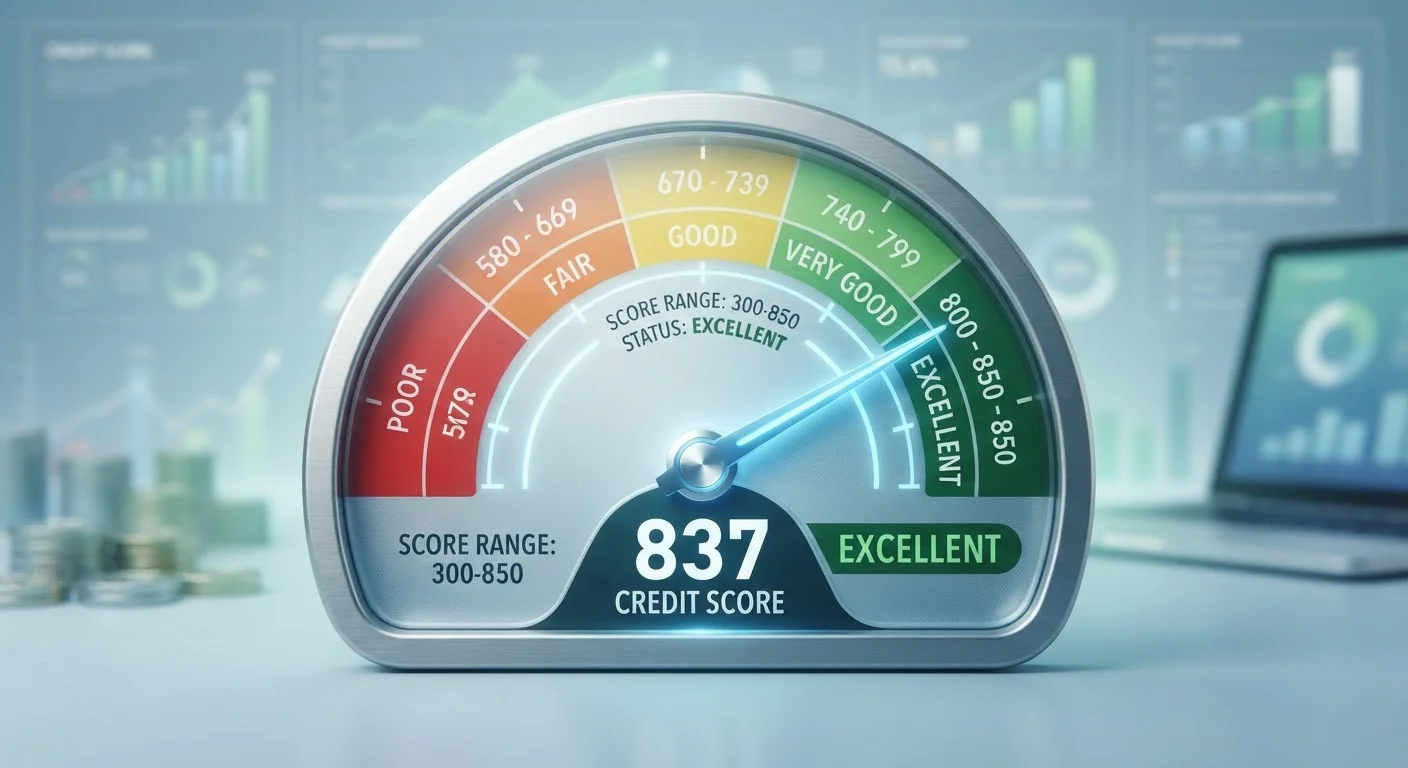
A credit score is a three-digit number, typically ranging from 300 to 850, that summarizes how reliably a person has managed borrowed money. Lenders use it to quickly assess how likely a borrower is to repay a new loan or credit card. The higher your score, the lower the perceived risk you represent to a lender.
The most widely used scoring models are FICO® Scores and VantageScore, both of which pull data from your credit report to calculate your score. Different lenders may use different versions of these models, so your score can vary slightly depending on the source.
What a Credit Score Is Actually Measuring
A credit score doesn't measure your wealth, income, or financial ambition. It measures one specific thing: how predictably you have managed debt obligations in the past. Scoring models are built on the principle that past repayment behavior is the most reliable indicator of future repayment behavior.
The data feeding into your score all comes from your credit report - a detailed record maintained by the three major credit bureaus (Equifax, Experian, and TransUnion). If you're unclear on the difference between a score and a report, the Credit Report vs. Credit Score explainer covers how each document works and when each one matters.
Scoring models convert your report data into a single number using a weighted formula. The result is a standardized signal that lenders can compare across millions of borrowers quickly and consistently.
The Five Factors and How They're Weighted
The FICO Score - the model most widely used by U.S. lenders - breaks down into five categories, each carrying a different weight:
- Payment history (approximately 35%): Whether you've paid accounts on time. A single missed payment, especially a recent one, can meaningfully lower your score.
- Amounts owed / credit utilization (approximately 30%): How much of your available revolving credit you're currently using. High balances relative to your credit limits signal risk to lenders. For a deeper look at this factor, see the credit utilization guide.
- Length of credit history (approximately 15%): How long your accounts have been open, including the age of your oldest account, newest account, and average age across all accounts.
- Credit mix (approximately 10%): Whether your history includes a variety of account types - such as credit cards, installment loans, and mortgages - rather than just one kind.
- New credit (approximately 10%): How recently you've applied for credit, reflected through hard inquiries on your report.
35%
Share of FICO Score from payment history
According to FICO's published scoring model breakdown, on-time payment behavior is the single largest contributor to a score.
~200M
Americans with a scoreable credit file
The Consumer Financial Protection Bureau estimates that roughly 200 million U.S. adults have enough credit history to generate a score.
7 years
How long most negative items stay on a report
Under the Fair Credit Reporting Act, most adverse items including late payments and collections must be removed from credit reports after seven years.
These percentages are general guidelines published by FICO. VantageScore uses a similar set of factors but weights them differently, which is one reason your score may vary between sources.
Why Lenders Care About This Number
When a lender evaluates a loan or credit card application, they're trying to answer one question: will this person repay? Reviewing full financial histories for every applicant individually would be impractical. Credit scores solve this by compressing complex repayment history into a comparable, objective signal.
In practice, your score often influences whether you're approved at all, what interest rate you're offered, and sometimes the size of the credit limit extended to you. A lower score typically means a lender perceives higher default risk - and may price that risk into a higher interest rate or decline the application entirely.
Beyond lending, credit scores are sometimes reviewed by landlords screening rental applicants and, in some states, by employers for certain roles. Understanding this broader context matters for anyone building or rebuilding their financial profile.
If you're starting from no credit history, the plain-language starting point for building credit walks through how to establish a record responsibly.
Common Misunderstandings About Credit Scores
Several widely held beliefs about credit scores are inaccurate and can lead to decisions that quietly damage a score over time. For example, many people assume that carrying a small balance on a credit card helps their score - it doesn't. Paying in full each month is generally the better strategy for your utilization ratio and your finances overall.
Others believe closing an unused credit card is always a responsible move. In reality, closing an account can reduce your total available credit, raise your utilization ratio, and shorten your average account age - potentially hurting your score. The credit score myths article covers this and other widespread misconceptions with evidence-based explanations.
Finally, it's worth noting that your credit score is not a fixed judgment. It's a dynamic number that responds to changes in your credit report. Consistent on-time payments and responsible utilization habits tend to move scores upward over time, though the timeline varies by individual circumstances.
This article is for general informational and educational purposes only and does not constitute personalized financial or credit advice. Consult a qualified financial professional for guidance specific to your situation.