

Key Takeaways
Envelope Budgeting
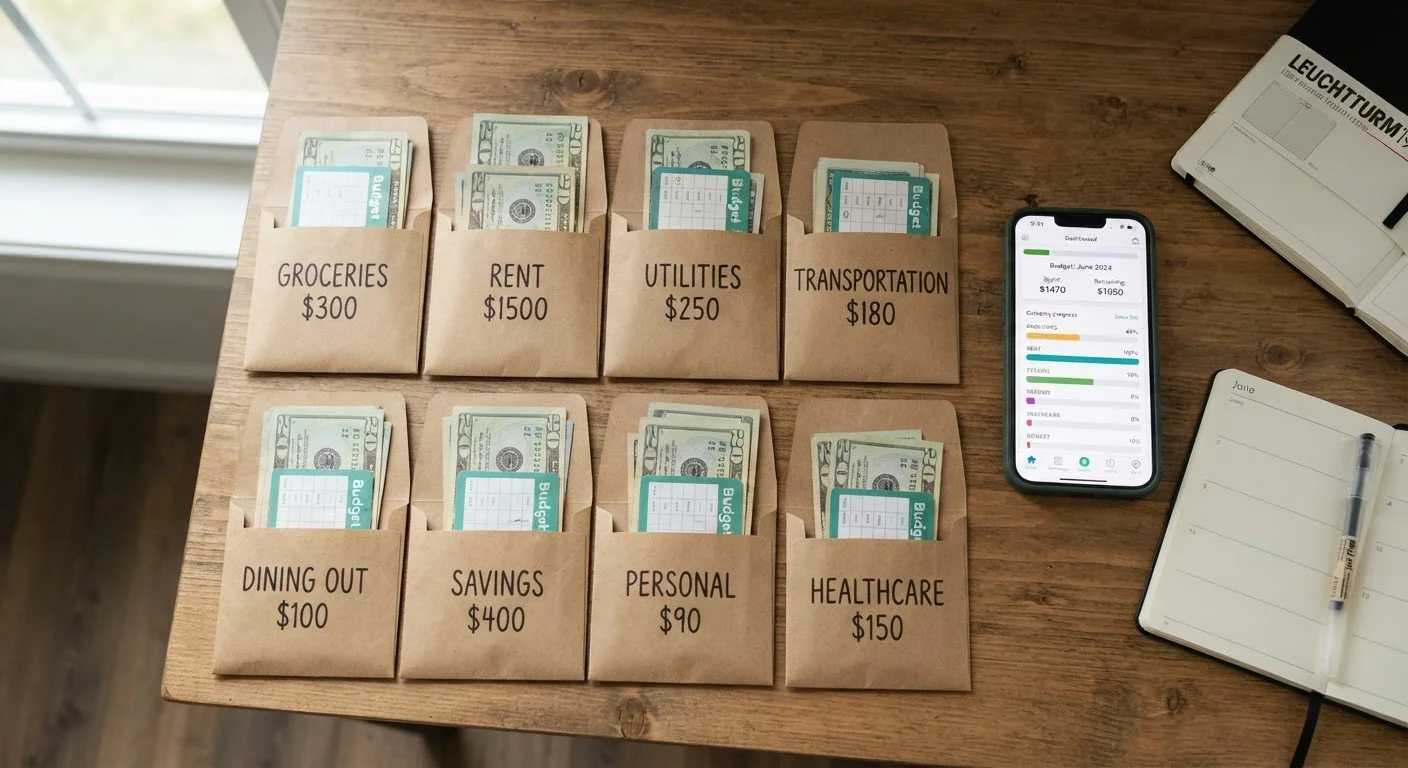
Envelope budgeting is a spending system where you divide your take-home income into separate categories - groceries, gas, dining out, entertainment - and allocate a fixed amount to each. Traditionally, that meant physically placing cash into labeled envelopes. When an envelope is empty, spending in that category stops for the month. The method forces awareness of exactly where money is going before it's spent.
The envelope system is a form of zero-based budgeting: every dollar of income is assigned a purpose, leaving no unaccounted funds at month's end.
How the Original Cash System Works
The cash envelope method is simple by design. At the start of each pay period, you withdraw your budgeted cash and distribute it among physically labeled envelopes - one for groceries, one for gas, one for eating out, and so on. You spend only from the relevant envelope, and when it's empty, that category is closed until the next funding date.
The system's power comes from tangibility. Research in consumer behavior consistently finds that people spend more freely with cards than with cash, partly because handing over physical bills registers as a more concrete loss. An empty envelope delivers an unambiguous signal that no app notification quite replicates. For that reason, the original cash format still has genuine merit for people who find digital spending feels abstract.
Fixed expenses - mortgage, car payment, insurance premiums - don't fit the envelope model and shouldn't be forced into it. Those are best handled through automated transfers and bill pay, leaving envelope discipline for the variable spending that tends to expand without structure.
Adapting the Logic for a Cashless Lifestyle
Most Americans now move through daily life without carrying meaningful amounts of cash. Card rewards, digital wallets, and the convenience of tap-to-pay make withdrawing cash each month feel like a deliberate inconvenience. The envelope method doesn't require physical currency to work - it requires the boundary-setting principle behind the cash.
Several practical digital approaches replicate that boundary:
- Virtual envelope apps: Some personal finance apps are built around envelope logic, letting you assign income to categories before spending and update balances as transactions occur.
- Multiple checking accounts: Some households maintain two or three checking accounts - one for fixed bills, one for groceries and household, one for discretionary - and fund each with only the allocated amount each month.
- Spreadsheet tracking: A simple spreadsheet with category columns and running totals can mirror envelope logic if you record spending the same day it happens. Our guide to spreadsheets vs. budgeting apps covers how each approach compares in practice.
The critical difference between digital envelope budgeting and standard expense tracking is timing. Tracking tells you where money went; envelopes tell you how much is left before you spend.
Start With Just Three Envelopes
New budgeters often try to categorize every dollar at once, which can feel overwhelming and lead to abandonment. Instead, identify your top two or three variable categories where spending tends to drift - typically groceries, dining, and entertainment - and apply envelope logic there first. Once those categories feel routine, you can expand the system gradually.
Building Habits That Make the System Last
Envelope budgeting - cash or digital - tends to fail not because the concept is flawed, but because people abandon it after one difficult month. A grocery envelope that runs out on the 20th doesn't mean the system is broken; it means the allocation needs adjustment. Treating the first few months as calibration rather than pass-or-fail changes the experience considerably.
A few habits reinforce the system over time:
- Fund envelopes on payday: Allocate the moment income arrives, not at the moment of purchase.
- Review weekly, not monthly: A brief weekly check of remaining balances prevents surprises and lets you make small course corrections.
- Set a rollover rule: Decide in advance whether unused funds roll into next month's envelope or move to savings. Consistency matters more than which rule you choose.
The broader research on budgeting suggests that consistent practice over time drives meaningful financial change - not the sophistication of the tool used. An imperfect envelope system followed consistently outperforms a detailed plan that's abandoned. For a full framework covering all budget components together, see the complete household budget guide.
This article is for general informational and educational purposes only and does not constitute personalized financial advice. Consult a qualified financial professional for guidance specific to your circumstances.