

Key Takeaways
Disc Brake System
A disc brake is a type of vehicle braking system that uses friction to slow or stop a rotating wheel. When you press the brake pedal, hydraulic pressure forces two brake pads to squeeze against a metal rotor (also called a disc) attached to the wheel hub, creating friction that slows the vehicle. Disc brakes are the standard on most modern passenger vehicles.
The hydraulic pressure is generated by the master cylinder and transmitted through brake fluid; most vehicles use a four-wheel disc layout, though some budget-oriented models still use drum brakes at the rear axle.
The Core Components - What's Actually Inside Your Brakes
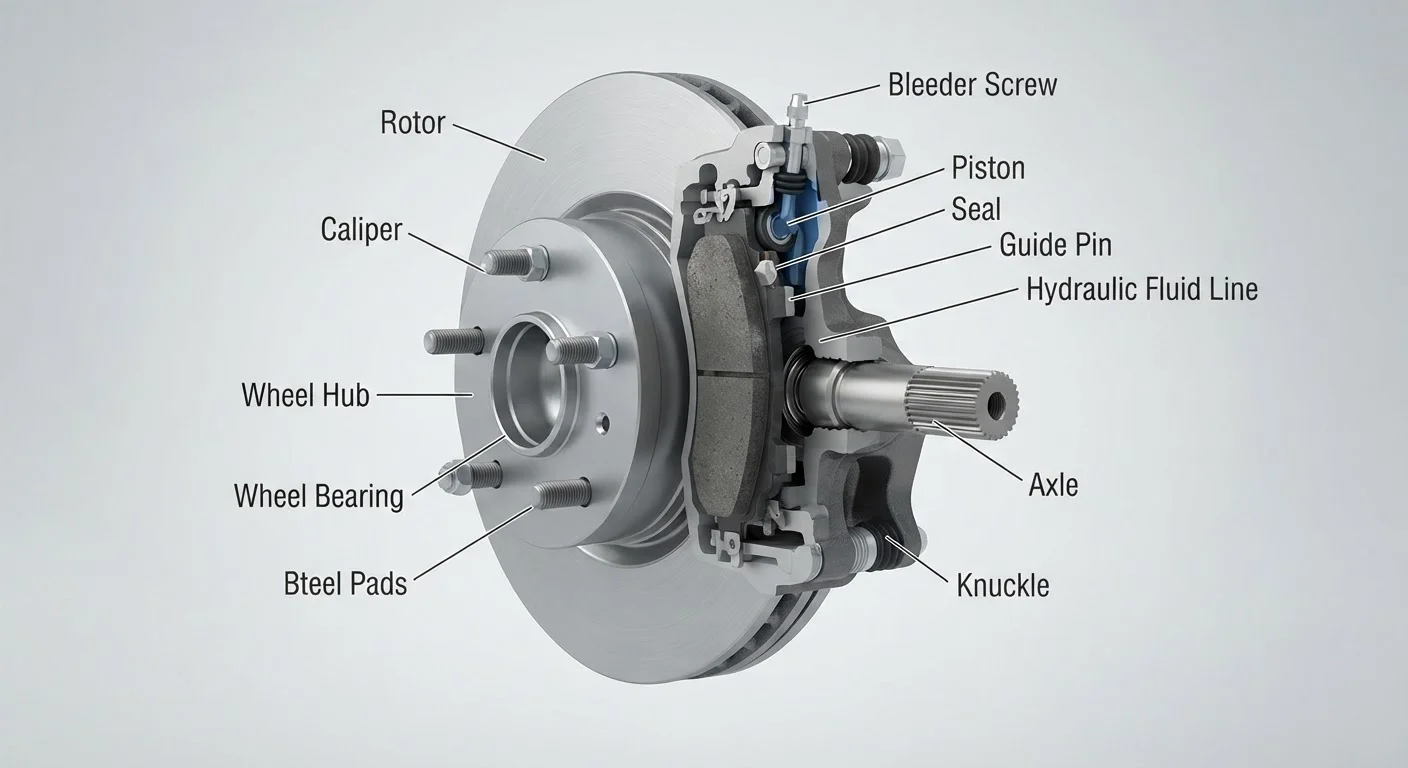
Your disc brake system has four main players, and understanding each one makes the whole picture click into place.
- Rotor: A flat, circular metal disc bolted to the wheel hub. It spins with the wheel and is the surface the pads clamp against. Rotors are typically made of cast iron, though some performance vehicles use carbon-ceramic versions.
- Brake pads: Two friction-material pads housed in the caliper, one on each side of the rotor. When the brakes engage, these press against the rotor faces.
- Caliper: A hydraulic clamp that straddles the rotor. When you press the pedal, hydraulic pressure pushes pistons inside the caliper outward, squeezing the pads against the rotor.
- Brake fluid: The hydraulic medium that transfers force from your foot on the pedal to the caliper pistons. It travels through sealed lines and must maintain its properties under high heat.
Together, these components convert your car's forward momentum into heat through friction - that energy has to go somewhere, and in disc brakes, it dissipates into the surrounding air off the rotor surface.
How the Stopping Process Actually Works
When you press the brake pedal, you're compressing a master cylinder filled with brake fluid. That pressure travels instantly through the brake lines to each wheel's caliper. The caliper pistons extend, pushing the brake pads inward from both sides until they grip the spinning rotor.
The friction between pad and rotor is what slows the wheel. More pedal pressure means more clamping force and more friction - which is why a gentle tap slows you gradually while a firm push stops you quickly. Rotors on many vehicles are also vented, meaning they have internal channels that allow airflow to carry heat away faster during heavy braking.
Use Engine Braking on Long Descents
On steep downhill grades, relying solely on your brake pedal generates sustained heat that can reduce brake effectiveness - a condition called brake fade. Shifting to a lower gear (or using 'L' or engine brake mode if available) lets the drivetrain help slow the vehicle, giving your disc brakes a chance to cool between applications.
Once you release the pedal, hydraulic pressure drops, the caliper pistons retract slightly, and the pads ease away from the rotor - letting the wheel spin freely again. This entire cycle happens hundreds of times on a typical drive without any input from you beyond your foot.
Decoding the Squeal - Harmless vs. Concerning
Brake noise is one of the most common reasons drivers get anxious, and understandably so. But not every squeal means something is wrong.
When the noise is usually harmless
- Morning squeal after rain or overnight dew: Surface oxidation on the rotor burns off within a few stops.
- Light squeal from new pads: Fresh pads may need a short break-in period before bedding in smoothly.
- Cold-weather noise: Metal contracts in cold temperatures, which can create brief squeaking until parts warm up.
When the noise deserves attention
- Persistent high-pitched squeal on every stop: Most brake pads include a small metal wear indicator tab. When the pad wears thin, this tab contacts the rotor and squeals - by design. It's a signal that inspection is overdue.
- Grinding or metal-on-metal scraping: This means pad material is gone and the metal backing plate is directly contacting the rotor. Immediate inspection is warranted - continuing to drive risks rotor damage and reduced stopping ability.
- Squealing combined with pulling to one side or a soft pedal: These additional symptoms suggest a caliper, brake fluid, or rotor issue that should be evaluated by a qualified mechanic.
For a deeper breakdown of specific noises and when they cross into urgent territory, see why your brakes are squealing and when to act.
25,000-70,000 mi
Typical brake pad lifespan range
Lifespan varies widely based on driving style, vehicle weight, and pad material - city stop-and-go driving wears pads significantly faster than highway cruising.
~400°F
Rotor surface temperature during normal highway braking
Under heavy repeated braking, such as descending a long grade, rotor temperatures can climb well beyond 500°F - illustrating why heat management is central to brake design.
Keeping Your Disc Brakes in Good Shape
Disc brakes are durable, but they wear over time and benefit from regular attention. A few practical habits help extend their life and catch problems early.
Check brake fluid periodically. Brake fluid absorbs moisture over time, which lowers its boiling point and can introduce corrosion inside the lines. Most manufacturers recommend flushing the fluid every two to three years, but verify with your owner's manual.
Pay attention during routine tire rotations. Many shops visually inspect brake pad thickness and rotor condition when tires are rotated. Ask for an assessment if one isn't offered automatically.
Avoid riding the brakes downhill. Sustained light pedal pressure generates sustained heat with no cooling interval. Downshift or use engine braking on long descents instead - your brakes will thank you.
Ultimately, the disc brake is a well-engineered system that gives you clear feedback when something needs attention. Learning to read that feedback - distinguishing a harmless morning squeak from a wear indicator's persistent cry - puts you in a much stronger position as a car owner.