

Key Takeaways
Why a Blowout Feels So Violent - and Why Your First Instinct Is Wrong
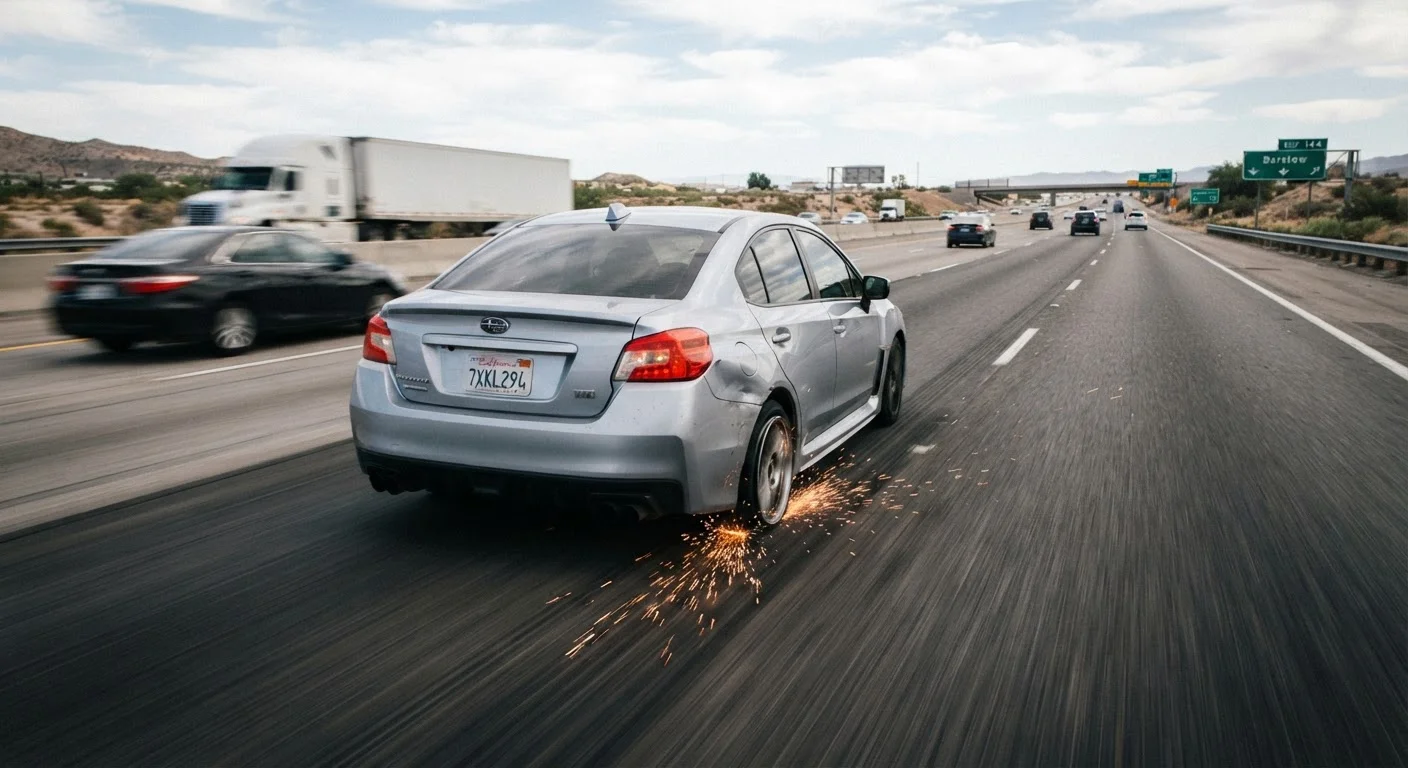
A tire blowout at highway speed is one of the most alarming things that can happen behind the wheel. You'll hear a sudden explosive bang, the car will lurch sharply to one side, and the steering wheel may wrench in your hands. Every instinct screams to hit the brakes and pull over immediately.
That instinct is wrong - and acting on it can cause a crash. When a tire fails at 60 or 70 mph, the car is still moving forward with tremendous momentum. Slamming the brakes causes the vehicle to pitch forward and yaw (rotate sideways), especially if it's a front tire that blew. The result can be a loss of directional control, a spin, or a rollover.
Understanding what's happening physically gives you a split second of clarity to respond correctly. The car is pulling toward the blown tire because that side has lost rolling support. Your job is to counteract that pull with steering input and manage speed gradually - not all at once.
This same kind of calm, methodical response applies to other high-speed hazards. Our complete guide to safe driving covers additional emergency scenarios worth reviewing.
Never Slam the Brakes After a Blowout
Hard braking immediately after a blowout is one of the most dangerous things you can do. It shifts weight dramatically onto the damaged tire or axle, making the vehicle far more likely to spin or flip. Stay off the brake pedal until you've stabilized speed and direction using the steps below.
What You'll Need Before You Pull Away
You can't control when a blowout happens, but you can make sure you're prepared to handle the aftermath safely. Before every highway trip, confirm you have the following in your vehicle.
What you will need
Spare Tire
Replaces the blown tire so you can drive to a repair shop after safely stopping.
Tire Jack and Lug Wrench
Required to lift the vehicle and remove the damaged wheel for replacement.
Hazard Warning Triangles or Flares
Alert approaching traffic to your stopped vehicle, reducing rear-collision risk.
Roadside Assistance Contact
Connects you with professional help if you're unable or unsafe to change the tire yourself.
Gloves and Reflective Vest
Protect your hands during a tire change and make you more visible to passing drivers.
Step-by-Step: Controlling Your Vehicle During a Blowout
Follow these steps in order. They're designed to work with the physics of a blowout, not against them. Practice visualizing this sequence before you need it - the more familiar the steps feel, the calmer you'll stay in the moment.
Grip the Steering Wheel Firmly with Both Hands
The moment you hear or feel the blowout, tighten your grip on the steering wheel. The car will pull sharply toward the blown tire. Use steady, firm counter-steering to hold your lane - don't jerk the wheel in the opposite direction, which can cause a dangerous overcorrection.
Ease Gently onto the Accelerator
This is the most counterintuitive part: apply gentle, brief throttle. It sounds wrong, but a small amount of acceleration keeps the rear of the car from stepping out sideways. You're not speeding up - you're maintaining the forward momentum that keeps the vehicle stable and controllable for just a few seconds.
Keep the Vehicle Straight and Stay in Your Lane
Resist the urge to immediately dart for the shoulder. Sudden lane changes at speed - especially with a compromised tire - create additional instability. Hold your position, signal your intention, and scan your mirrors to understand where other traffic is before you move.
Gradually Ease Off the Accelerator
Once the car feels stable and you have a read on surrounding traffic, lift your foot off the gas slowly. Let engine braking begin to bring your speed down naturally. You're aiming to reach roughly 30 mph or lower before you steer toward the shoulder.
Steer Smoothly Toward the Shoulder or Emergency Lane
Signal first, then make a gradual steering input toward the right shoulder or nearest safe area. Avoid abrupt turns - smooth, progressive steering is far more effective than a sharp pull at speed. Continue coasting down to a very low speed before applying gentle brake pressure.
Apply Light Brake Pressure to Come to a Full Stop
Only once you're well below highway speed and fully onto the shoulder should you apply the brakes. Use steady, moderate pressure - not a hard stop. Bring the car to a complete, controlled halt as far from traffic as possible, then turn on your hazard lights if you haven't already.
Once you're safely stopped and out of traffic, assess the tire and call for roadside assistance if you're not comfortable changing it yourself. Keep in mind that proper tire maintenance - including regular pressure checks and tread inspection - is one of the most effective ways to prevent blowouts before they happen.
For drivers who regularly travel high-speed roads, pairing this knowledge with other highway skills - like those covered in our guide to merging onto the highway without panic - builds a well-rounded foundation for safe freeway driving.
After You've Stopped: What to Do Next
Once you've brought the car to a safe stop, your priorities shift to visibility and personal safety.
- Stay in the vehicle if stopping on a shoulder puts you close to fast-moving traffic. It's often safer to remain inside with your seatbelt on than to stand beside the car.
- Turn on your hazard lights immediately if you haven't already - they should go on the moment you realize something is wrong.
- Call for help rather than attempting a tire change in a dangerous location. Many roadside assistance programs, insurance policies, and even wireless carriers offer emergency services.
- Use warning triangles or flares if you have them and can deploy them safely behind the vehicle.
Handling a blowout calmly on the highway is closely related to managing other kinds of reduced-traction situations. The mindset of smooth inputs, controlled speed reduction, and deliberate steering carries directly into driving in rain, fog, and snow.