

Key Takeaways
Engine Oil Degradation
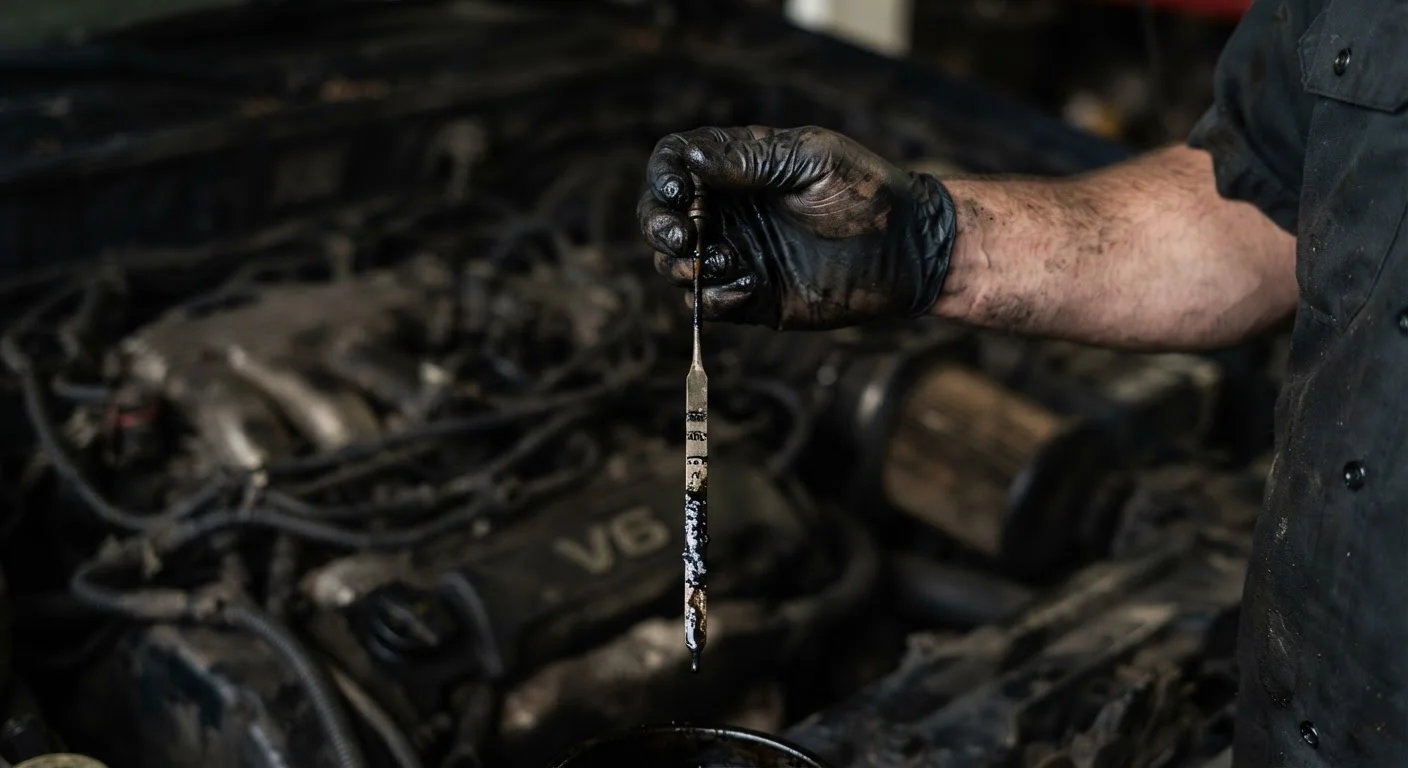
Engine oil degrades over time as it collects heat, metal particles, and combustion byproducts. As it breaks down, it loses its ability to lubricate, clean, and cool your engine's moving parts. Skipping an oil change means those degraded fluids keep circulating — causing accelerating wear with every mile driven.
Oxidation and viscosity breakdown are the two primary failure modes: oxidized oil forms sludge, while thinned oil loses its film strength, allowing metal-on-metal contact at critical surfaces.
What Engine Oil Actually Does
Before understanding what goes wrong, it helps to know what oil is doing in the first place. Engine oil serves four main jobs: it lubricates metal surfaces to reduce friction, carries heat away from components that can't be reached by the cooling system, suspends and transports contaminants to the filter, and forms a protective film that prevents direct metal contact.
Your engine contains hundreds of moving parts operating at high speed and high temperature. Without a continuous supply of clean oil, those surfaces would grind against each other within seconds. Fresh oil keeps that from happening. The problem is that oil doesn't stay fresh — it degrades, and once it does, it becomes progressively less effective at all four jobs.
How Oil Breaks Down Over Time
Every time your engine runs, oil is exposed to extreme heat, combustion gases that leak past piston rings, and microscopic metal particles shed by normal wear. These stresses cause two main types of breakdown.
First, oxidation — exposure to heat and oxygen causes oil molecules to react chemically, thickening the oil and forming deposits. Second, viscosity change — the oil's thickness shifts outside its designed range, meaning it either flows too slowly or too quickly to maintain the protective film your engine needs.
Additives in modern engine oil — detergents, anti-wear agents, and dispersants — slow this process, but they deplete. Once they're spent, degradation accelerates. This is why oil change intervals aren't arbitrary; they're calibrated to when those additives are likely to be exhausted.
Your Oil Life Monitor Isn't a Mileage Counter
Many modern vehicles include an oil life monitoring system that calculates remaining oil life based on driving conditions — not just miles driven. It accounts for temperature, load, and trip length. This system is generally reliable, but it assumes you started with a full, clean oil fill. If you're unsure when the oil was last changed or whether the monitor was reset properly, a physical inspection is the safest approach.
The Sludge Problem
The most serious consequence of neglected oil changes is engine sludge — a thick, gel-like substance that forms when oxidized oil mixes with moisture and combustion byproducts. Sludge coats internal surfaces and, critically, can block the narrow oil passages that feed components like the crankshaft bearings and valve train.
When those passages get blocked, parts that depend on oil pressure for lubrication start running dry — even if there's oil in the pan. This is how a missed oil change can quietly set the stage for major engine damage, often without any obvious warning until something breaks. See our guide to habits that shorten a car's life for other ways gradual neglect adds up.
What Skipping One Change Actually Means
Missing a single oil change by a small margin rarely causes immediate, catastrophic failure — and that can give drivers a false sense of security. The damage from degraded oil is cumulative. Each additional mile driven on spent oil adds a small amount of extra wear to bearings, cylinder walls, and other friction surfaces. That wear doesn't reverse when you eventually get the oil changed.
Think of it like sunscreen: skipping one application doesn't cause visible damage immediately, but the cumulative effect of repeated exposure adds up over years. If you're driving a higher-mileage vehicle, the stakes are higher — older engines often have tighter tolerances and more worn seals that make them more sensitive to oil quality. Maintenance needs shift significantly after 100,000 miles, and oil quality becomes even more critical.
How Often You Actually Need a Change
The old rule of "every 3,000 miles" is outdated for most modern vehicles. Many manufacturers now recommend intervals of 5,000 to 10,000 miles or more, particularly with full synthetic oil. Your owner's manual — not a quick-lube window sticker — is the authoritative source for your specific vehicle.
Driving conditions matter too. Frequent short trips, dusty environments, towing, or extreme temperatures are classified as "severe" conditions by most manufacturers and warrant more frequent changes than the standard interval. It's worth reading what your manufacturer considers severe — many drivers who think they're in normal conditions actually aren't. For a closer look at how common interval myths stack up against the evidence, see the maintenance myths costing drivers money.